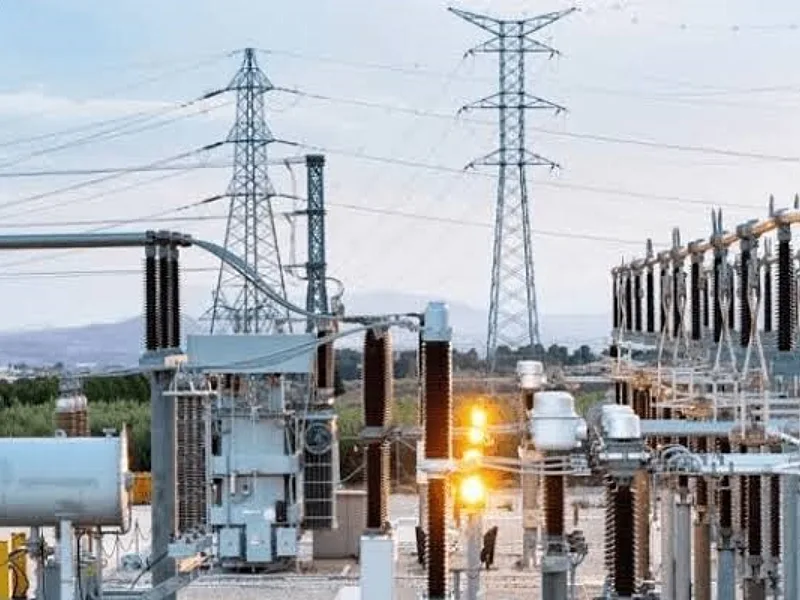

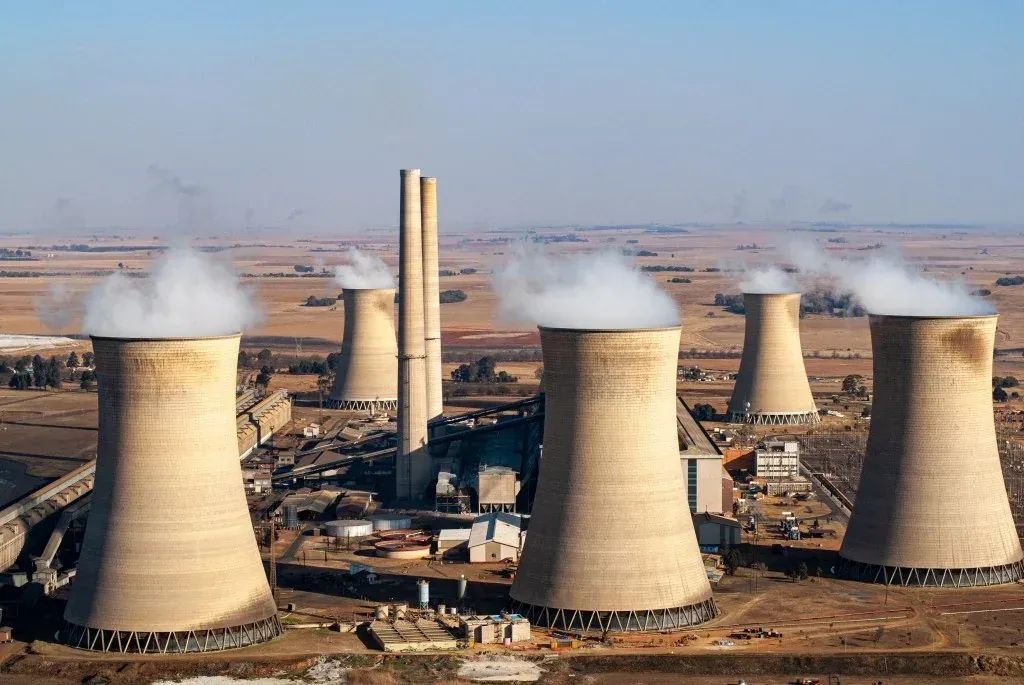
A fair climate transition must account for workers losing income, households facing higher costs, and the town dependent on a single industry.
For African economies, justice requires plans that reach informal workers and create credible alternatives before disruption leaves communities carrying costs they cannot absorb.
Fair Climate Action Requires Economic Security
African governments face a demanding climate policy test: reducing emissions while improving the economic security of people whose livelihoods may change.
- A programme can meet a technical emissions objective and still fail socially if displaced workers, small suppliers and neighbouring communities have no credible route to alternative income.
- Consider these together from the beginning.
“Just transition: How can climate action be made fair?” describes fairness across employment, social protection and regional development.
- It traces the concept to organised labour and its recognition in international climate governance.
For African markets, the framework applies beyond coal workers.
- Transport operators, farmers, repair businesses and households may all face changing technologies, costs or market requirements.
The policy question is who gains access to the opportunities and who receives support through the disruption.
A Green Investment Can Still Displace Livelihoods
Consider the different economies surrounding an industrial facility.
- Employees depend on wages, contractors on orders, and nearby traders depend on spending.
- A closure can affect each group through a different channel.
- Counting only the permanent workforce would leave much of the local economic exposure outside the transition plan.
This concern is particularly relevant to Africa’s labour market.
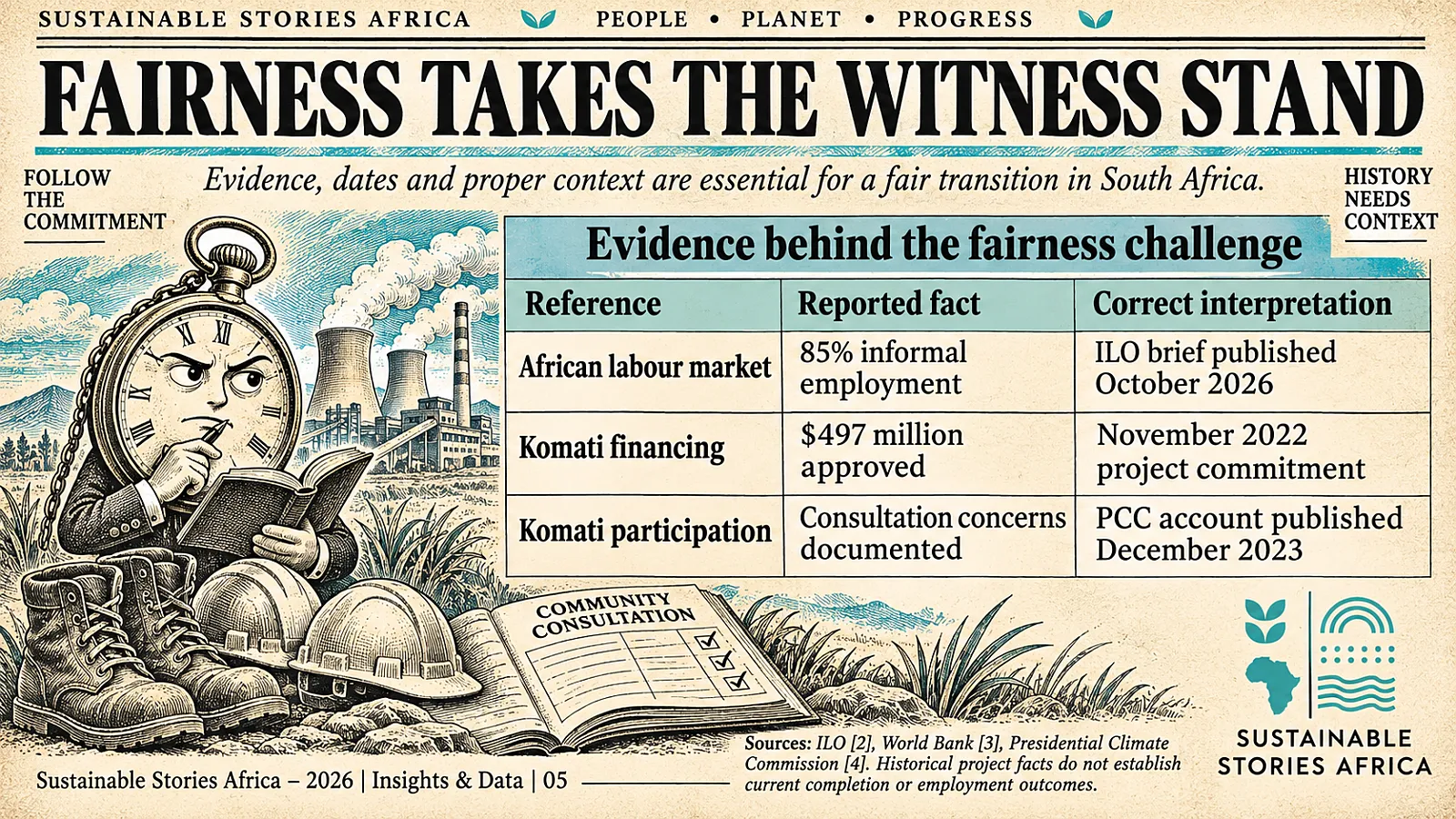
- An ILO research brief describes informal employment as accounting for 85% of employment in Africa.
- A protection model limited to formally registered employees would therefore be poorly matched to the structure of much of the continent’s work.
This does not mean that every worker faces the same climate-related risk.
- It is that governments need better local information before deciding whom a programme covers.
- A street vendor near a power station and an engineer employed inside it have different skills, bargaining power and eligibility for benefits.
- Fairness requires recognising these differences without making support inaccessible to people with limited paperwork.
Territorial development is part of justice.
- In practice, a retraining offer may be insufficient if suitable jobs are available only far from a worker’s home.
- Housing, transport, family responsibilities and the loss of local services can determine whether an apparently attractive opportunity is usable.
These costs belong in economic appraisal and community engagement.
Komati Shows Why Sequencing And Participation Matter
South Africa’s Komati experience offers a concrete reference.
- In November 2022, the World Bank approved a $497 million project to decommission and repurpose the coal-fired station, with planned renewable generation, batteries and support for workers and communities.
- Approval established a financing commitment; it was not a declaration that the intended jobs or facilities had already been delivered.
The Presidential Climate Commission subsequently reviewed the project.
- Its December 2023 account noted concerns from workers and communities about inadequate consultation and described recommendations to improve future projects.
- The case illustrates why a transition’s process deserves scrutiny alongside its engineering and funding.
For future African projects, consultation should occur while choices remain open.
- Residents need information about timing, likely impacts and available alternatives in forms they can use.
- A meeting held after the essential decisions have been made may gather feedback, but it offers limited influence over the decision itself.
Employment forecasts also need careful reading.
- Temporary construction positions, ongoing operations jobs and indirect economic activity should be reported separately.
- Training places are another category.
Presenting all four as equivalent jobs can make a proposal appear more protective than it is and prevent affected households from judging whether promised opportunities match their circumstances.
Better Design Can Broaden The Transition’s Benefits
A fair transition can create a more durable investment environment because communities have stronger reasons to support change.
- Early planning can identify opportunities to reuse infrastructure, develop suppliers and connect workers to employers.
- These are potential gains from better design, rather than guaranteed consequences of giving a project a just-transition label.
The ILO’s transition guidelines place decent work, social protection and dialogue among governments, workers and employers at the centre of policy.
- Applying that approach means examining working conditions as well as job numbers.
- A new position should be assessed for pay, safety, contract security and access to representation, rather than being counted as an adequate substitute simply because it exists.
Training can be valuable when its content follows credible demand.
- Providers should involve prospective employers in course design and publish completion and placement information.
- Workers may also need transport, childcare or income support while attending.
- These details determine who can participate and whether a skills programme reaches those most affected.
Regional diversification deserves equal attention.
- Towns exposed to a major industrial change should assess other sources of economic activity before public revenues and customer spending deteriorate.
- This may involve infrastructure, business services or procurement opportunities.
The appropriate combination depends on local capabilities and markets; a generic promise of green jobs is not a regional development strategy.
Put Distributional Choices Inside Every Investment Decision
Governments should require a distributional assessment before approving major transition programmes.
- It should identify affected groups, potential benefits and costs, timing, compensation arrangements and responsible institutions.
- The assessment should also distinguish impacts caused by the proposed policy from wider technological or market changes, so that responsibilities and remedies are grounded in evidence.
Financiers should examine whether social measures have budgets and delivery agencies.
- A community programme described in an appendix but excluded from the funded schedule cannot provide reliable protection.
- Disbursement conditions should reflect consultation and livelihood milestones where appropriate, while allowing transparent adjustments if local conditions change.
Businesses should disclose workforce implications early enough for meaningful negotiation.
- Labour organisations and informal-worker associations should be able to test assumptions about skills, vacancies and compensation.
- Local authorities need their own assessment of revenue and service effects, because a programme’s impact on a municipality may extend well beyond the plant boundary.
Public monitoring should continue after a facility closes or a replacement investment opens.
- The relevant questions concern household income, sustained work and local service quality over time.
- Publishing these outcomes, including setbacks, would help African governments improve subsequent projects and give citizens evidence against which to judge whether the transition is becoming fairer.
Fiscal planning should include local services.
- If industrial change reduces a municipality’s revenue, residents may face deteriorating services at the same time as employment disruption.
- National and local authorities should assess this exposure together and agree how essential functions will be maintained.
- The protection of a household depends partly on the institutions serving the surrounding community.
Grievance arrangements should offer an accessible route to correction.
- People need to know whom to contact, what evidence is required and when they can expect a response.
- Recording complaints is insufficient if no institution can change a decision or resolve a payment problem.
Monitoring should therefore show how cases are handled and whether recurring issues lead to programme adjustments.
Path Forward – For A Fair African Transition
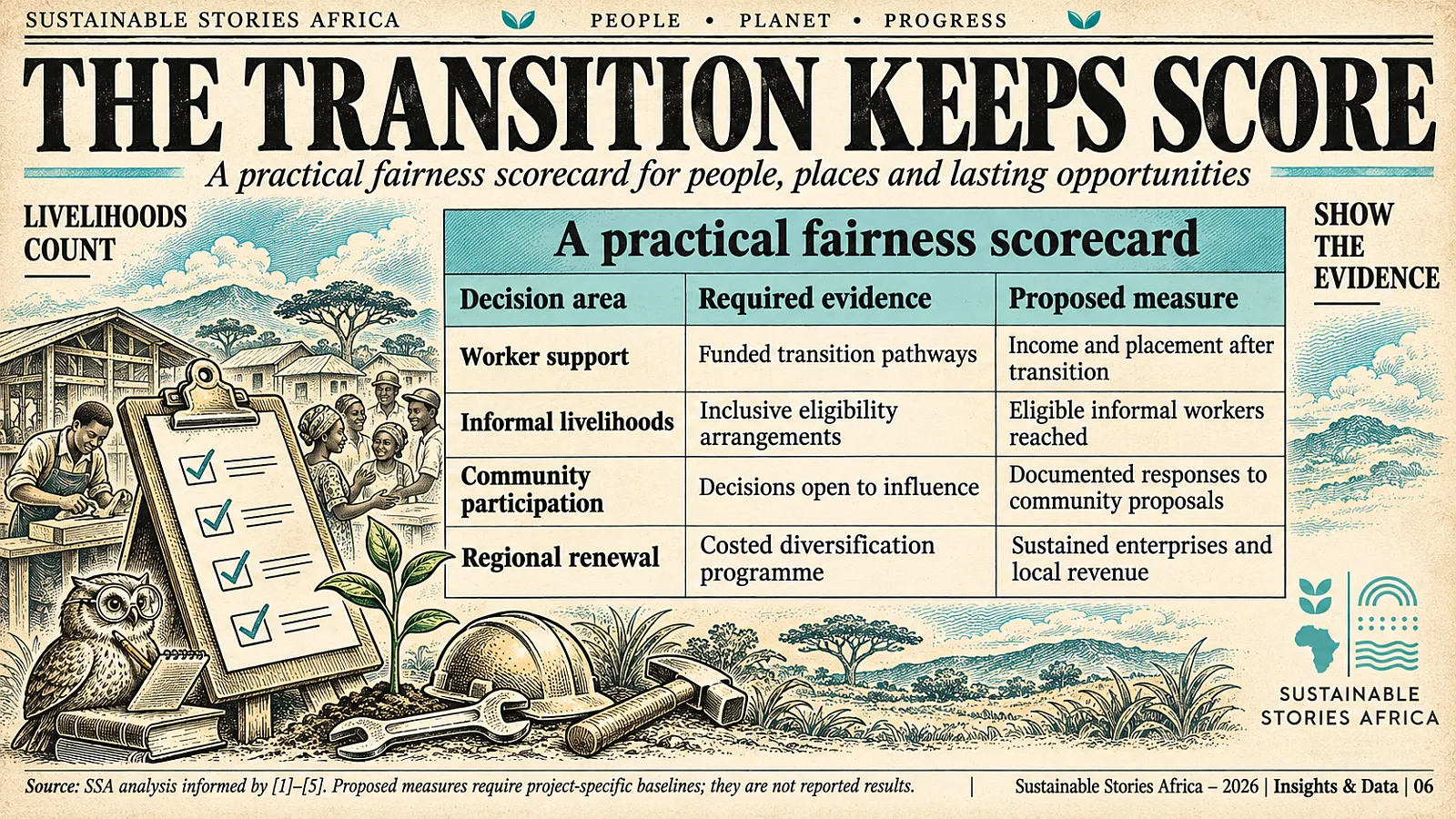
African transition plans should fund livelihood protection, inclusive participation and regional renewal alongside technical investments.
Informal workers and affected communities need a place in decisions before disruption occurs.
Governments and financiers should publish employment assumptions and track outcomes after implementation.
Fairness becomes credible when people can see who receives support, how alternatives develop and whether economic security improves.