
Repair, reuse and better product design can help African economies retain more value from materials while reducing waste pressures.
Recycling is one part of that wider system.
The opportunity depends on viable markets, safe work and products designed for longer use, with environmental gains measured across their life cycles.
Material Value Should Survive First Use
Africa’s circular economy opportunity begins before a product becomes waste.
- Designing for durability, maintaining equipment and enabling reuse can preserve value that would otherwise be lost through premature disposal.
For governments and businesses facing infrastructure and resource constraints, the central question is how to provide useful services with fewer avoidable material losses.
“What is the circular economy, and why is it important for sustainability?” describes a model built around longer product lives and resource efficiency.
- It links circular practices with manufacturing, construction, agriculture and other sectors.
This African application also draws on UNEP’s Global Resources Outlook 2024 and the UNEP–ISWA Global Waste Management Outlook 2024.
- Their global findings establish the scale of material and waste pressures; they should not be mistaken for measurements of African markets alone.
Growing Material Demand Raises A Development Question
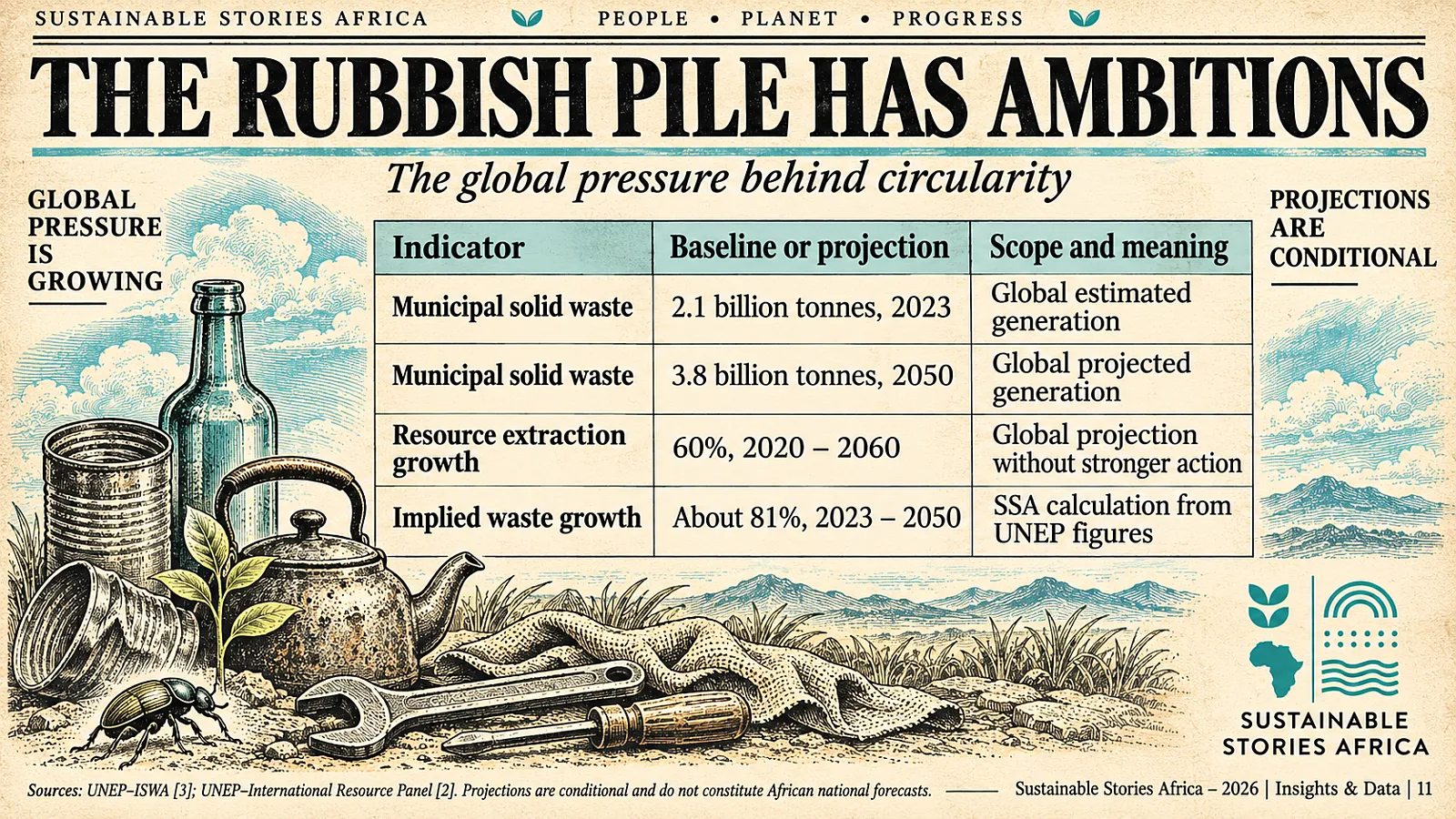
UNEP’s resource assessment warns that extraction could rise by 60 per cent between 2020 and 2060 without stronger action.
- The African development question is how to expand housing, transport and basic services while avoiding unnecessary waste.
- Resource efficiency should support improved living standards, rather than becoming an argument against investments needed to overcome deprivation.
The distinction is especially important when comparing countries with different levels of consumption and infrastructure.
- An economy building essential water systems has different priorities from a market replacing usable consumer goods rapidly.
- A credible circular strategy should recognise these starting points and focus on the efficiency and durability of the services being delivered.
Waste projections underline the pressure.
- The UNEP–ISWA outlook estimates municipal solid waste at 2.1 billion tonnes in 2023 and projects 3.8 billion tonnes by 2050.
- This implies an increase of approximately 81%, calculated by SSA.
- It is a global scenario, not a forecast that every African city’s waste will grow at the same rate.
For local authorities, the useful response is to understand their own material streams.
- Packaging, food waste, construction materials and electronics require different collection and treatment arrangements.
- A programme designed around a single headline recycling target may overlook the opportunities to prevent waste or keep high-value products functioning for longer.
Circularity Extends Beyond Collecting And Recycling Waste
The explainer places reuse, repair and regeneration alongside recycling.
- This wider framing matters because collecting material does not guarantee a useful second life.
- It must be sorted, processed and matched to a buyer with an appropriate quality requirement.
- Without that demand, a collection programme can shift waste from one location to another.
Repair offers a different route to retaining value.
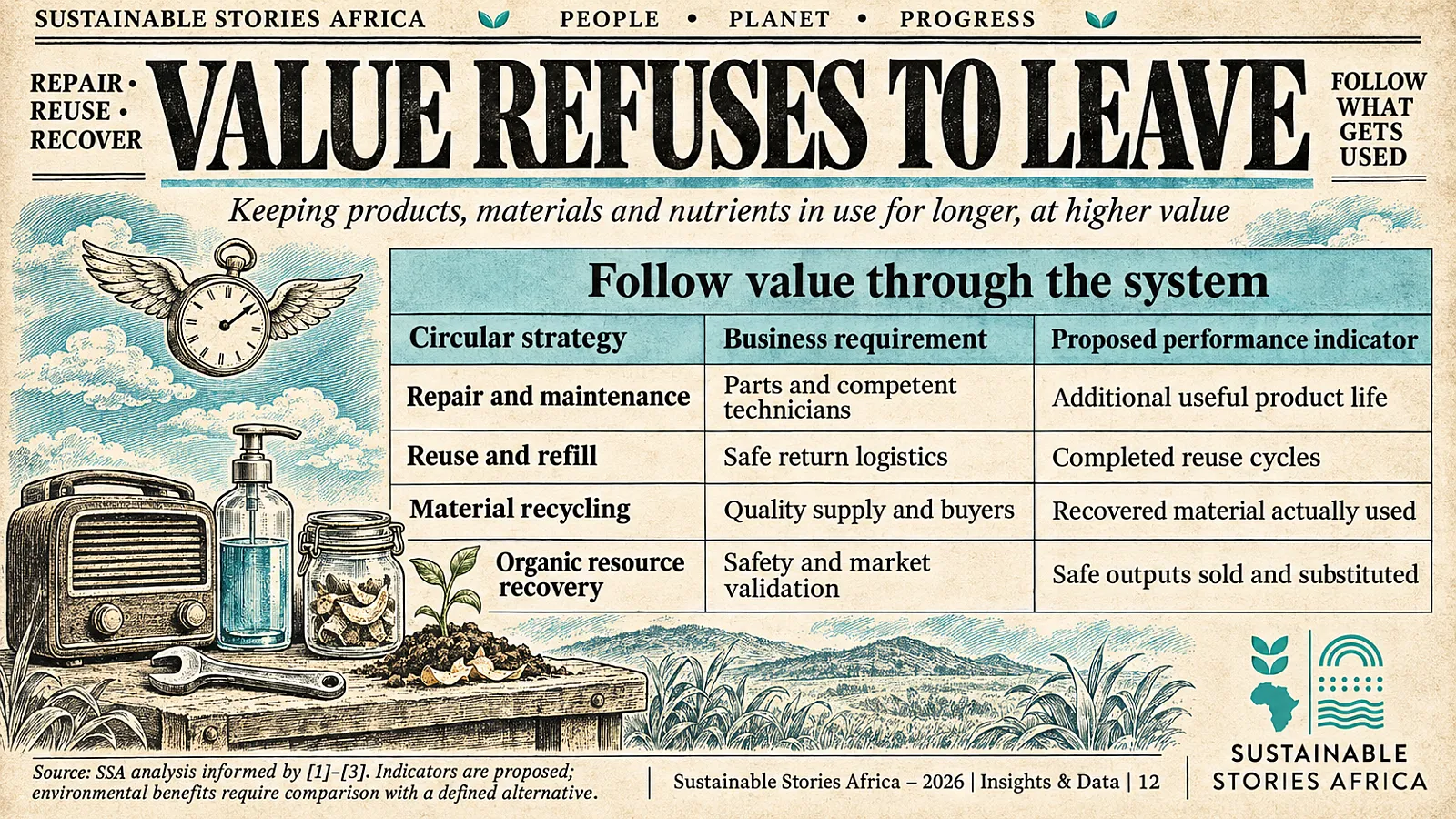
- Procurement of equipment can consider spare parts, diagnostic access and the availability of competent technicians.
- A lower purchase price may prove expensive if an otherwise usable machine cannot be repaired locally.
- Whole-life costing makes those trade-offs more visible before a contract is awarded.
Construction also needs a broader perspective.
- Designers can consider adaptable spaces and materials that can be recovered when a building changes use.
- The environmental benefit depends on safety, quality and the resources required for recovery.
- Reuse should be evaluated against an appropriate alternative, rather than assumed beneficial solely because a material has been used before.
In agriculture and food systems, circular options may involve preventing avoidable losses and finding safe uses for organic residues.
- Each application needs quality controls and a reliable market.
Promoting a waste-to-resource product without assessing contamination or performance can create new problems and weaken confidence in the wider circular economy.
Better Business Models Can Retain Local Value
A circular business needs customers willing and able to pay for the service it provides.
- A repair enterprise depends on accessible parts and skilled labour. A refill model depends on convenient collection and safe handling.
- A recycler depends on material quality and purchasers. These commercial conditions should shape support programmes from the beginning.
African firms can test opportunities through focused pilots with clear unit economics.
- They should measure collection costs, rejection rates, repair success and repeat demand before expanding.
- A model that works only while materials are collected free of charge may require redesign once the full cost of labour, transport and compliance is recognised.
Public procurement can create predictable demand for durable and repairable products.
- Buyers should specify performance and evidence requirements rather than favouring a label.
- Contracts can ask suppliers to provide maintenance information, replacement components and end-of-use arrangements.
- The aim is a reliable service over time, with a clear account of the resources consumed.
Workers must benefit from improved systems.
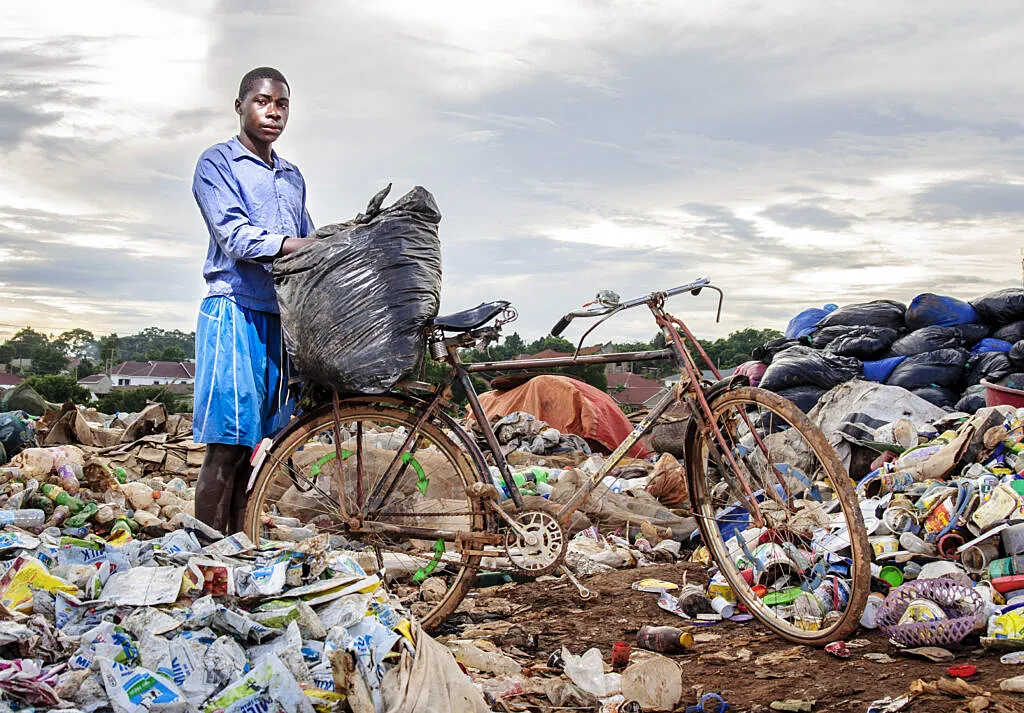
- Informal collectors and repairers should be considered in programme design, with attention to payment, safety and access to work.
- A new collection contract that removes existing livelihoods without a practical alternative could meet a material target while worsening social outcomes.
- Circularity should be assessed through both environmental performance and decent work.
Build Markets And Accountability Around Material Flows
Governments should establish baselines before announcing large diversion or recycling targets.
- They need to know which materials arise, how they are currently managed and where value is lost.
- Reporting should distinguish collection, processing and actual use of recovered material. These stages are related, but counting them as equivalent can overstate progress.
Businesses should disclose the boundaries behind circularity claims.
- A percentage of recycled content refers to an input; a collection rate describes a recovery system; a durability measure concerns product performance.
- Each needs an appropriate denominator and time period.
- Combining them into an unexplained sustainability score makes the evidence harder to assess.
Financiers should assess working capital and offtake as carefully as machinery.
- A processing facility can struggle if feedstock arrives unpredictably or buyers reject inconsistent output.
- Support should help enterprises demonstrate reliable supply and demand, rather than equating installed capacity with a functioning circular market.
Finally, environmental evaluation should include transport, energy, water and residual waste.
- An intervention may improve one measure while worsening another.
- Publishing these trade-offs allows better decisions and helps identify the conditions under which a business model should expand.
- Africa’s opportunity is to build systems that preserve useful value and improve services, with results that withstand scrutiny.
Product information can make these markets more dependable.
- Repairers and second-hand buyers need to understand condition, expected performance and available support.
- Clear grading and appropriate warranties can help customers compare options while discouraging the transfer of unusable goods under a reuse label.
- Testing and disclosure should match the safety implications of the product concerned.
Policy should also recognise different business sizes.
- A reporting system that is manageable for a large manufacturer may exclude a small repair enterprise.
- Authorities should seek the information needed for oversight while simplifying registration, guidance and payment processes.
- Consultation with workers and smaller firms can identify where a well-intended rule creates avoidable costs or blocks legitimate activity.
These decisions should be reviewed against measurable service and safety outcomes.
Path Forward – For Africa’s Circular Economy Development
African governments and firms should prioritise durability, repair, safe recovery and reliable markets.
Baselines and procurement rules can help turn circular ambitions into commercially useful services.
Progress should be measured through longer product lives, materials genuinely reused and better working conditions.
Investment will be stronger when it follows demonstrated demand and verified environmental gains rather than collection volumes alone.