Across many developing economies, women continue to face deeply entrenched barriers in employment, entrepreneurship and leadership.
However, evidence increasingly shows that breaking gender norms and strengthening government support systems can dramatically expand women’s economic participation.
From targeted labour reforms to gender-responsive policy design, governments and development partners are experimenting with new models that empower women economically while unlocking broader economic growth.
Breaking Gender Norms Drives Economic Inclusion
Across developing economies, gender norms continue to shape who works, who leads and who benefits from economic opportunity.
Women remain disproportionately excluded from formal employment, leadership positions and financial systems, limiting both personal opportunity and national economic growth.
However, emerging evidence suggests that targeted policy reforms, including labour market reforms, childcare support, and government-led gender inclusion initiatives, can significantly increase women’s participation in the economy.
When combined with cultural shifts that challenge traditional gender roles, these policies create pathways for women to enter new sectors and leadership positions.
For policymakers, investors and development institutions, the implication is clear: gender equality is no longer only a social issue; it is an economic imperative.
Countries that successfully expand women’s participation in the workforce often see improvements in productivity, innovation and long-term economic resilience.
Gender Norms Continue Limiting Economic Participation
Despite global progress on gender equality, structural barriers remain widespread. In many regions, women face restrictions rooted in social expectations that prioritise domestic responsibilities over paid employment.
These norms often influence access to education, employment opportunities and entrepreneurial capital. Women are also more likely to work in informal sectors with lower wages and limited legal protections.
Economic research increasingly shows that these constraints come with high macroeconomic costs.
According to international development institutions, closing gender gaps in labour force participation could raise GDP significantly across many emerging economies.
In Africa and other developing regions, the challenge is particularly acute due to a combination of cultural norms, limited childcare infrastructure and unequal access to financial services.
Policy Support Expands Women’s Economic Opportunities
Governments are increasingly recognising that policy intervention is necessary to break entrenched barriers.
Gender-responsive policies such as parental leave reforms, childcare support systems, and anti-discrimination legislation have proven effective in increasing women’s workforce participation in several countries.
Public investment programmes are also expanding access to training, entrepreneurship financing and digital skills development for women.
Structural Barriers Affecting Women’s Economic Participation
Barrier | Economic Impact |
|---|---|
Social gender norms | Limits access to formal employment |
Lack of childcare infrastructure | Reduces workforce participation |
Limited access to finance | Restricts entrepreneurship growth |
Informal employment concentration | Lower wages and job security |
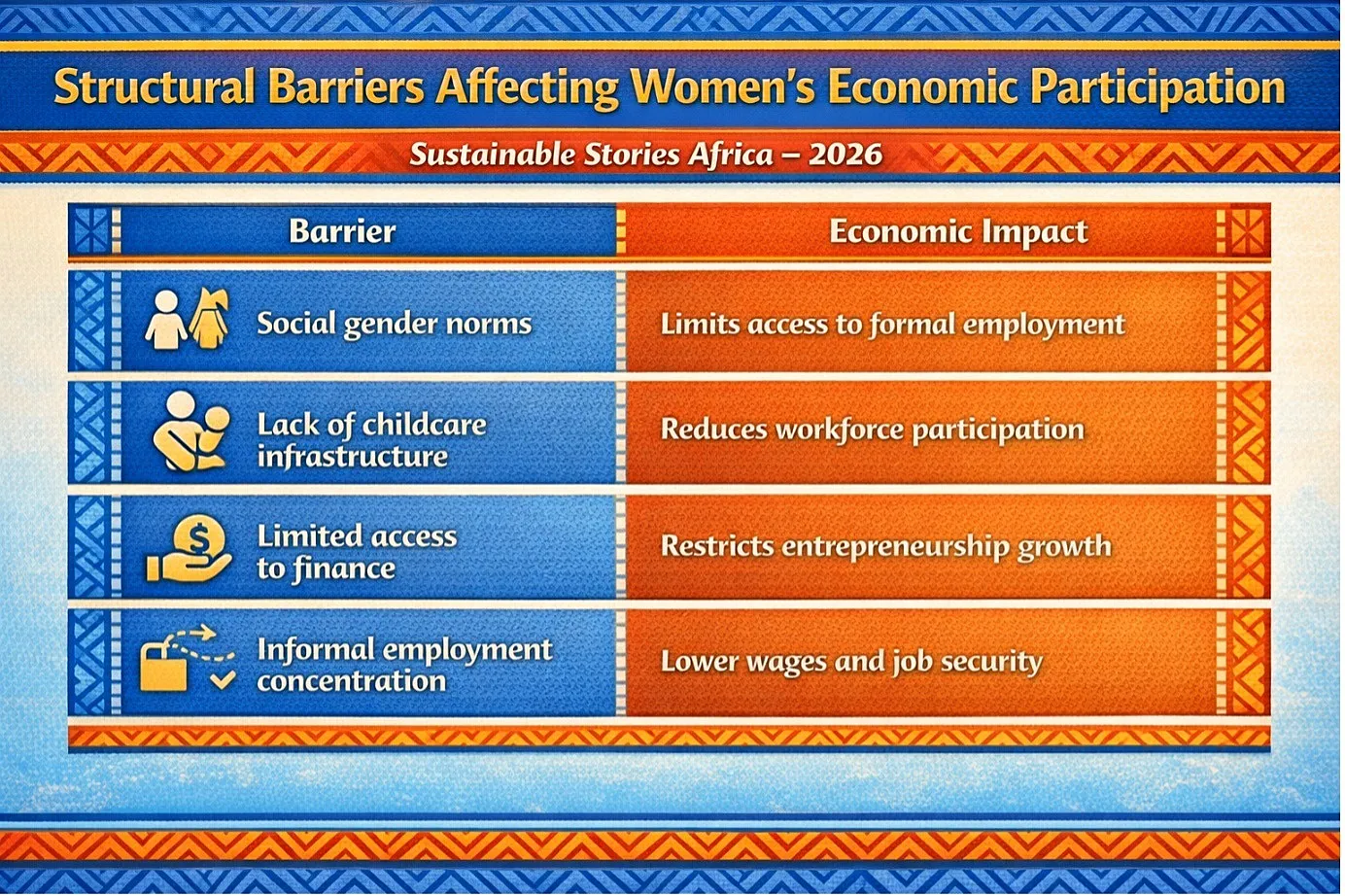
Analysts note that addressing these barriers requires both policy reforms and social change, as legal frameworks alone cannot fully transform labour market outcomes.
Women’s Participation Key To Economic Growth
Evidence increasingly demonstrates the economic value of gender inclusion. Countries that improve women’s access to employment and entrepreneurship opportunities often experience higher productivity and stronger economic growth.
Women-owned businesses are also growing rapidly in many emerging markets, particularly in sectors such as retail, services and digital commerce.
Economic Benefits Of Gender Inclusion
Indicator | Development Impact |
|---|---|
Higher female labour participation | Increased GDP growth |
Women's entrepreneurship growth | Expanded SME sector |
Education equality | Improved workforce skills |
Financial inclusion | Greater economic resilience |
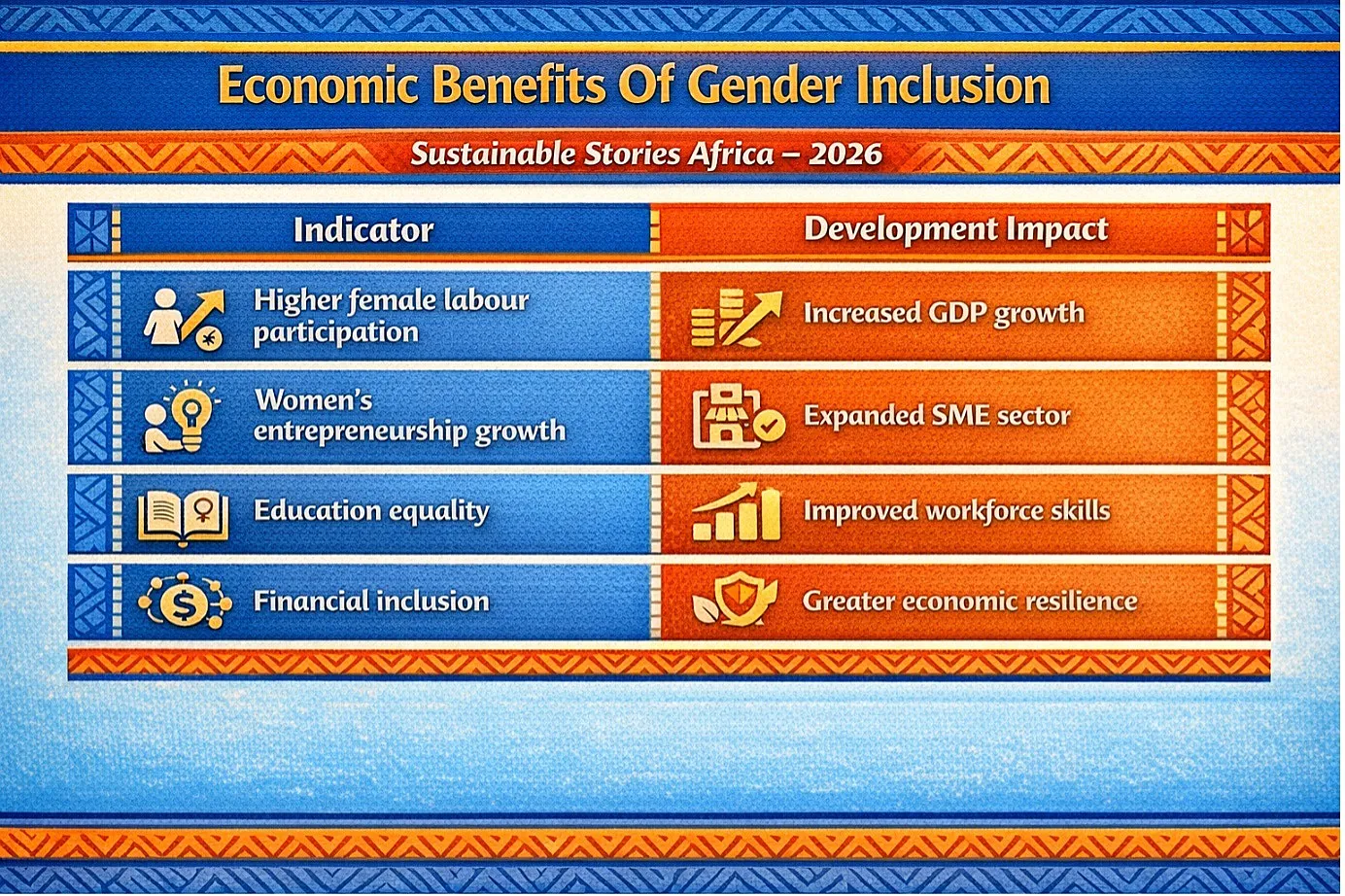
International financial institutions increasingly emphasise gender inclusion as a key component of sustainable development strategies.
Shifting Norms Requires Coordinated Policy Reform
While progress is evident, transforming gender norms remains a complex and long-term process.
Policy interventions must be accompanied by public awareness campaigns, education initiatives and institutional reforms that promote equal opportunity.
Governments also play a crucial role in expanding childcare infrastructure and ensuring equal access to finance and training opportunities.
Private sector organisations can contribute by implementing workplace equality policies, supporting women leadership programmes and investing in female entrepreneurship ecosystems.
For African economies in particular, empowering women represents one of the most powerful levers for unlocking inclusive economic growth.
As labour markets evolve and digital economies expand, ensuring women’s full participation will be essential to sustaining long-term development.
Path Forward – Policy Leadership And Social Norm Transformation
Expanding women’s economic participation requires coordinated action between governments, businesses and civil society.
Policies that support childcare, entrepreneurship and equal employment opportunities can help dismantle long-standing barriers.
By combining policy reform with cultural change, countries can unlock the full economic potential of women, strengthening productivity, resilience and inclusive growth across developing economies.