Global demand for credible ESG reporting is accelerating as regulators, investors, and stakeholders push for independently assured sustainability disclosures.
KPMG's latest ESG Assurance Maturity Index highlight that while adoption is increasing, substantial gaps remain across regions, sectors, and assurance quality, highlighting the urgent need for stronger governance, clearer standards, and more consistent verification.
Trust Now Drives ESG Reporting
ESG reporting has entered a new phase, one where credibility matters as much as disclosure. As sustainability claims shape investment decisions, corporate reputation, and regulatory scrutiny, assurance has become the benchmark for trust.
Investors increasingly expect ESG data to be verified with the same rigour as financial statements.
KPMG's ESG Assurance Maturity Index emphasises how well organisations integrate assurance into their ESG reporting. It evaluates the scope, depth, and quality of ESG assurance across industries and regions, measuring whether sustainability information is independently verified, consistently applied, and aligned with global standards.
The findings reveal progress, but also fragmentation. While more companies now obtain ESG assurance, many still rely on limited, partial, or low-confidence verification.
The result is a global assurance landscape marked by uneven maturity, regulatory pressure, and increasing stakeholder expectations.
Assurance Becomes the New Baseline
KPMG's index shows that ESG assurance is no longer optional. Regulatory reforms, investor activism, and climate-related risk disclosures are driving demand for verified sustainability data.
Jurisdictions introducing mandatory ESG reporting are also tightening assurance requirements to reduce greenwashing and improve market confidence.
However, assurance maturity varies widely. Some organisations apply reasonable assurance, the highest level of verification, while others rely on limited assurance or internal reviews, which offer lower confidence in data reliability.
How Mature Is ESG Assurance?
The ESG Assurance Maturity Index evaluates organisations across four dimensions:
- Coverage – Which ESG topics are assured
- Depth – Level of assurance applied
- Consistency – Alignment with recognised standards
- Governance – Oversight and internal controls
KPMG found that most companies still prioritise environmental metrics more than social or governance indicators, creating imbalances in ESG credibility.
Climate data is often verified, while human rights, diversity, and governance disclosures remain less assured.
ESG Assurance Coverage Trends
| ESG Area | Typical Assurance Coverage | Maturity Level |
|---|---|---|
| Environmental | High | Advanced |
| Social | Moderate | Developing |
| Governance | Low | Early stage |
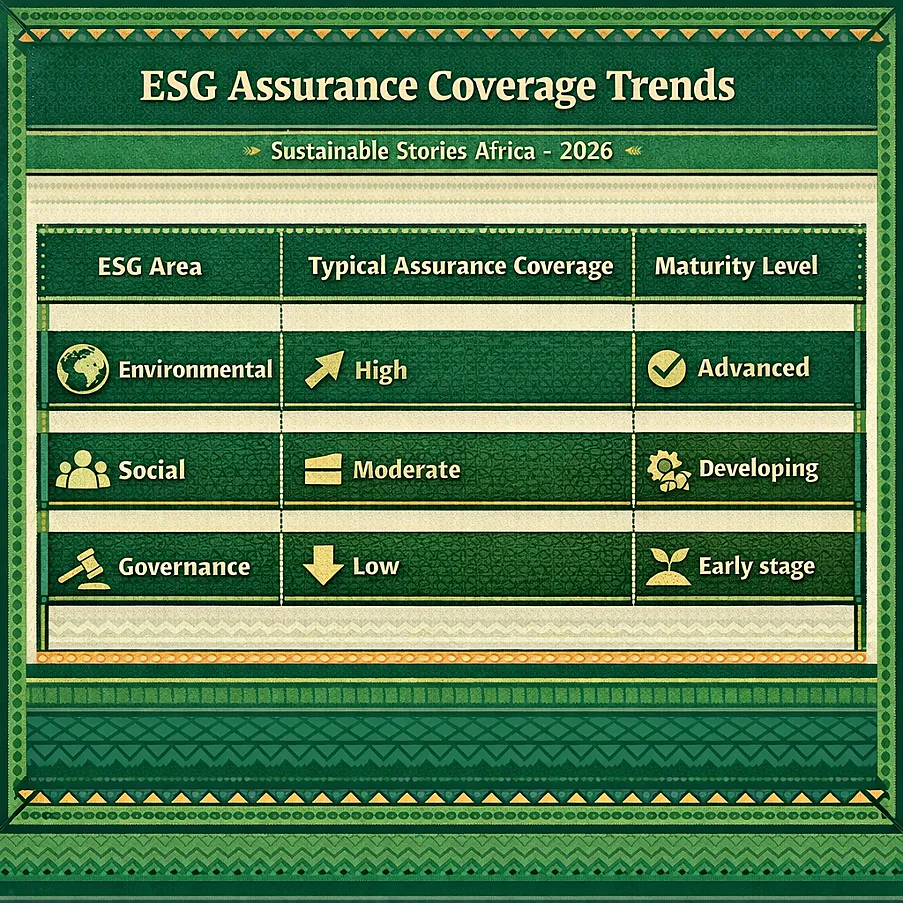
This uneven assurance profile limits stakeholder confidence and weakens the credibility of ESG claims, especially in emerging markets where regulatory oversight remains fragmented.
What Strong Assurance Delivers
Companies with mature ESG assurance systems benefit in three keyways:
- Investor confidence – Verified data supports capital allocation decisions
- Regulatory readiness – Alignment with evolving disclosure rules
- Reputation protection – Reduced greenwashing risk
KPMG notes that organisations using recognised assurance standards, such as ISAE 3000 or AA1000AS, demonstrate stronger governance and more consistent ESG performance reporting.
In contrast, weak assurance exposes firms to reputational damage, legal risk, and investor scepticism.
As ESG becomes financially material, assurance maturity is emerging as a strategic advantage.
Closing the Global Assurance Gap
To improve ESG assurance maturity, KPMG recommends:
- Expanding assurance beyond climate metrics
- Adopting consistent global standards
- Strengthening board-level ESG oversight
- Integrating assurance into risk management
ESG Assurance Maturity Roadmap
| Stage | Key Characteristics | Priority Actions |
|---|---|---|
| Early | Limited ESG assurance | Define ESG scope |
| Developing | Partial verification | Expand coverage |
| Advanced | High-confidence assurance | Integrate governance |
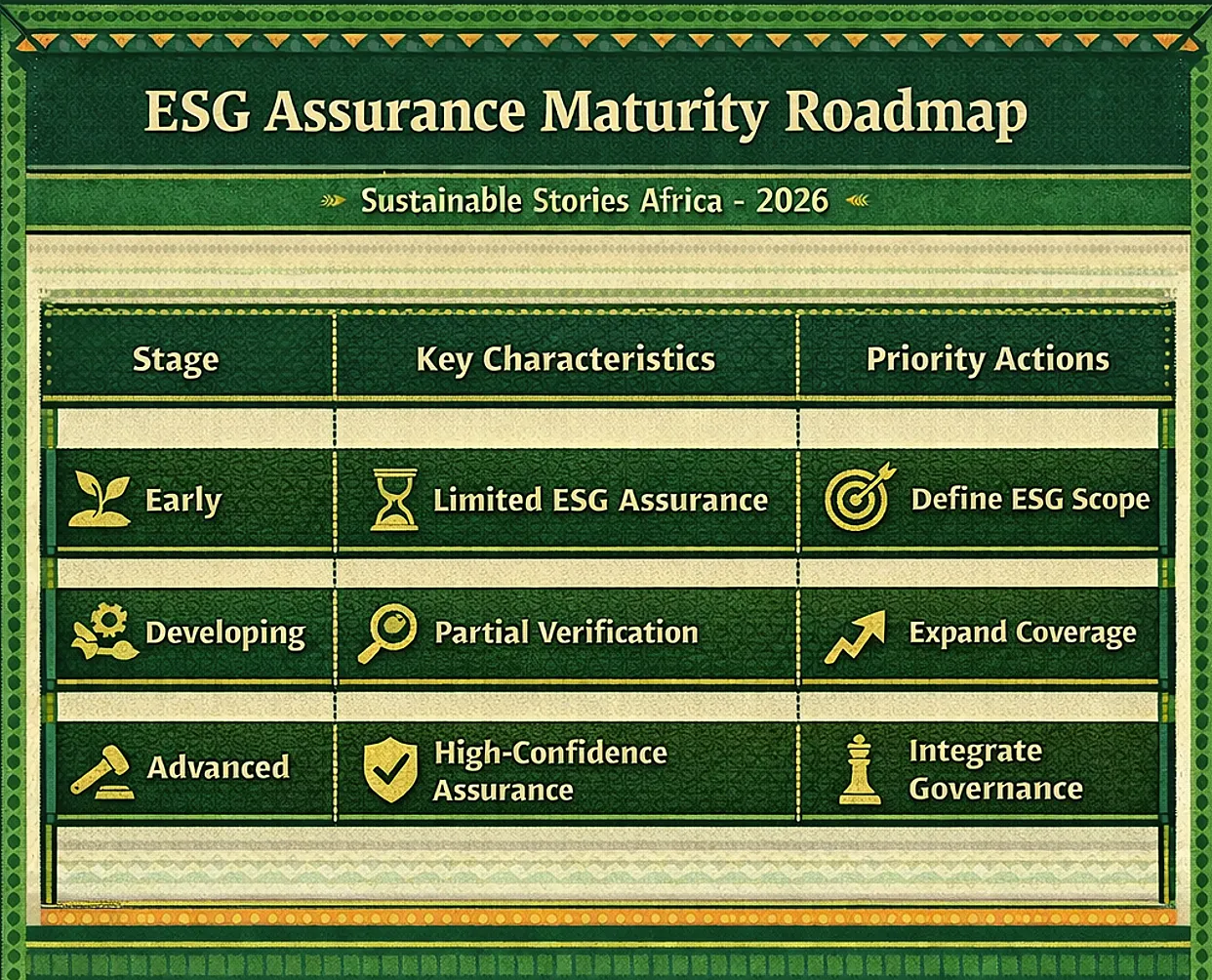
As regulations tighten, organisations that delay assurance upgrades risk falling behind peers and losing stakeholder trust.
PATH FORWARD – From Disclosure to Credibility
ESG assurance is fast becoming a defining measure of corporate credibility. Regulators, investors, and consumers increasingly expect sustainability claims to be independently verified.
By strengthening assurance scope, governance, and standards alignment, organisations can move from symbolic reporting to trusted, decision-grade ESG disclosures.