
Workplace conflict remains one of the most persistent sources of stress for employees and managers, driven largely by poor communication, unclear expectations, and unresolved tensions.
Surveys show that over 40% of adults cite colleagues or superiors as their primary source of interpersonal stress.
Experts say conflict is not inevitable. With simple, intentional communication techniques, ranging from listening without interruption to speaking with positivity and clarity, leaders can transform workplace relationships, improve performance, and build healthier organisational cultures.
When Words Shape Workplace Outcomes
Manager Kim is frustrated. His employees misunderstand instructions, make repeated mistakes, and respond with excuses. Conversations often begin with sharp corrections.
On the other side, staff member Jeong lies awake at night, discouraged by vague guidance and irritated responses to simple questions. Despite working hard, he feels unheard.
Their experience reflects a wider reality. A survey of 1,000 adults by data consulting firm PMI found that colleagues and superiors are the most common source of interpersonal stress (41.5%).
The leading reasons for poor communication (51.6%), followed by repeated, unresolved conflicts (46.4%).
Experts argue that workplaces are not just operational spaces; they are social ecosystems shaped by hierarchy, expectations, and dialogue. How leaders speak can either deepen tension or build trust.
Veteran broadcaster Han Seok-jun believes the difference lies in the communication technique.
"The same words," he says, "can make you a relic or a respected superior, depending on how you say them."
Conflict Begins With Miscommunication
Workplace conflict often begins with a misunderstanding rather than an intentional act. When instructions are unclear, feedback feels personal, or questions are met with irritation, trust erodes. Employees feel ignored. Managers feel unheard. Performance suffers.
According to the PMI survey:
| Stress Source | Share (%) |
|---|---|
| Colleagues or superiors | 41.5% |
| Family | 19.2% |
| Neighbours/acquaintances | 16.8% |
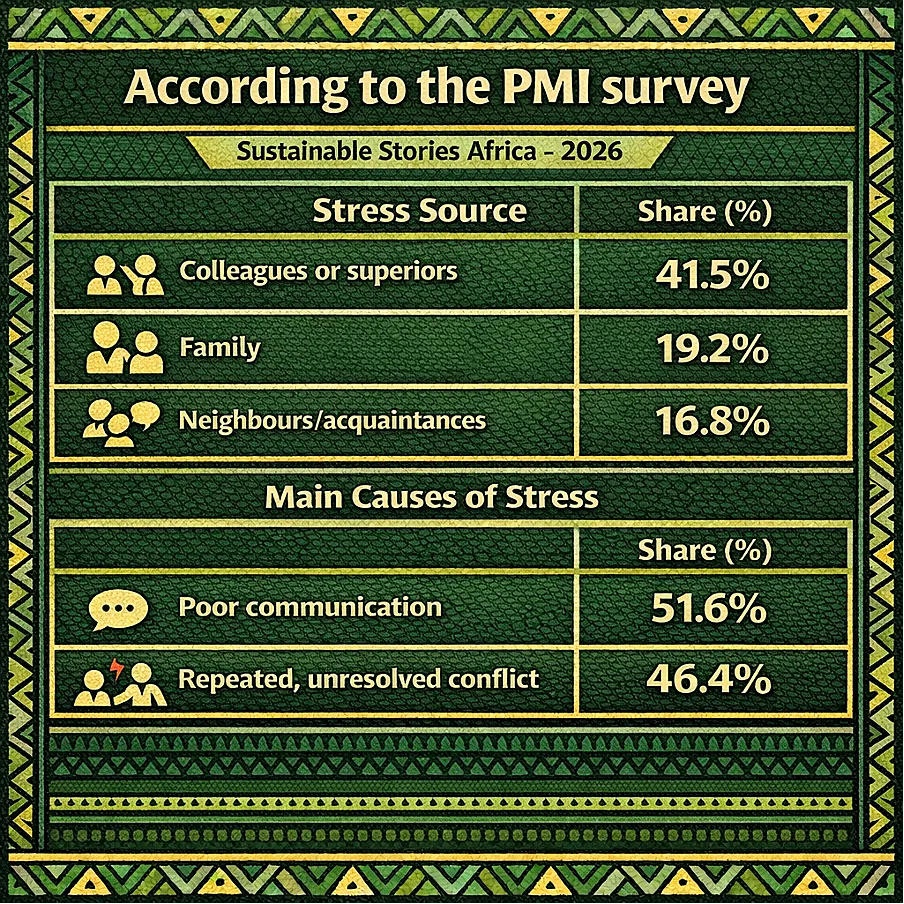
These numbers reveal a clear pattern: communication, not workload, drives much of today's workplace tension.
Five Techniques Reduce Daily Friction
Han Seok-jun, an announcer with 26 years of experience and author of Speaking Class and The Art of Conversation, outlines five practical techniques that can reduce workplace conflict.
- Do not interrupt others – Cutting people off mid-sentence signals dismissal. Phrases like "That's not what I meant" or "You don't understand" make employees feel ignored. Instead, managers should focus on the correction itself, rather than personal comparisons. The goal is shared performance, not emotional release.
- Simple Explanation – If people don't understand, the issue may be about clarity, not intelligence. Starting with conclusions and using plain language improves comprehension. Effective communicators make complex ideas feel simple.
- Speak positively – Negative speech undermines even the most diligent professional ability. Encouraging language builds trust, especially when responding to new ideas. Leaders like NVIDIA CEO Jensen Huang use optimism to inspire vision without sounding outdated.
- Match language to rank – Junior leaders should explain details. Senior leaders should speak in broader strategic terms. Authority comes from vision, not volume.
- Summarise in three points – Executives should speak conversationally and present ideas in three clear points. Apple's reporting culture under Steve Jobs emphasised simplicity over length.
Better Communication Builds Performance
Positive communication does more than reduce conflict; it improves results. When employees understand expectations, feel respected, and receive constructive feedback, they perform more effectively.
Clear messaging:
- Reduces repeated mistakes
- Strengthens trust
- Improves morale
- Encourages idea-sharing
- Builds leadership credibility
As Han notes, experience can either divide or connect generations. Leaders who share lessons without sounding dismissive foster more inclusion. Those who speak with vision rather than nostalgia inspire momentum.
In high-pressure workplaces, tone often matters as much as content. Words shape culture.
Simple Habits Create Lasting Change
Managers do not need expensive training programmes to improve communication. Small changes make a big difference:
| Technique | Immediate Impact |
|---|---|
| Listening fully | Builds respect |
| Speaking simply | Improves clarity |
| Using positive language | Boosts morale |
| Adapting tone to rank | Enhances authority |
| Three-point summaries | Improves retention |

When leaders stop interrupting, simplify their language, and communicate with optimism, workplaces become calmer, more productive environments.
PATH FORWARD – Clear Words, Stronger Workplaces
Organisations must treat communication as a leadership skill, not a personality trait. Managers who listen, simplify, and speak positively reduce conflict and improve performance.
By adopting structured, respectful communication habits, companies can transform everyday interactions into tools for collaboration, clarity, and growth.
Culled From: Five techniques to reduce workplace conflict