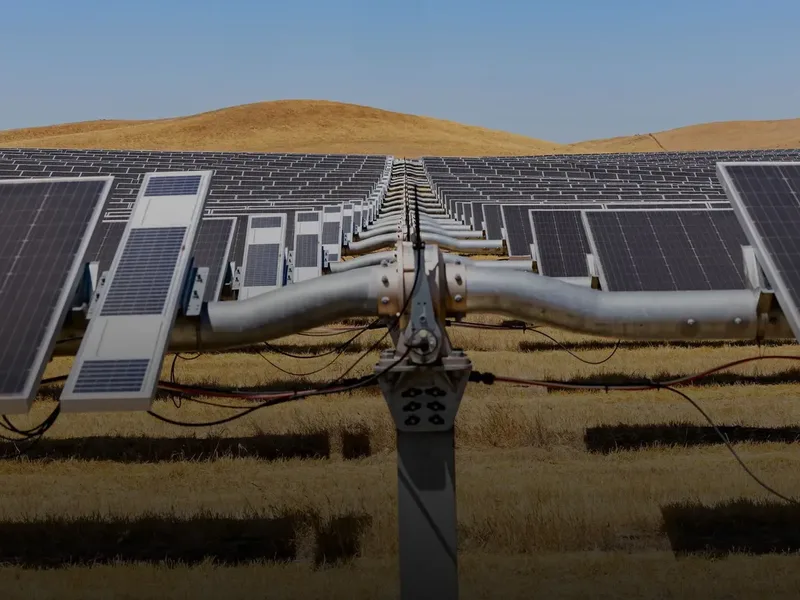
Green bonds are rapidly transforming global capital markets, offering governments and companies a structured way to finance climate-friendly infrastructure while attracting ESG-focused investors.
From renewable energy to climate-resilient transport systems, these purpose-driven debt instruments are helping mobilise billions of dollars for sustainable development, a model increasingly relevant for Africa’s infrastructure and energy transition ambitions.
Financing Climate Futures Through Green Bonds
Global capital markets are undergoing a structural shift as sustainability becomes a defining factor in investment decisions.
At the centre of this transformation are green bonds, financial instruments designed specifically to fund environmentally sustainable projects.
Green bonds function similarly to conventional bonds but are issued with a clear commitment: proceeds must be directed toward projects that deliver measurable environmental benefits such as renewable energy, clean transport, or climate-resilient infrastructure.
For emerging markets, including those across Africa, green bonds are increasingly viewed as a practical pathway to mobilise long-term capital for infrastructure and climate adaptation while simultaneously strengthening corporate credibility and investor confidence.
Green Bonds Transform Global Capital Markets
Green bonds have emerged as one of the fastest-growing instruments in sustainable finance.
Designed as debt securities used to raise funds for environmentally friendly projects, they allow governments, development banks, and corporations to channel capital toward climate solutions.
Unlike traditional financing tools, green bonds link investment returns with measurable environmental outcomes.
Investors purchase the bonds and receive regular interest payments, while issuers allocate the proceeds exclusively to qualifying green projects.
The result is a financial mechanism that aligns investor returns with environmental objectives, proving that sustainability and profitability can coexist within modern capital markets.
Why Climate Financing Demand Accelerates
Several structural trends are driving the rapid growth of green bonds globally.
First is the surging demand for climate investment. Governments and corporations are under increasing pressure to finance renewable energy systems, climate adaptation infrastructure, and low-carbon transport networks.
Second is the rise of ESG-driven investment mandates. Institutional investors, including pension funds, sovereign wealth funds, and asset managers, are seeking portfolios that meet sustainability criteria while delivering stable financial returns.
Third is the expanding role of government sustainability commitments, which encourage capital markets to support climate transition policies.
Core Characteristics of Green Bonds
Feature | Description |
|---|---|
Instrument Type | Debt securities are used to raise capital |
Primary Purpose | Financing environmentally sustainable projects |
Common Uses | Renewable energy, climate adaptation, clean transport, and sustainable infrastructure |
Key Participants | Governments, corporations, development banks, and multilateral institutions |
Investor Returns | Fixed interest payments similar to conventional bonds |
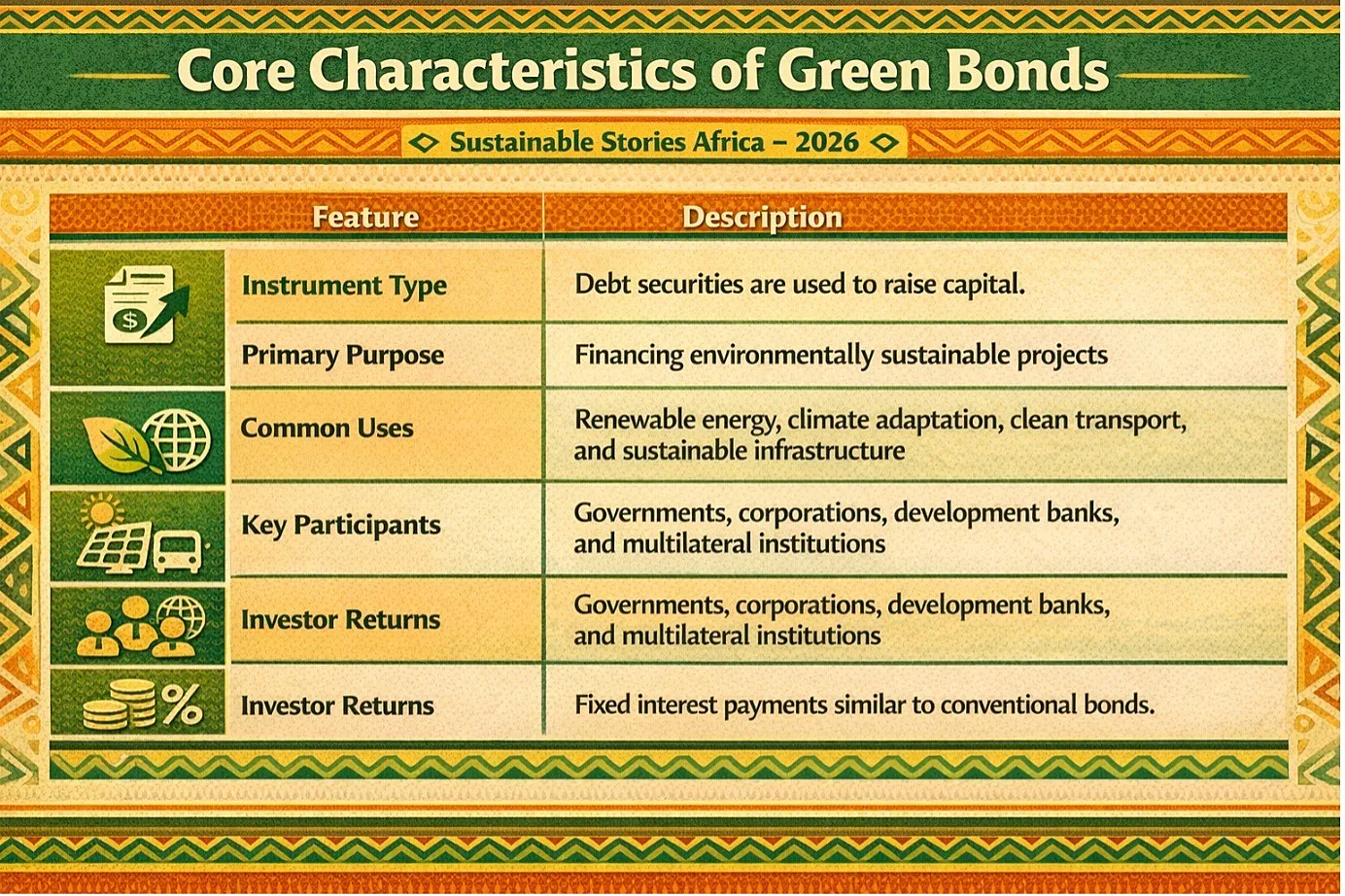
Green bonds, therefore, sit at the intersection of climate policy, capital markets, and infrastructure investment, creating a powerful financial tool for sustainable growth.
Investors And Issuers Find Shared Value
The attraction of green bonds lies in the dual benefits they provide to issuers and investors.
For issuers, green bonds open access to a growing pool of global ESG investors.
They can also enhance a company’s sustainability reputation and, in some cases, reduce borrowing costs by attracting demand from responsible investment funds.
For investors, green bonds provide stable returns while supporting environmental objectives.
They also offer portfolio diversification and alignment with institutional ESG mandates.
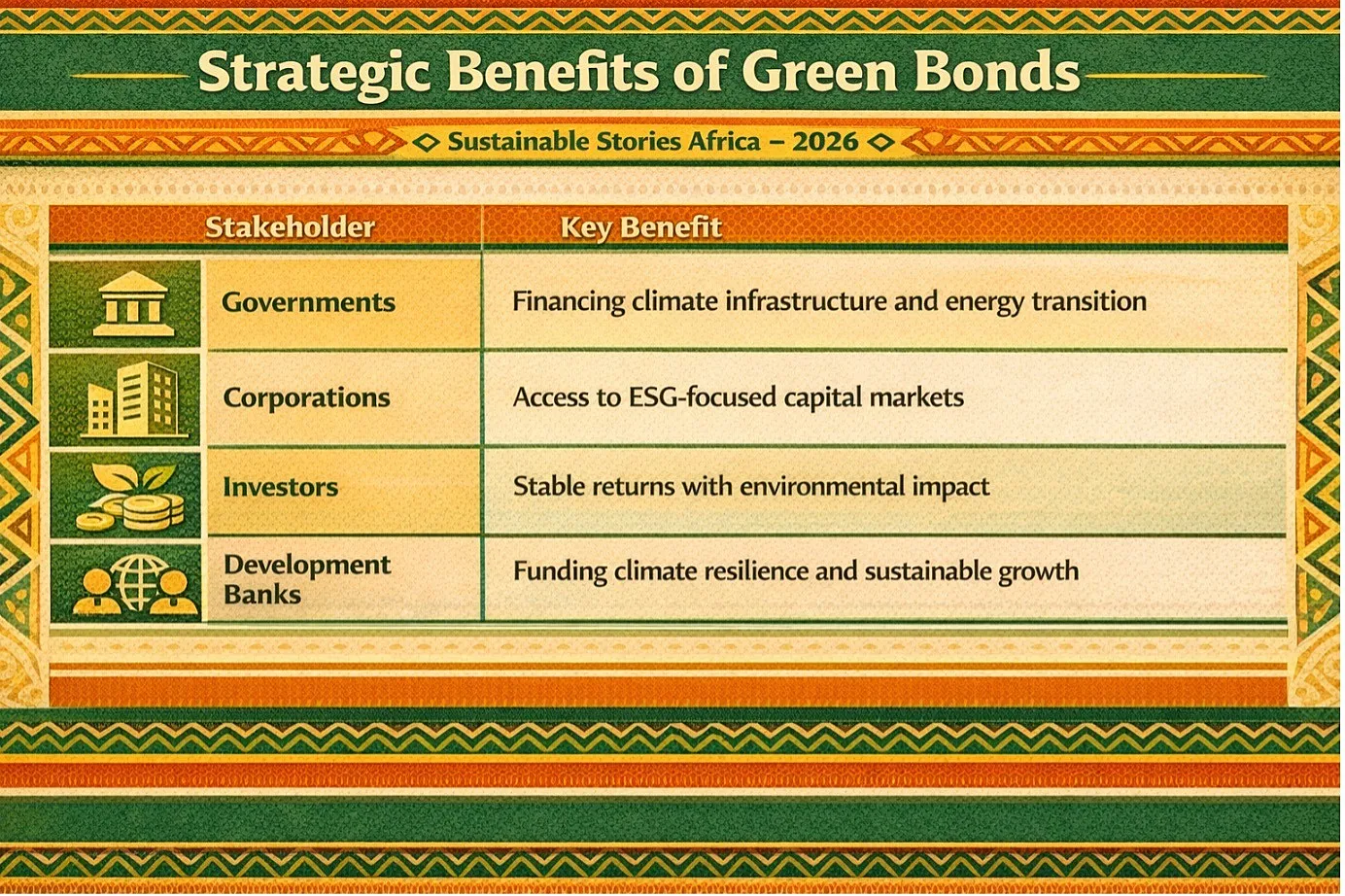
Strategic Benefits of Green Bonds
Stakeholder | Key Benefit |
|---|---|
Governments | Financing climate infrastructure and energy transition |
Corporations | Access to ESG-focused capital markets |
Investors | Stable returns with environmental impact |
Development Banks | Funding climate resilience and sustainable growth |
However, the rapid expansion of green finance also raises critical governance questions. Concerns around greenwashing, inconsistent global standards, and challenges in verifying environmental impact remain significant risks that markets must address.
Credibility, transparency, and standardised reporting frameworks will therefore be essential to sustain investor trust.
Africa’s Opportunity in Sustainable Capital Markets
For African economies, the rise of green bonds presents a strategic opportunity.
The continent faces an enormous financing gap in areas such as renewable energy, sustainable transport systems, and climate-resilient infrastructure. Traditional financing alone cannot close this gap.
Green bonds could help unlock long-term institutional capital by linking infrastructure development with global ESG investment flows.
Countries such as Nigeria, Kenya, and South Africa have already begun issuing green bonds, signalling that African capital markets are gradually aligning with global sustainability finance trends.
If supported by strong regulatory frameworks and transparent reporting standards, green bonds could become a cornerstone of Africa’s climate finance architecture, enabling governments and corporations to raise capital while accelerating the energy transition.
Path Forward – Scaling Credible Green Finance Markets
Green bonds demonstrate how capital markets can mobilise investment for environmental progress while delivering financial returns.
Strengthening transparency, verification standards, and reporting frameworks will be critical to sustaining investor confidence.
For Africa, the next phase will require policy coordination, deeper capital markets, and credible ESG governance systems to ensure green finance flows into the infrastructure and climate projects that shape the continent’s sustainable future.