The world is running dry, and the global economy is paying the price.
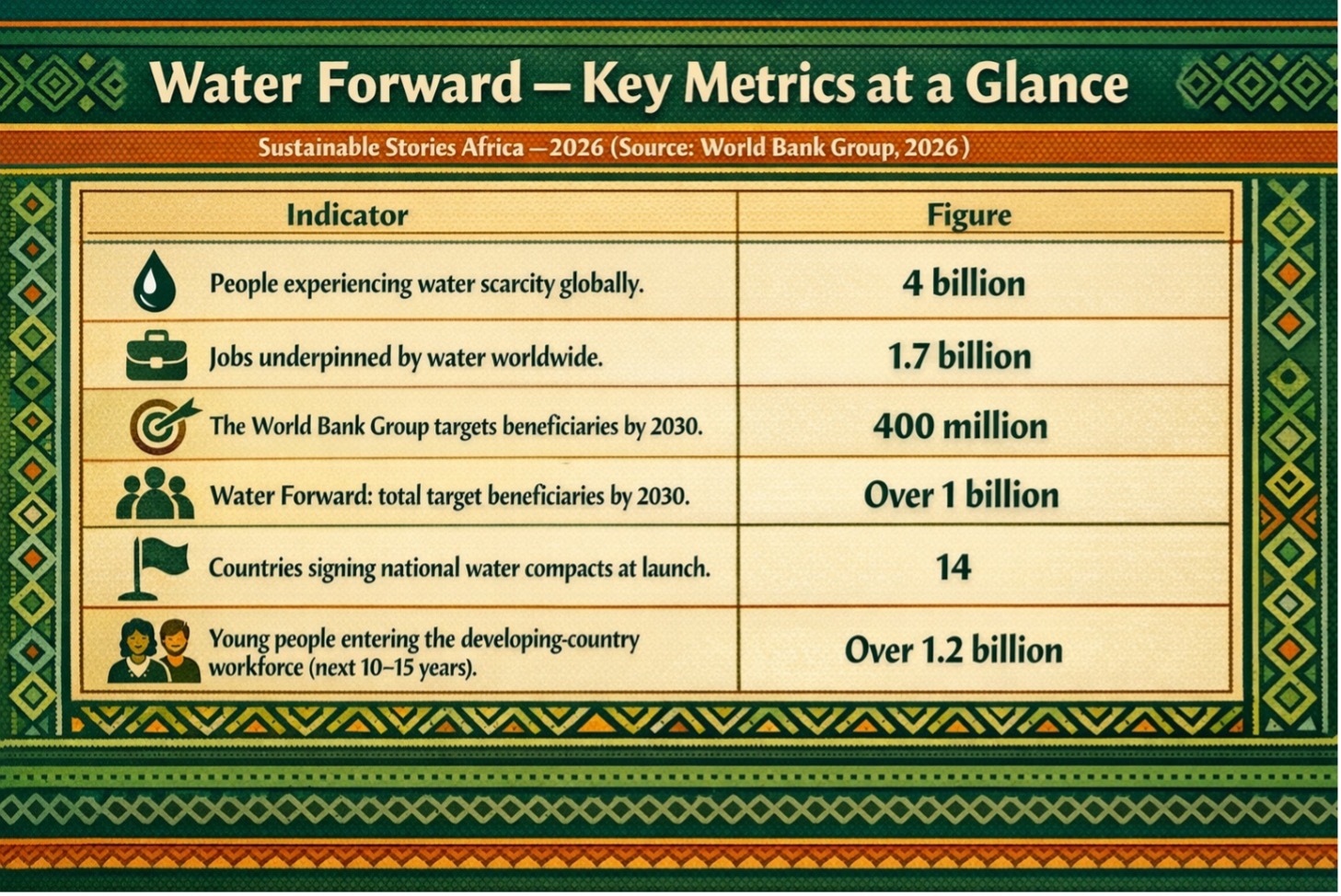
On April 15, 2026, the World Bank Group launched Water Forward, a transformative platform to deliver water security to more than one billion people by 2030. With 4 billion people facing water scarcity and 1.7 billion jobs at risk, the question is no longer whether water is an economic issue.
The question is: who will act, how fast, and with what resources?
Water, Jobs, and a Crisis Hiding in Plain Sight
The 2026 IMF and World Bank Spring Meetings in Washington, D.C., convened finance ministers, central bankers, development institutions, and private-sector leaders from April 13 to 18 against a backdrop of mounting global anxieties, including increasing debt, slowing growth, and the intensifying bite of climate change.
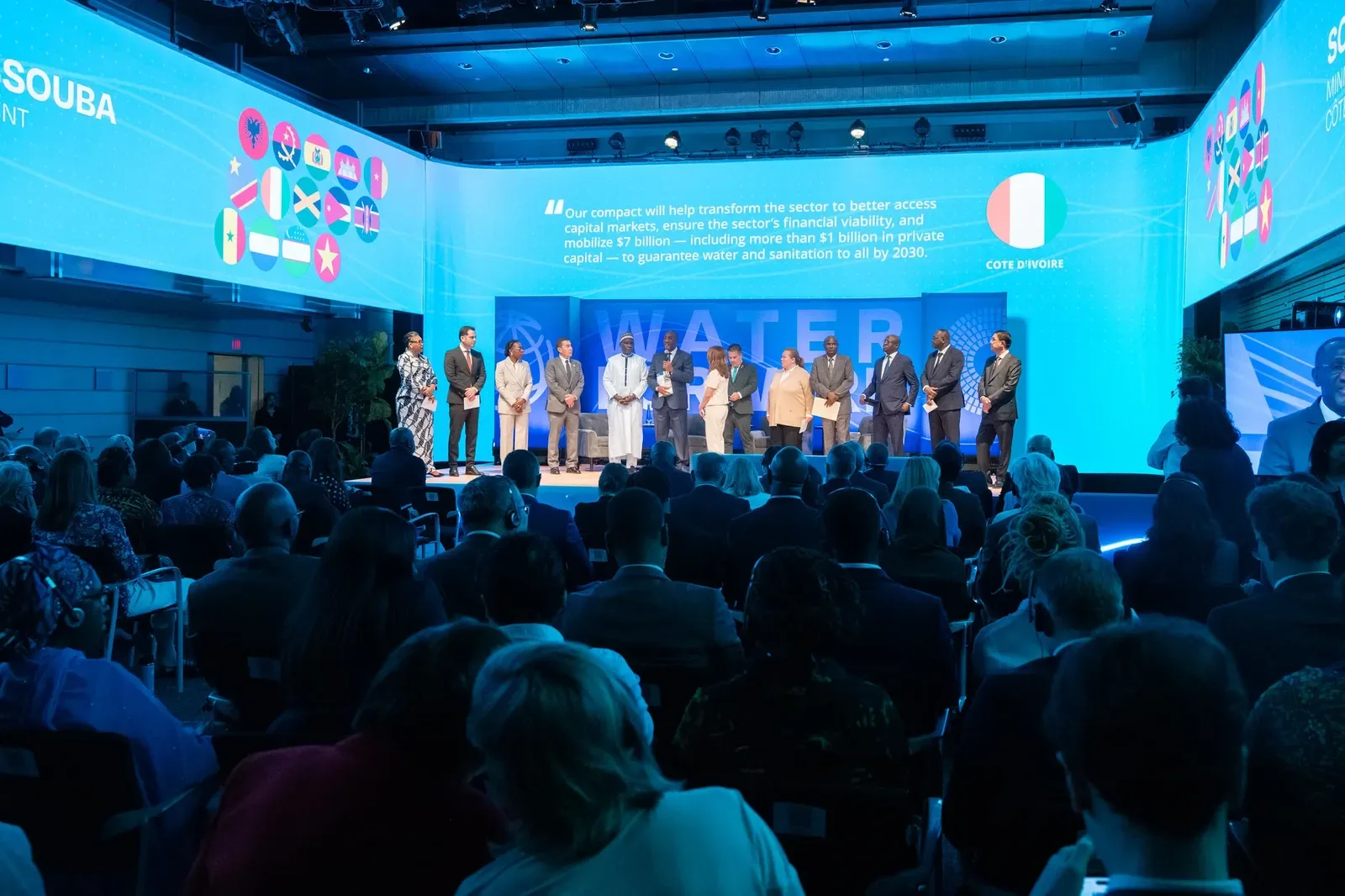
However, amid the high-level sessions and bilateral negotiations, one launch cut through the economic noise with a clarity that few could dismiss: Water Forward.
Unveiled on April 15, Water Forward is a global platform built on a simple but urgent premise, that water security is not a humanitarian addendum to economic policy, but its very foundation.
For Africa and the broader Global South, where water stress already limits agricultural output, constrains energy generation, and drains public health budgets, the stakes could not be higher.
The initiative signals a decisive shift in how multilateral institutions frame water: no longer as a sectoral concern managed in isolation, but as a systemic economic enabler requiring the same coordinated policy, finance, and governance architecture that other critical infrastructure commands.
Four Billion People, Zero Margin for Delay – A crisis too costly to ignore any longer.
Four billion people experience water scarcity today. That is not a projection; it is the present reality.
However, water quietly underpins an estimated 1.7 billion jobs globally, spanning agriculture, energy, industry, and services. When water systems fail, those jobs do not simply pause; they disappear. Farms dry up, factories shut down, and cities stagnate.
"Water is foundational to how economies function. When water systems work, farmers produce, businesses operate, and cities attract investment. Our task now is to align reform, financing, and partnerships to deliver reliable water services at scale," said Ajay Banga, President of the World Bank Group, at the launch.
Water Forward was designed precisely to answer that call. With more than 1.2 billion young people set to enter the workforce in developing countries over the next 10 to 15 years, reliable water infrastructure is not just a social good; it is the single most critical prerequisite for job creation at scale.
For African economies, where youth unemployment already runs at structurally dangerous levels, the connection between water security and economic inclusion is direct and immediate.
The Architecture of a Global Water Platform – Compacts, coalitions, and country-led reform.
Water Forward is not a fund; it is a platform for alignment. At its centre are country-led water compacts, in which governments set their own reform priorities, commit to strengthening institutions and map investment pathways for their water sectors. At the 15 April launch, 14 countries announced national compacts, with more in the pipeline.
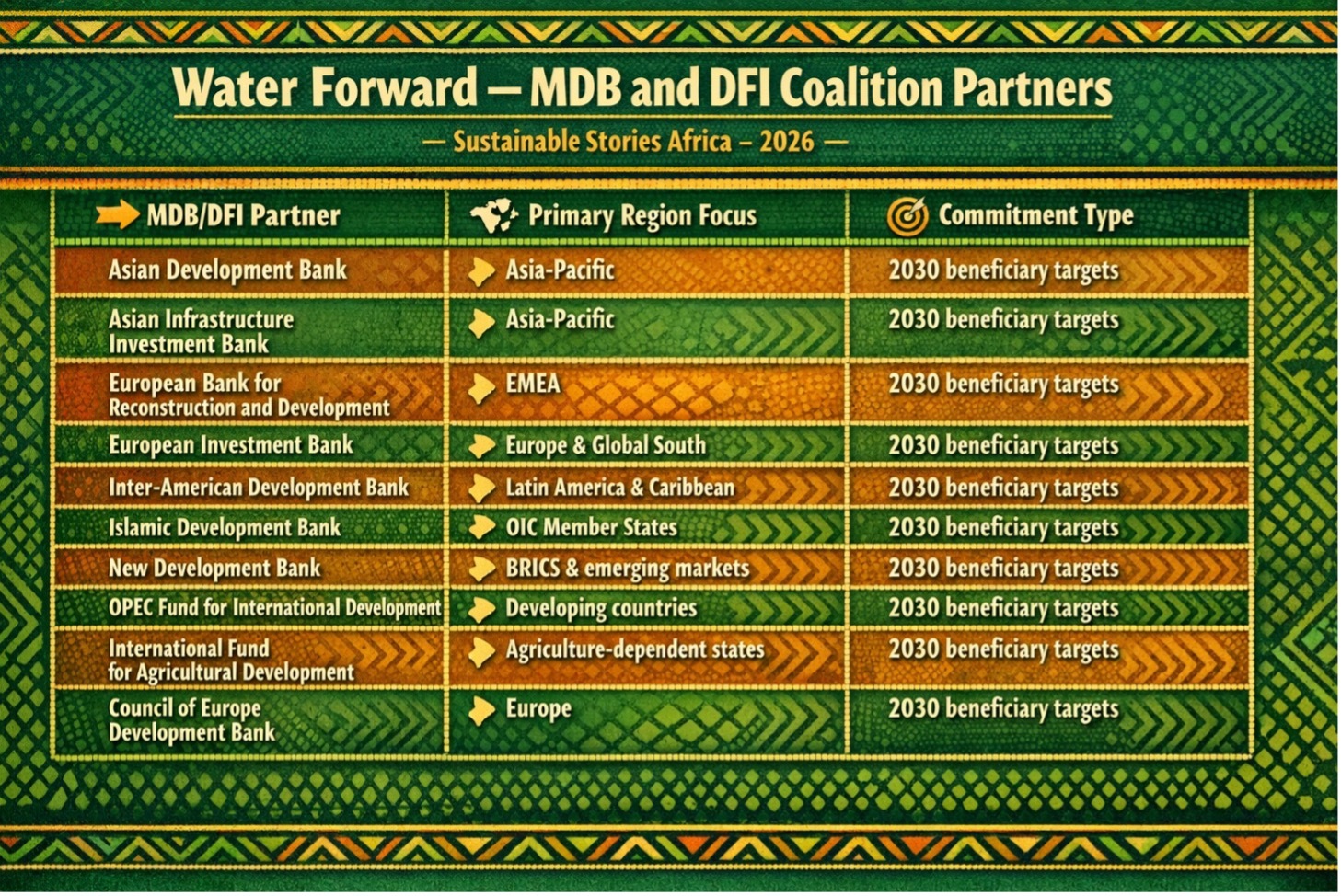
The initiative has drawn a broad coalition of multilateral development banks and development finance institutions, each setting 2030 beneficiary targets.
The World Bank Group has pledged to bring water security for 400 million people by 2030, with partner efforts expected to push total reach above one billion. For water-stressed regions in Sub-Saharan Africa and South Asia, this signals a long‑needed acceleration after decades of fragmented finance and weak utilities.
Water Forward’s core bet is that aligning policy reform, institutional capacity and investment readiness in a single pathway can finally unlock scale.
The African dimension of the launch also drew attention with a high-level side event held on April 14, organised by the African Union Permanent Mission and AfriCatalyst, focused on unlocking investment and strengthening Africa–U.S. private sector partnerships.
The African Water Facility, headquartered in Abidjan, was cited as a key mobilisation mechanism for deploying financial and human resources across the continent.
What a Water-Secure Future Looks Like – Productivity, prosperity, and a liveable planet.
Water Forward’s promise is concrete, not rhetorical. Countries that use the platform to coordinate water reforms, such as strengthening utilities, tightening regulation and developing bankable projects, can unlock broad economic gains.
The Reliable supply of water underpins agricultural productivity, manufacturing output, reduced public health costs and stronger climate resilience for vulnerable communities.
For African and other emerging markets, the stakes are particularly high. Water scarcity is already estimated to shave several percentage points off Sub‑Saharan Africa’s GDP through lost farm yields, health impacts and constrained industry.
By aligning reform and finance through country‑owned compacts, Water Forward offers a replicable template for reversing that drag.
A core aim is to mobilise private capital by improving utility performance, building credible project pipelines and derisking entry for institutional investors, green bond issuers and impact funds.
Civil society partners such as Water.org, through initiatives like “Get Blue”, reinforce the focus on household‑level access, not just national metrics.
Governments, Investors, and Institutions Must Move – From commitment to delivery: the work starts now.
The launch of Water Forward was a statement of intent. Translating it into impact requires specific, time-bound actions from multiple actors.
- For governments, particularly in Africa and the Global South, the immediate call is to finalise and operationalise national water compacts that go beyond symbolic commitments. This means enacting policy reforms that strengthen regulatory frameworks, ensure utilities achieve operational and financial sustainability, and embed water security as a measurable priority within national development planning and climate finance strategies.
- For multilateral development banks and DFIs, the task is to accelerate disbursement pipelines, reduce bureaucratic lead times, and ensure that concessional and blended finance reaches the front lines of water infrastructure delivery, rural distribution networks, small-town utilities, and drought-resilient irrigation systems that serve smallholder farmers across the continent.
- For the private sector, the compact model offers a new opening. Countries that demonstrate institutional credibility and reform momentum will attract the long-term capital that water systems require. Institutional investors, infrastructure funds, and ESG-aligned capital pools should treat Water Forward's investment-readiness pipeline as a structured entry point rather than a wait-and-see opportunity.
- For civil society and communities, particularly those in water-stressed regions, this is a moment to demand accountability. Water Forward's country compacts create a new layer of public commitment that civil society organisations can monitor, challenge, and champion, holding governments and financiers to the delivery targets they have publicly endorsed.
Path Forward – Securing the Promise of Water for All
Water Forward marks the most coordinated attempt yet to position water as a driver of growth, jobs and human development, not just a social service.
Its country compact model, backed by aligned multilateral development bank finance and structured private-sector engagement, creates a real architecture for faster delivery, if political will and institutional follow-through hold.
For Africa, the stakes are urgent: water security and economic transformation are inseparable.
Momentum from the 2026 Spring Meetings must translate to funded projects, reformed utilities and measurable gains in water access by 2030, starting with the first 14 countries and those that follow.