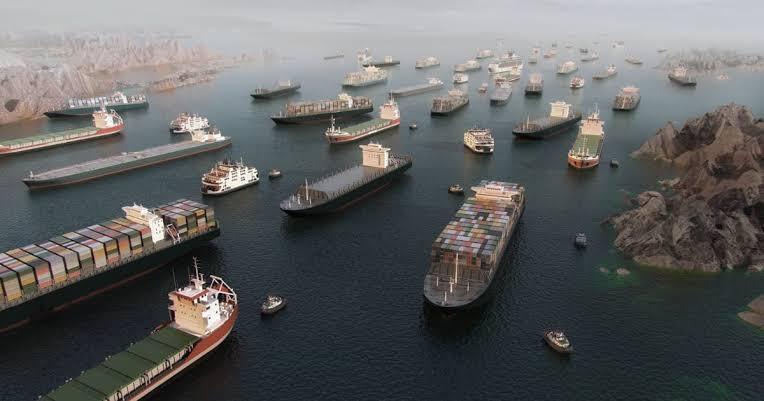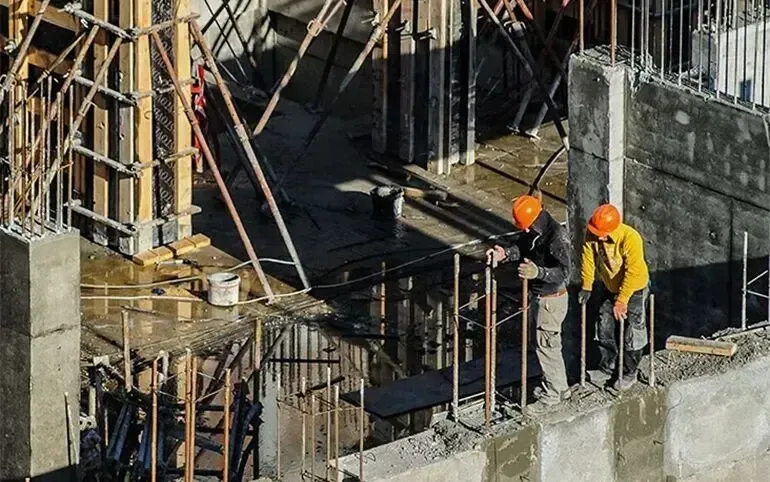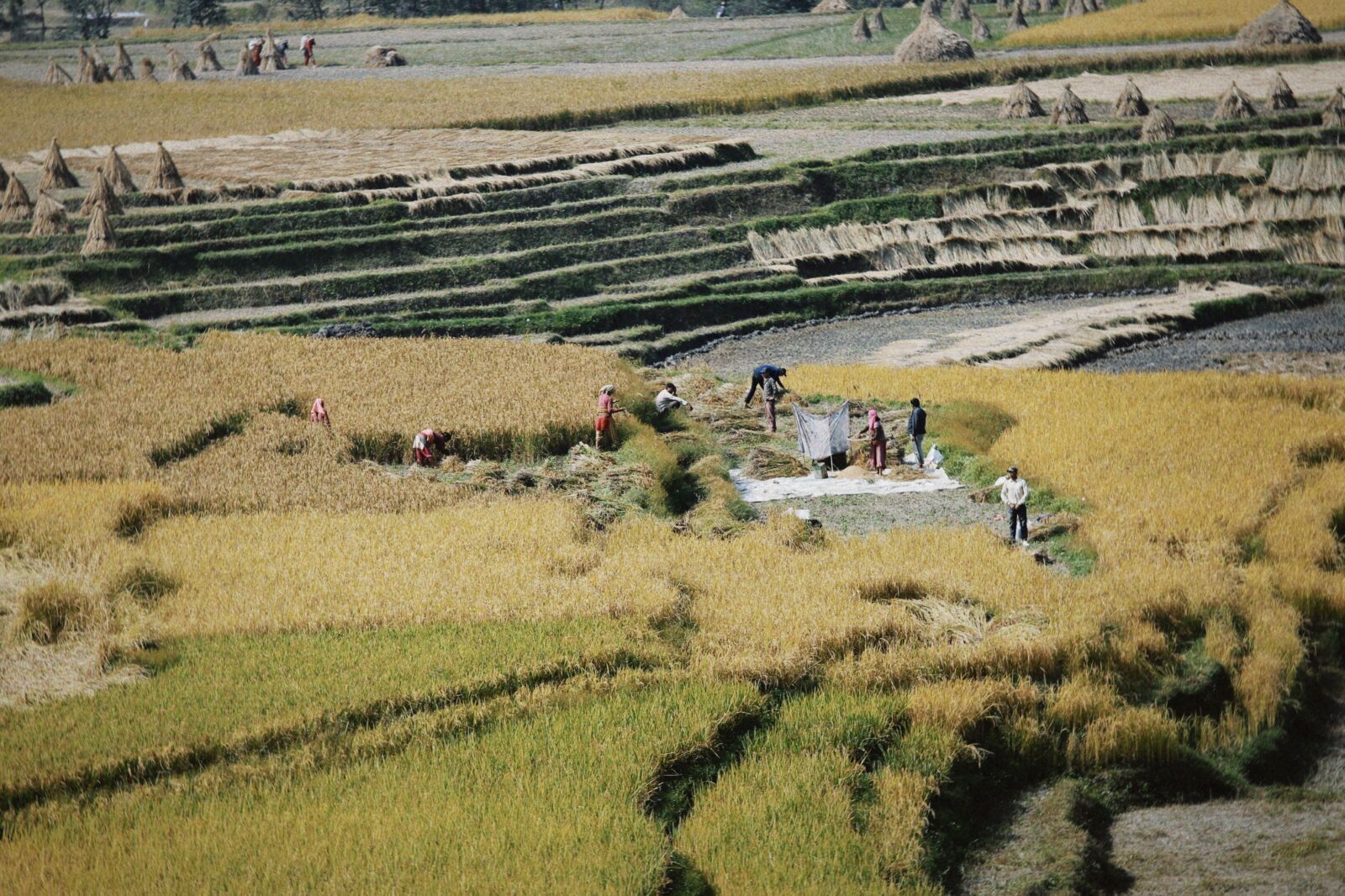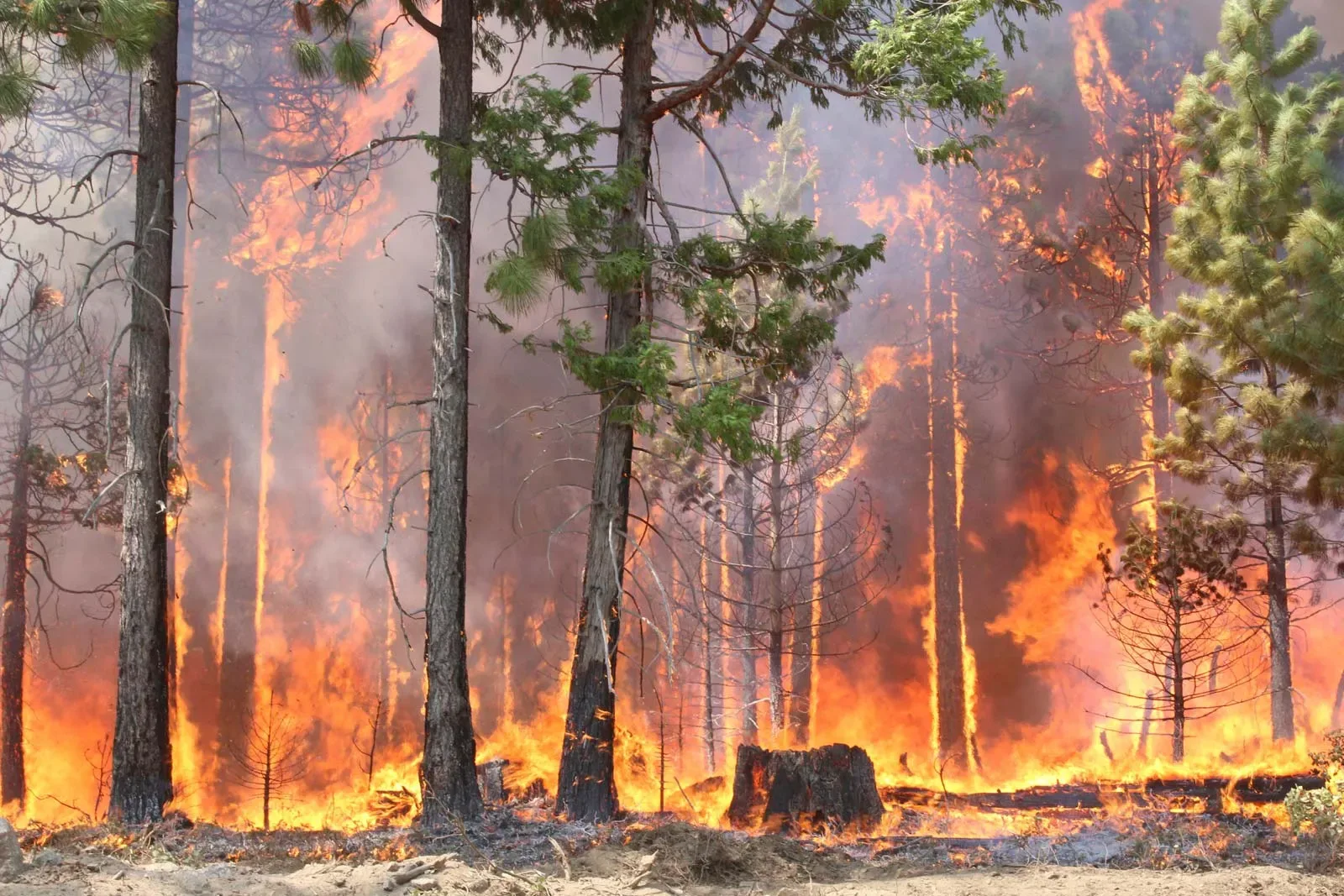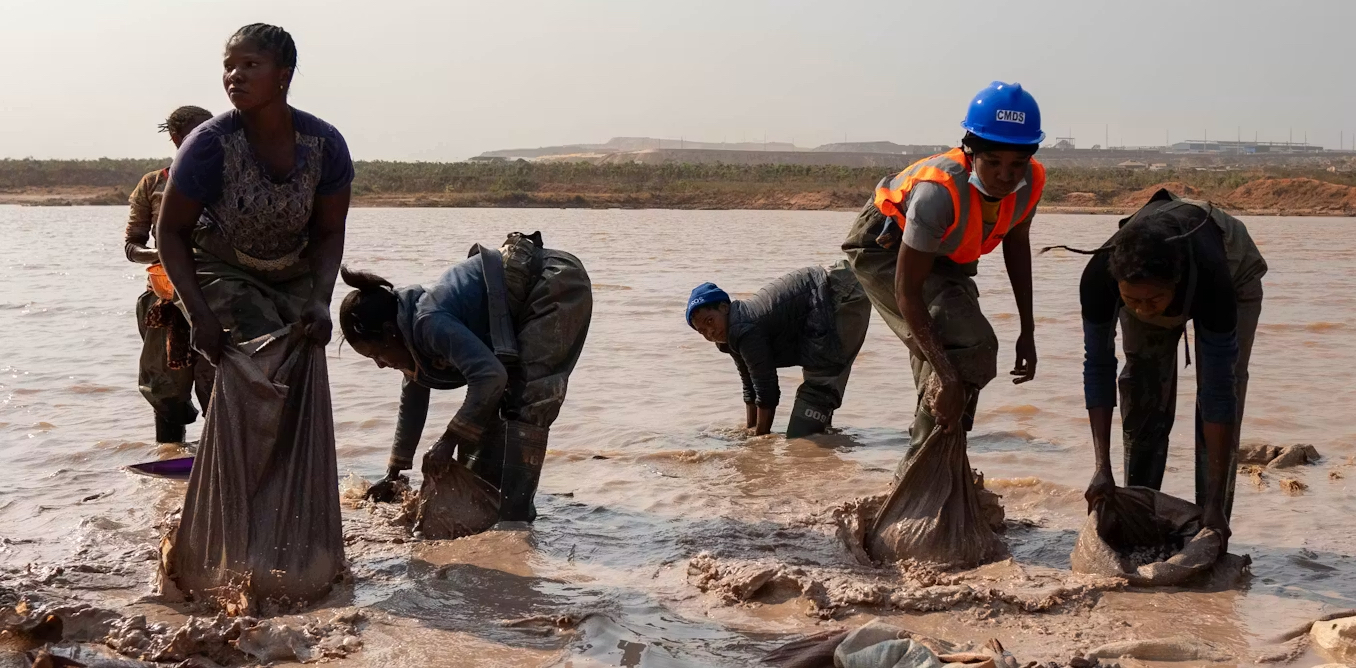
Nearly two-thirds of mining and metals facilities face high exposure to at least one physical water-risk indicator, according to a new ICMM dataset covering 12,000 facilities.
Africa’s drought exposure is especially severe, making shared water planning central to critical-mineral growth, community security and the energy transition.
Water Now Shapes Mining’s Growth Ceiling
The energy transition depends on increased quantities of copper, manganese, aluminium, steel, platinum-group metals and other materials.
A new global dataset warns that the facilities supplying those materials are already operating inside stressed, drought-prone, flood-exposed or highly variable water systems.
The International Council on Mining and Metals analysed the intersection of five physical water indicators with 12,000 mines, smelters, refineries and plants across 148 countries or regions.
It found that 66% of facilities are highly exposed to at least one indicator, while 5% face three or more independent pressures.
This is an exposure map, not a verdict on individual companies. The data show where facilities coexist with catchment-level hazards; they do not measure a mine’s withdrawals, pollution, management quality or operational loss.
Used carefully, however, the findings reveal where governments, investors, communities and operators need stronger planning before mineral demand rises further.
Two-Thirds Face At Least One Risk
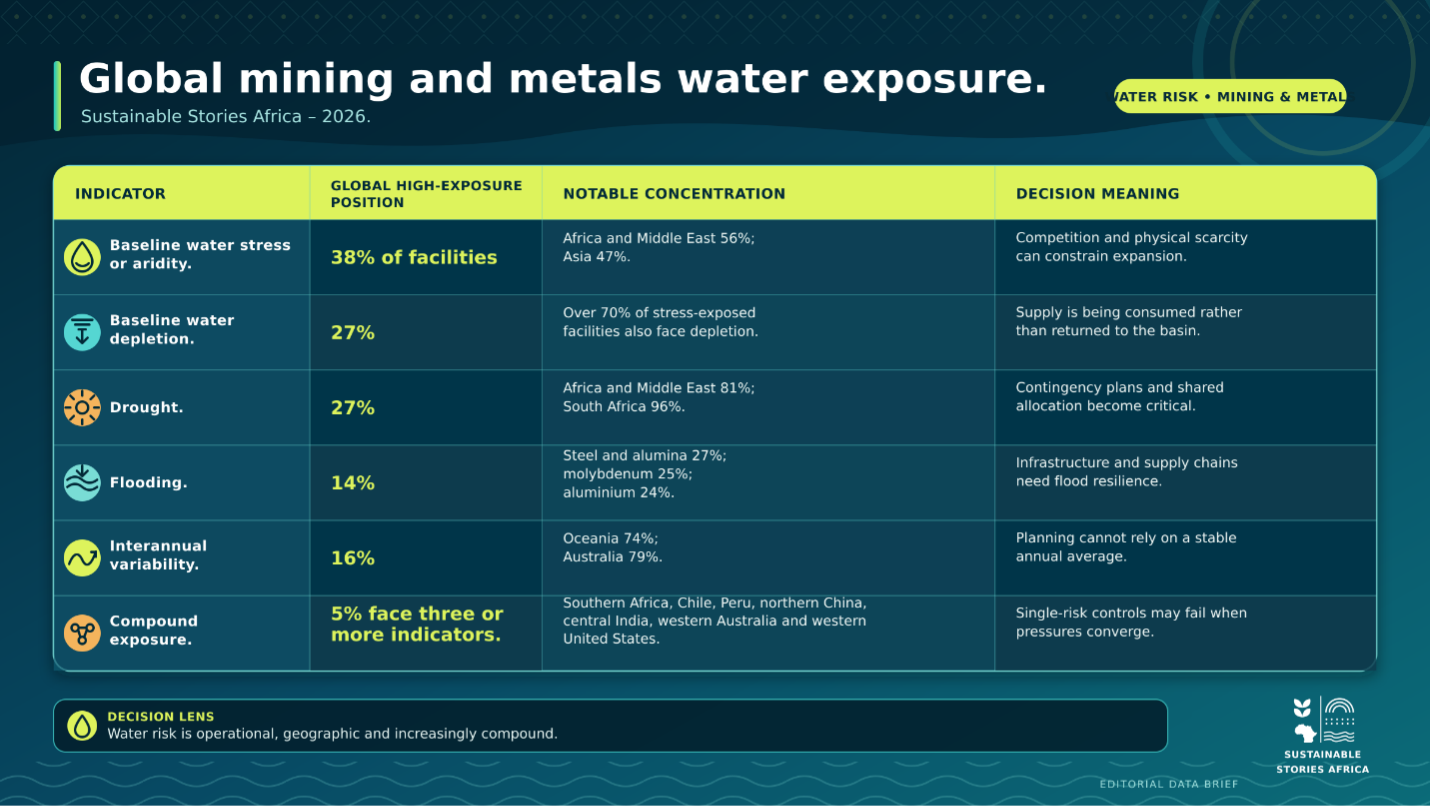
Baseline water stress is the most widespread pressure.
- 30% of facilities sit in catchments with high or extremely high competition for water
- 8% are in arid areas where water is functionally unavailable.
More than 70% of this exposed group also faces high baseline water depletion, which affects 27% of all facilities.
Stress and depletion describe related but different conditions.
- Stress compares total demand with renewable surface and groundwater supply.
- Depletion measures the share of water consumed and not returned to the basin.
When they overlap, users are not only competing for water; available reserves are being drawn down faster than they are replenished.
- Drought is the second-most prevalent high-exposure indicator at 27% globally.
- Flood risk affects 14%, while 16% face high or extremely high year-to-year variability in water supply.
These averages conceal sharp geographic and commodity differences.
Africa’s Drought Exposure Demands Closer Scrutiny
The strongest African signal is drought.
ICMM found that 81% of mining and metals facilities across Africa and the Middle East face high or very high drought exposure, against a global average of 27%.
- In South Africa, 415 of 431 facilities, approximately 96%, carry this risk.
- Zambia and Ghana report 100% exposure across 40 and 47 facilities respectively, figures that should be read alongside sample size rather than as universal proof of operational impact.
- Morocco shows 85% exposure across 22 facilities
- The Democratic Republic of Congo records 84% across 54.
Commodity geography matters:
- Platinum-group elements show 74% global drought exposure
- Chromite 60%
- Diamonds 57%
Concentrated largely in southern Africa, materials critical to catalytic converters, stainless steel, batteries, and clean-energy technologies.
Compound exposure adds complexity
- 31% of diamond facilities face at least three independent high-risk indicators
- Manganese 21%
- Copper 9%.
This is against a 5% global average, meaning single efficiency projects cannot resolve multi-layered risk.
The human dimension remains decisive. Water access is a shared right; technically efficient mines can still face conflict if surrounding communities experience scarcity amid opaque decision-making.
Stewardship Can Protect Operations And Communities
Water stewardship starts by treating the catchment, not the fence line, as the decision unit.
- Operators need to understand other users, environmental flows, seasonal variability and future development plans.
- Governments need integrated land and water allocation so that mining approvals, agriculture, cities and ecosystems are not planned separately against the same finite supply.
For companies, stronger water performance can protect production, permits and social licence.
- Recycling, lower-quality water use, tailings innovation, leak reduction and resilient storage can reduce exposure when suited to local conditions.
- Transparent baselines and community participation can also improve trust before drought or flood forces emergency decisions.
Investors and customers can reward credible stewardship by examining catchment context;
- Water balances, scenario analysis, capital expenditure, grievance mechanisms and shared outcomes.
A company should not receive sustainability credit merely because a site lies outside a high-risk polygon, nor should it be condemned solely because a facility is inside one.
Management quality and local evidence remain essential.
Planning Must Move Beyond Individual Mine Sites
Governments should begin with basin-level mineral and water plans;
- Mapping current and proposed facilities, community demand, agriculture, ecological needs, climate scenarios, and infrastructure capacity, with approval processes testing cumulative effects rather than isolated projects.
Companies should publish site-relevant water data;
- Withdrawals by source, consumption, discharge, quality, recycling, targets, and incidents, alongside catchment conditions, with plans addressing both drought and flood response since scarcity and excess can threaten operations at different times.
Communities require;
- A structured role in allocation and monitoring, with consultation beginning before designs are fixed, accessible grievance systems, and shared infrastructure agreements defining affordability, ownership, maintenance, and service priorities during scarcity.
Financial institutions;
- Should integrate physical water risk into credit, insurance, and valuation, combining global screening tools with site studies and community evidence, ensuring covenants measure outcomes borrowers can influence.
Finally, researchers;
- Should close dataset gaps; ICMM excludes artisanal mining, inactive sites, and water-quality indicators, with public data covering only 7,104 of 12,000 facilities, treating this as a foundation, not a final ranking.
Path Forward – Water Security Must Anchor Mineral Strategy
Africa’s critical-minerals opportunity cannot be separated from drought, shared water demand and community rights.
Water risk must be established in mining strategy before projects are approved, financed or expanded.
The priority is coordinated basin planning, transparent site evidence, resilient infrastructure and genuine stewardship.
The energy transition needs minerals, but it also needs water systems capable of supporting people, ecosystems and industry together.