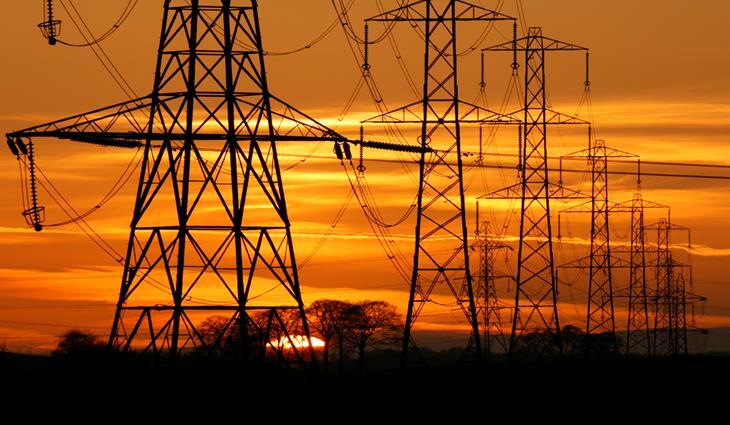
A major electrification initiative backed by $1.2 billion in financing aims to accelerate electricity access for millions of households still living without reliable power.
The programme targets underserved rural communities where energy shortages continue to constrain economic growth, education and healthcare delivery.
Policymakers and development financiers say expanding access to affordable electricity will be central to unlocking productivity and supporting long-term development across emerging markets.
Global Push To Expand Electricity Access
A large-scale electrification programme backed by $1.2 billion in financing is being rolled out to expand electricity access across energy-poor regions, targeting millions of households still living without reliable power.
The initiative forms part of a broader global push to close the electricity access gap that continues to affect hundreds of millions of people, particularly across Africa and parts of Asia.
According to international development estimates, over 600 million people in Africa remain without electricity, limiting economic productivity, constraining education and weakening health services.
The electrification programme combines public financing, development bank support and private-sector investment to deploy grid expansion, mini-grids and off-grid solar systems designed to reach rural and remote communities.
Policymakers say the goal is to accelerate energy access while building resilient power systems that can support local economic growth.
Infrastructure Investment Targets Energy Gap
The electrification initiative focuses on expanding infrastructure while strengthening energy distribution networks that can serve communities currently beyond the reach of national grids.
Many rural areas face high connection costs and limited infrastructure, making conventional grid expansion difficult. As a result, the programme includes a mix of solutions, from national grid extensions to decentralised energy systems such as mini-grids and solar home systems.
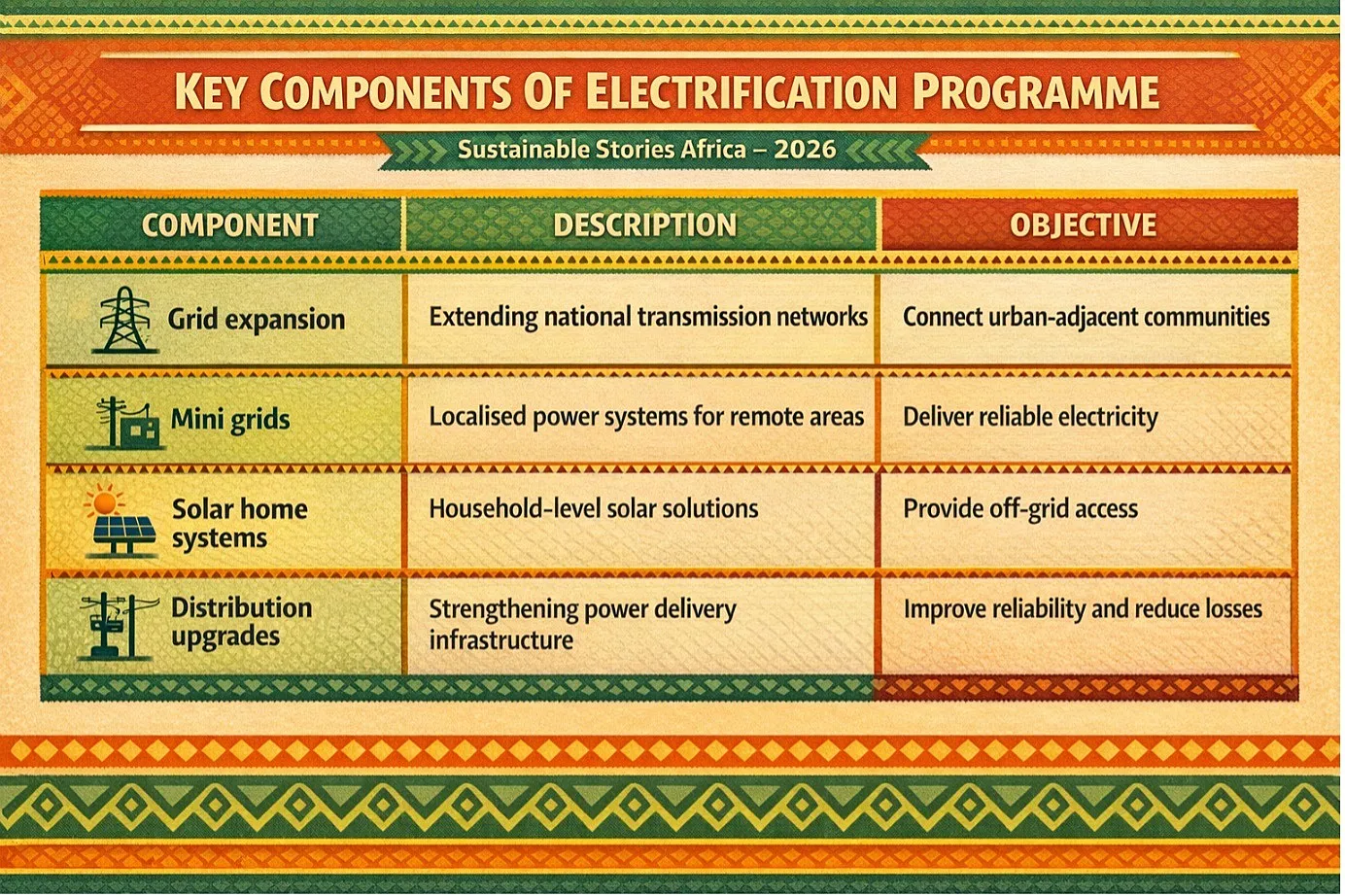
Key Components Of Electrification Programme
Component | Description | Objective |
|---|---|---|
Grid expansion | Extending national transmission networks | Connect urban-adjacent communities |
Mini grids | Localised power systems for remote areas | Deliver reliable electricity |
Solar home systems | Household-level solar solutions | Provide off-grid access |
Distribution upgrades | Strengthening power delivery infrastructure | Improve reliability and reduce losses |
Development agencies supporting the initiative say diversified energy systems will help reach communities faster than traditional grid expansion alone.
Electrification Impact Across Underserved Communities
Energy access is widely recognised as one of the most powerful drivers of economic development. Electrification enables businesses to operate longer hours, improves access to digital services and supports better education and healthcare outcomes.
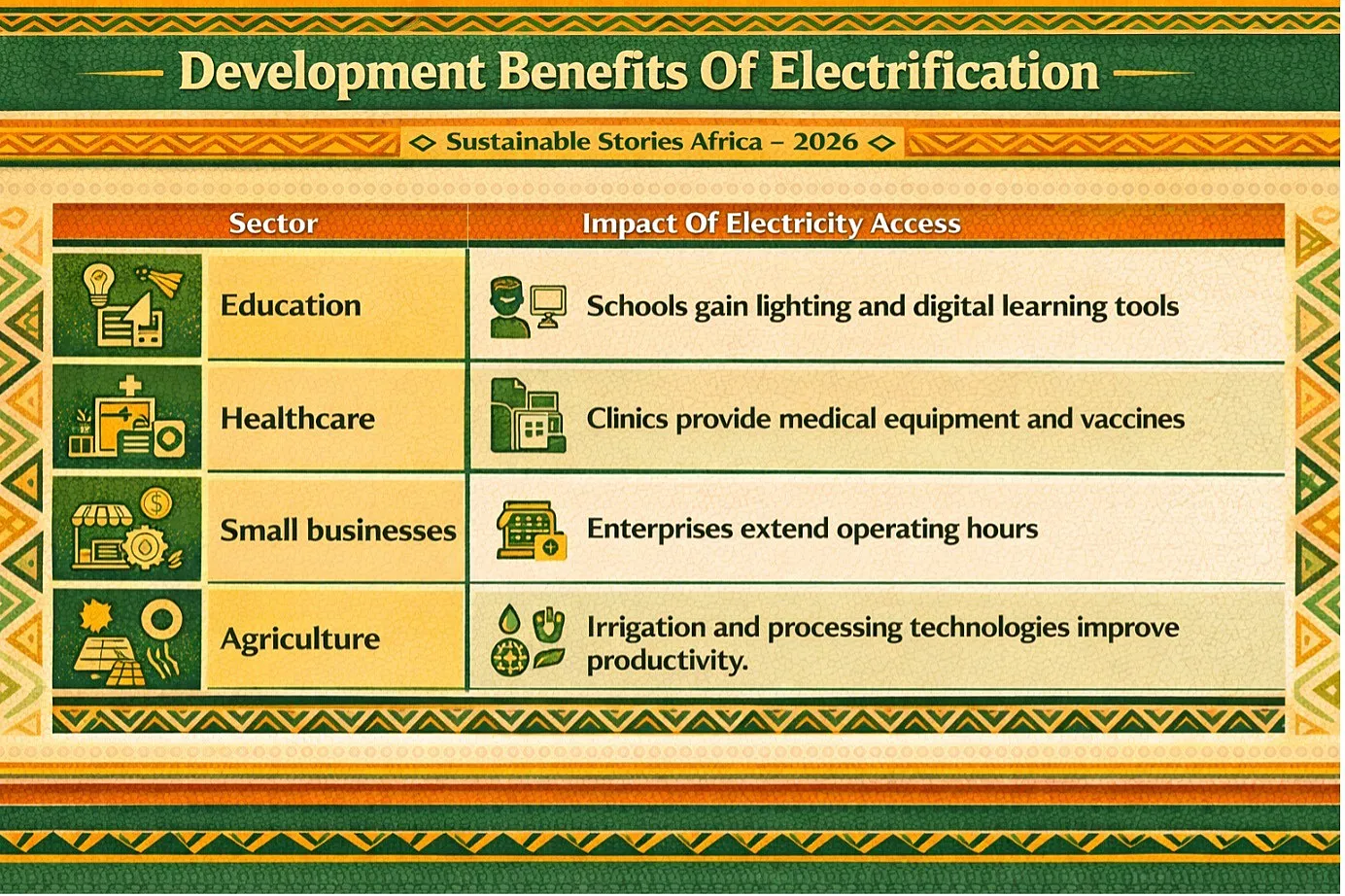
Development Benefits Of Electrification
Sector | Impact Of Electricity Access |
|---|---|
Education | Schools gain lighting and digital learning tools |
Healthcare | Clinics provide medical equipment and vaccines |
Small businesses | Enterprises extend operating hours |
Agriculture | Irrigation and processing technologies improve productivity |
Expanding energy access can also unlock investment by creating conditions for industrial growth and improved infrastructure development.
However, there must be caution that electrification programmes must address affordability and reliability to ensure long-term success.
Partnerships Accelerate Global Energy Access
The electrification drive highlights growing collaboration among governments, development finance institutions and private investors seeking to address global energy poverty.
Development banks are providing concessional financing while private companies contribute technical expertise and infrastructure investment.
Energy experts say partnerships of this scale are essential to closing the electricity access gap and supporting sustainable economic growth.
At the same time, policymakers emphasise the importance of strengthening regulatory frameworks, improving the power sector governance and encouraging private-sector participation.
Without such reforms, they warn, infrastructure expansion alone may struggle to deliver reliable electricity services.
Path Forward – Scaling Investments To Close Electricity Gap
Governments and development partners plan to scale electrification programmes by expanding investment in grid infrastructure, mini-grids and distributed renewable energy systems across underserved communities.
The long-term goal is to accelerate universal electricity access while ensuring power systems remain affordable, reliable and capable of supporting economic development across emerging markets.
Culled From: Largest electrification drive gets $1.2 billion