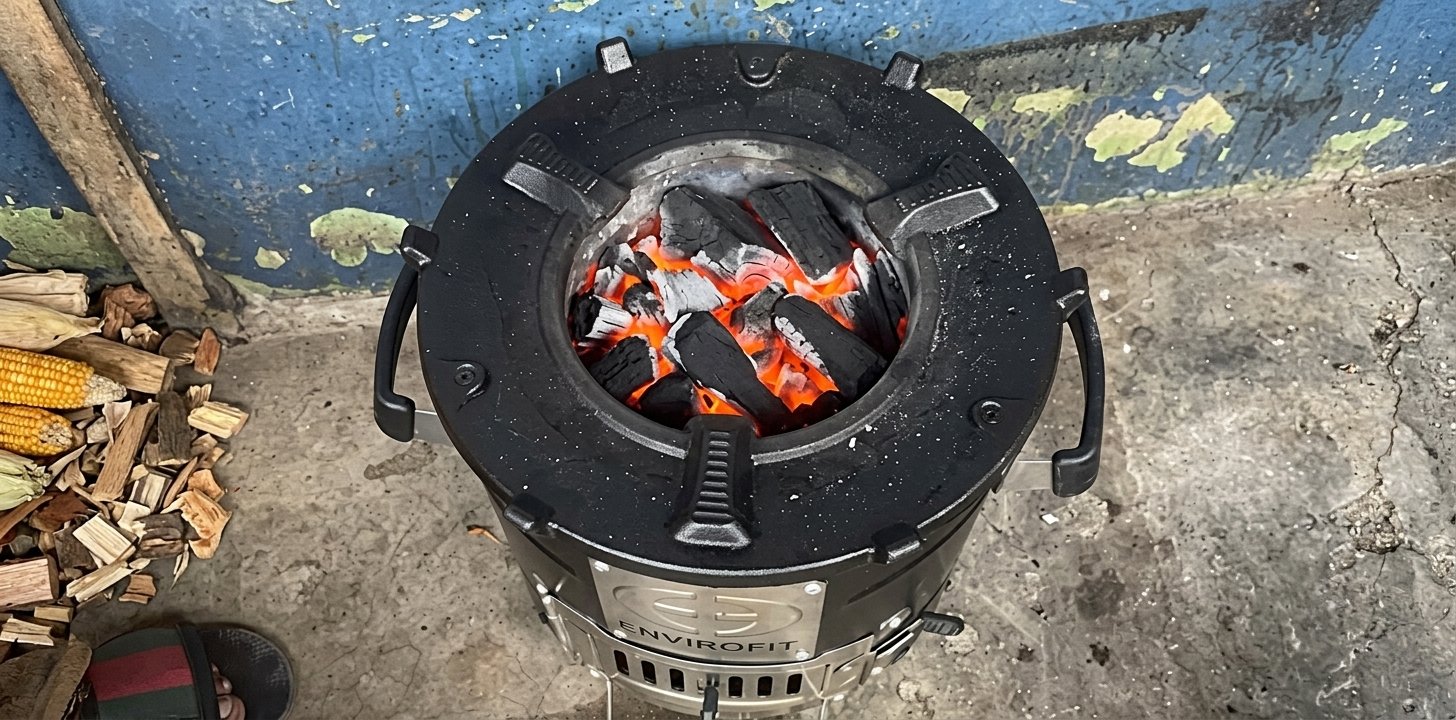
Africa Go Green has provided BioLite a $10.7 million senior debt facility to distribute at least 163,500 improved cookstoves in Zambia.
Future mitigation outcomes contracted to Switzerland’s KliK Foundation underpin the financing, creating a test of whether compliance carbon revenues can mobilise capital while maintaining integrity and household benefits.
Carbon offtake supports upfront lending
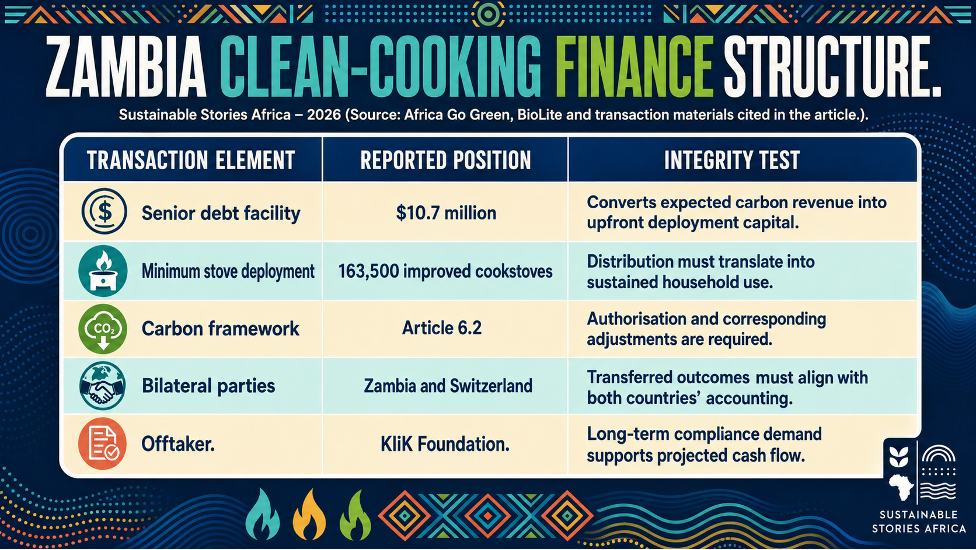
Africa Go Green has provided a $10.7 million senior debt facility to BioLite to purchase and distribute at least 163,500 improved cookstoves across Zambia.
The transaction is built around future carbon revenue.
- Mitigation outcomes generated by the project are expected to be sold to Switzerland’s KliK Foundation under a long-term Mitigation Outcomes Purchase Agreement.
The arrangement operates under the bilateral Article 6.2 agreement between Zambia and Switzerland, which enables authorised international transfers of mitigation outcomes.
Insurance support and the compliance-driven offtake are intended to give the lender confidence in future cash flow.
Structure addresses carbon project timing
Clean-cooking projects face a financing mismatch.
- Stoves must be manufactured and distributed before emissions reductions are monitored, verified and paid for.
- Project developers therefore need working capital long before carbon revenue arrives.
By lending against a contracted future offtake, Africa Go Green is converting part of that expected revenue into upfront finance.
This can allow BioLite to scale faster than if it relied solely on grant funding or retained earnings.
The structure is significant because it treats carbon revenue as part of project finance rather than an uncertain bonus.
Its replicability will depend on buyer credit quality, insurance terms, government authorisation and confidence that mitigation outcomes will meet agreed standards.
Clean cooking carries wider benefits
Many Zambian households still rely on charcoal and firewood.
- More efficient stoves can reduce fuel use, household expenditure and pressure on forests while lowering smoke exposure.
Women and children often bear a disproportionate burden from cooking smoke and fuel collection.
- A successful programme could therefore deliver health, time and livelihood benefits alongside emissions reductions.
Those outcomes require correct use and sustained adoption.
Distribution numbers alone do not prove that stoves replace traditional fires, remain functional or achieve expected fuel savings.
User training, repair systems and local feedback are essential.
Article 6.2 raises integrity requirements
Internationally Transferred Mitigation Outcomes must be authorised and accounted for so the same emissions reduction is not counted by both countries.
Zambia will need corresponding adjustments under the bilateral framework.
The project must also establish credible baselines, monitor usage and address leakage or rebound effects.
Independent verification should test whether claimed reductions are additional and durable.
These controls matter especially for clean-cooking credits, which have faced scrutiny over assumptions about stove use, baseline fuels and household behaviour.
Compliance-linked demand may improve discipline, but a sovereign authorisation does not remove the need for conservative measurement.
Zambia must protect national interests
Article 6 transactions can attract capital and technology, but host countries should understand the mitigation value they transfer.
Selling low-cost reductions abroad may affect the cost of meeting Zambia’s own nationally determined contribution later.
- The government should therefore publish the authorisation criteria, benefit-sharing arrangements and how the project fits national clean-cooking and climate plans.
- Communities should know what data is collected, what benefits are promised and how grievances can be raised.
Local economic participation also matters.
- Distribution networks, after-sales service and components can create jobs and strengthen a domestic clean-cooking market beyond the crediting period.
Replication depends on verified performance
The transaction offers a possible model for other African climate projects with clear emissions outcomes but insufficient upfront capital.
Long-term offtakes can support debt for efficient appliances, waste, transport or distributed energy when contracts and measurements are credible.
But financial innovation cannot outrun environmental integrity.
- If credits are overstated or households abandon the technology, both climate outcomes and lender confidence weaken.
The first test is deployment.
- The deeper test is whether verified use, transparent accounting and household benefits persist long enough to justify the mitigation outcomes transferred internationally.
- Independent publication of monitoring methods and verification findings would allow governments, buyers and civil society to assess whether the model deserves replication.
- Transparent pricing would also show how much carbon value reaches deployment, local services and participating households.
Path Forward – BioLite, Zambia Must Ensure Carbon Integrity
BioLite and its partners should disclose adoption, stove performance, verified emissions reductions, household savings and grievance outcomes throughout the crediting period.
Zambia should maintain transparent Article 6 authorisation and corresponding adjustment rules while ensuring transferred outcomes support national development and fair community benefits.