The Bundibugyo Ebola outbreak in the Democratic Republic of the Congo is expanding without a licensed vaccine or approved specific treatment.
Containment depends on early reporting, safe care and cooperation with contact tracers.
Yet fear, insecurity and underfunded community engagement are weakening the trust on which every one of those measures relies.
Trust now carries clinical weight
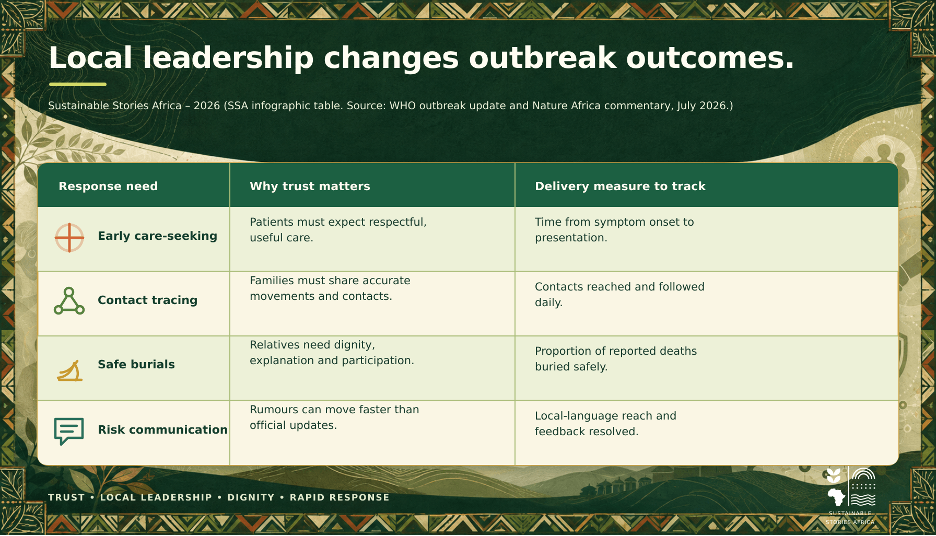
In eastern Democratic Republic of the Congo, the difference between a patient seeking early help and staying at home can determine whether one infection becomes a chain of transmission.
That makes trust a practical medical intervention in the outbreak of Ebola disease caused by Bundibugyo virus, not a softer addition to laboratories, isolation wards and protective equipment.
The World Health Organisation reported 3,605 confirmed cases and 1,587 deaths in the DRC as of 30 July 2026, a crude fatality ratio of 44%.
Cases had reached 49 health zones across Ituri, North Kivu, South Kivu, Haut-Uélé and Tshopo, while 651 patients had recovered.
The figures are moving quickly, but the direction is clear: the response must interrupt transmission faster than the virus reaches new communities.
No vaccine raises communication stakes
Unlike outbreaks caused by the Zaire species of Ebola virus, this emergency has no licensed vaccine or approved virus-specific therapy.
- Early supportive care can still save lives, while rapid diagnosis, contact tracing, safe burials and infection prevention remain central.
- Each measure, however, requires people to believe that response teams will listen, explain and protect them.
Nature Africa commentators led by Godfrey Musuka and Africa CDC Director-General Jean Kaseya argue that the work of building such confidence remains chronically underfunded.
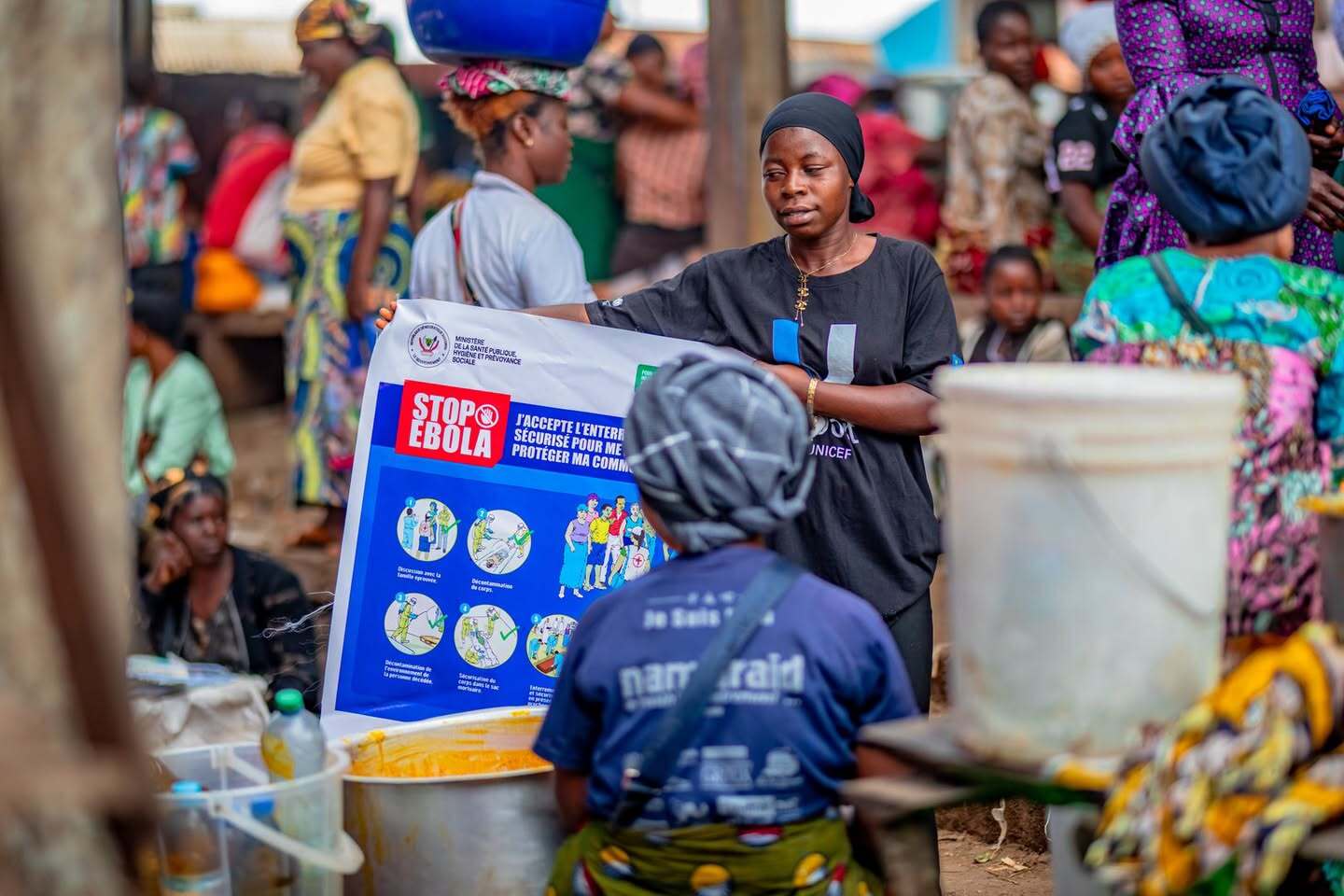
Communities may fear treatment centres, resist contact tracing or conceal symptoms when messages arrive through unfamiliar officials without trusted local intermediaries.
In conflict-affected areas, previous violence, displacement and interrupted services deepen that suspicion.
The problem is circular.
- Late presentation increases the likelihood of severe illness and household transmission.
- More deaths outside treatment centres make safe burials harder.
- Frightening outcomes then strengthen rumours that health facilities are dangerous, pushing the next patient away from care.
Local leadership changes outbreak outcomes
Trust can be built through people already embedded in community life: health workers, survivors, women’s groups, faith leaders, youth networks, traditional authorities and local radio presenters.
They can translate guidance into local languages, explain why responders ask sensitive questions and return community feedback to decision-makers.
This is not one-way messaging.
- Response teams must publish clear information on tests, isolation, treatment and burial procedures; acknowledge uncertainty; investigate complaints; and adapt operations where communities identify genuine risks.
- Paying community workers promptly and protecting frontline personnel also signals that participation is valued rather than extracted.
Fund confidence like core infrastructure
Emergency budgets often prioritise visible clinical assets while community engagement receives shorter grants and fewer trained staff.
That allocation misunderstands the response system. An empty treatment bed does not help a patient who is too frightened to arrive, and a contact-tracing form has little value if households will not answer the door.
- Governments and partners should ring-fence multi-month funding for local engagement, mental health support, feedback systems and the protection of community responders.
- Clinical trials for vaccines and treatments remain essential, but communities cannot wait for future breakthroughs before receiving credible information and humane care today.
Path Forward – Put communities inside every response decision
The immediate path is to pair surveillance and clinical capacity with trusted local leadership in every affected health zone.
Funding should measure not only messages delivered, but concerns heard and resolved.
Over time, stronger primary healthcare and locally owned preparedness networks can leave communities better protected after the emergency ends.
In an outbreak without a licensed vaccine, trust is not the backdrop to containment; it is one of its main tools.
Culled From: Why the fight against Bundibugyo Ebola depends on trust | Nature Africa