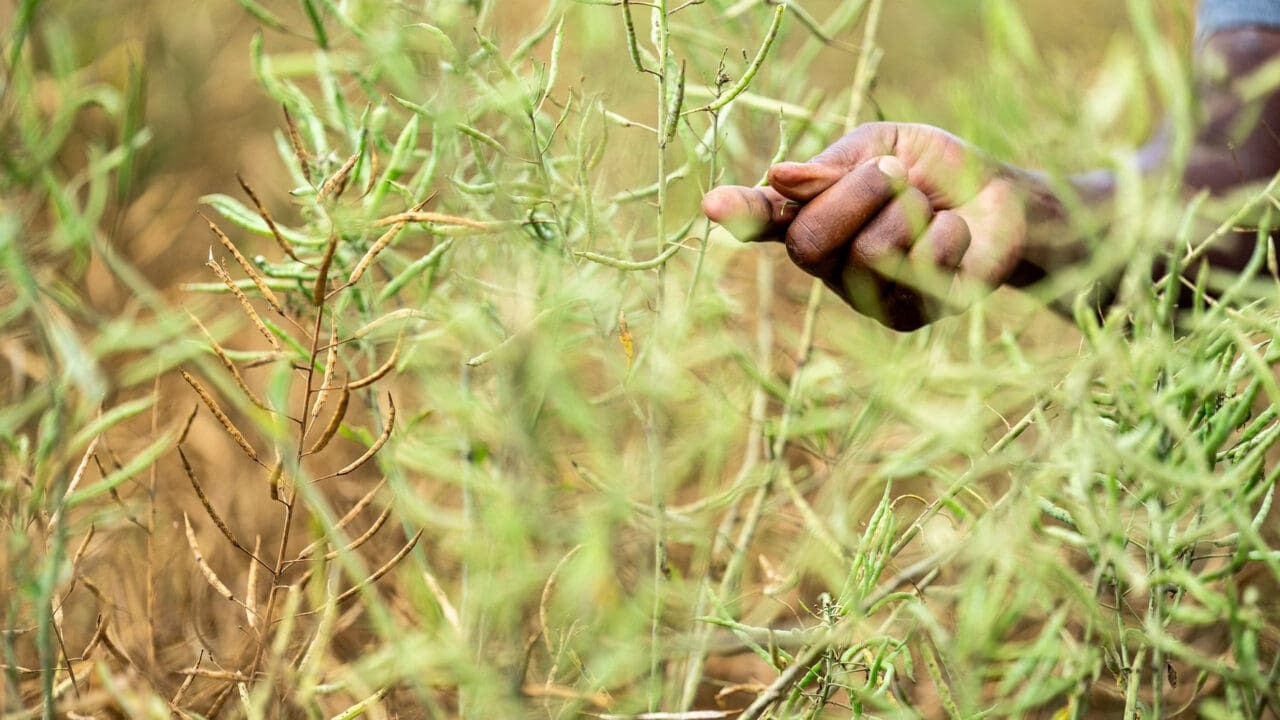
Swedfund has invested $12 million in Acumen Resilient Agriculture Fund II to finance businesses to strengthen markets, technology, financial services and post-harvest systems for African smallholders.
The fund expects portfolio companies to reach about four million farmers, making additionality, gender outcomes and measurable resilience central to its impact case.
Capital targets agricultural value chains
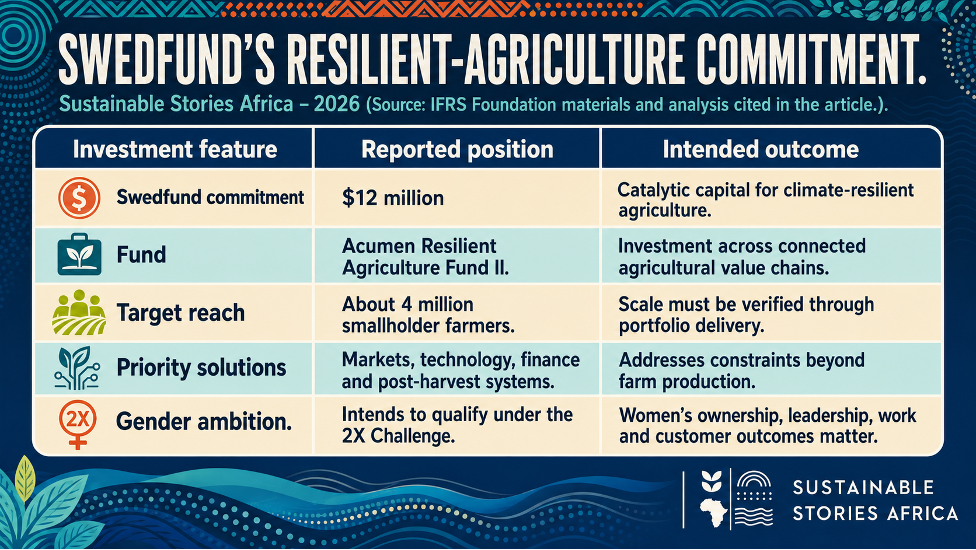
Swedish development finance institution Swedfund has committed $12 million to Acumen Resilient Agriculture Fund II, expanding investment in businesses that help smallholder farmers manage climate risk and reach functioning markets.
The fund will target enterprises that provide finance, digital tools, agricultural inputs, post-harvest infrastructure and market integration across sub-Saharan Africa.
Its strategy focuses on the systems surrounding farms rather than treating low productivity as a farm-level problem alone.
Portfolio companies are expected to reach about four million smallholder farmers.
The fund also intends to qualify under the 2X Challenge, which assesses whether investments expand economic opportunity for women.
Smallholders face connected constraints
Small farms produce a large share of sub-Saharan Africa’s food and support millions of livelihoods. However, many operate without necessary credit, reliable extension services, storage, insurance or predictable buyers.
These constraints reinforce one another.
- A farmer without storage may sell immediately after harvest when prices are low.
- A lender may view that unstable income as high risk.
- Limited finance then prevents investment in irrigation, improved seed or equipment that could raise resilience and productivity.
Businesses that connect farmers to finance, logistics and buyers can address several barriers at once.
The commercial challenge is to do so at a price that works for low-income producers while earning sustainable returns.
Climate change raises the financing need
Rising temperatures, irregular rainfall, drought and flooding are increasing production volatility, especially in rain-fed systems.
Climate shocks reduce household income, tighten food supply and can raise inflation and emergency spending.
Adaptation investment in agriculture has often relied on grants and public programmes.
- Private funds can add scale by backing companies with repeatable products and revenue models
- However, impact should not be assumed from a climate-resilience label.
Fund managers must highlight how services change farmer outcomes.
Relevant measures include yield stability, income variability, avoided post-harvest losses, water efficiency, insurance coverage and recovery after extreme weather.
Blended finance shares early risk
Development finance institutions are using blended structures to attract private investment into agricultural businesses that may have high impact but limited operating histories or exposure to volatile markets.
Patient or risk-tolerant capital can help these companies test models and reach underserved customers.
Successful businesses may later attract commercial finance on more conventional terms, allowing scarce concessional resources to move to newer markets.
The discipline lies in proving additionality.
Swedfund and the fund should explain which investments would not proceed on comparable terms without DFI participation and how public-purpose capital is mobilising rather than replacing private investment.
Gender outcomes require deliberate design
Women play major roles in African agriculture but often have weaker access to land rights, finance, technology and formal market relationships.
Meeting 2X criteria can direct attention to ownership, leadership, employment and customers.
Still, a portfolio-level gender label is only a starting point.
The fund should examine:
- Whether products are designed around women farmers’ constraints
- Whether women control resulting income
- Whether employment is safe, fairly paid and capable of advancement.
Data should be disaggregated by gender, geography and farm type.
Without that detail, large beneficiary numbers can hide unequal access or shallow engagement.
Food security depends on stronger enterprises
Africa’s food-security challenge cannot be solved singly by increasing production.
Food must be stored, processed, financed and transported efficiently, while farmers need enough income to invest in the next season.
- The Swedfund commitment adds capital to a growing effort to build those systems through local enterprises.
- It could also support agro-processing, rural jobs and regional trade by reducing losses and improving the reliability of supply.
The investment will be most valuable if it helps businesses reach commercial durability while farmers experience measurable resilience. Scale should mean more than customer counts; it should mean higher incomes, lower losses and food systems better able to withstand climate shocks.
Exit planning should protect this development purpose by favouring future owners capable of sustaining affordable services and responsible relationships.
Path Forward – ARAF II Must Scale Resilient Agribusiness
ARAF II should publish consistent data on farmer income, resilience, post-harvest losses, gender outcomes and private capital mobilised.
Governments should complement investment with rural infrastructure, extension, market standards and predictable trade policies that allow resilient agribusinesses to scale.