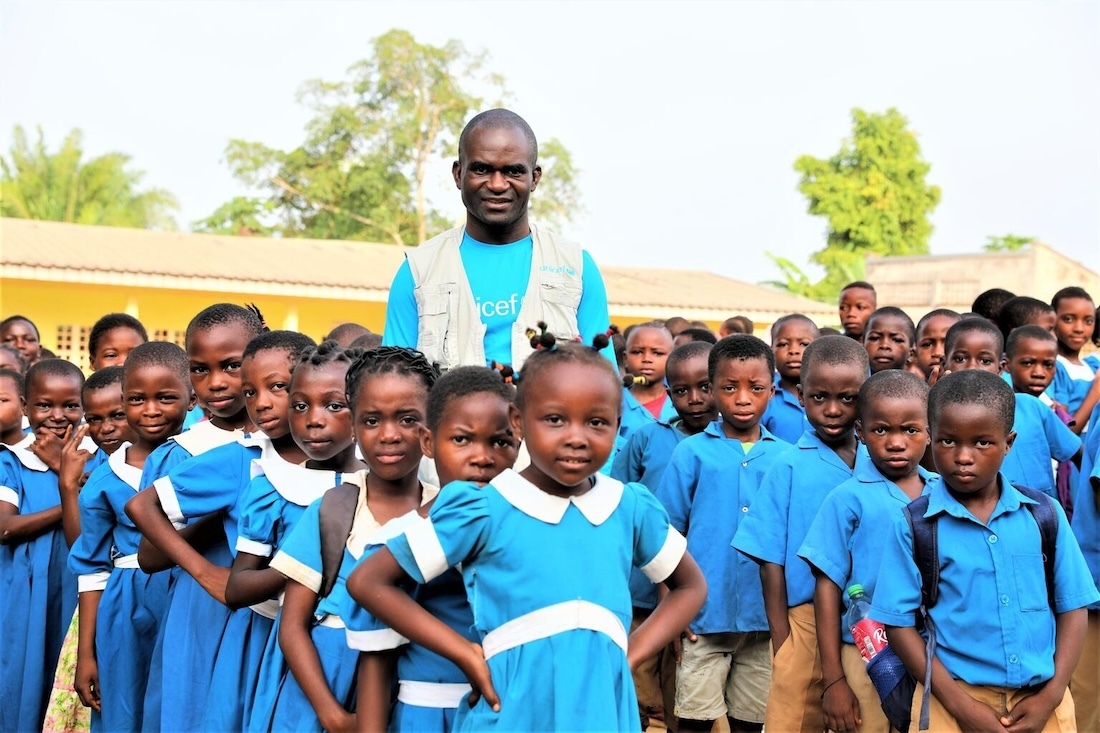
UNICEF Cameroon’s Climate, Energy, Environment and Children Strategy links resilient public services, youth participation and lower operational emissions.
With Cameroon ranked among countries where children face very high climate and environmental exposure, implementation will depend on financial partnerships and measurable protection for schools, health facilities, water systems and vulnerable communities.
Climate risk threatens childhood systems
UNICEF Cameroon has launched a child-centred climate strategy designed to protect essential services, empower young people and reduce the organisation’s environmental footprint.
The Climate, Energy, Environment and Children Strategy 2024-2026 responds to floods, drought, coastal erosion, biodiversity loss and deforestation that are affecting health, education, water and future livelihoods.
UNICEF’s Children’s Climate Risk Index places Cameroon among the ten countries where children face the highest exposure to climate and environmental hazards.
Children contribute little to global emissions but experience disproportionate disruption when schools close, water becomes unsafe, or household income collapses.
Protect pillar strengthens public services
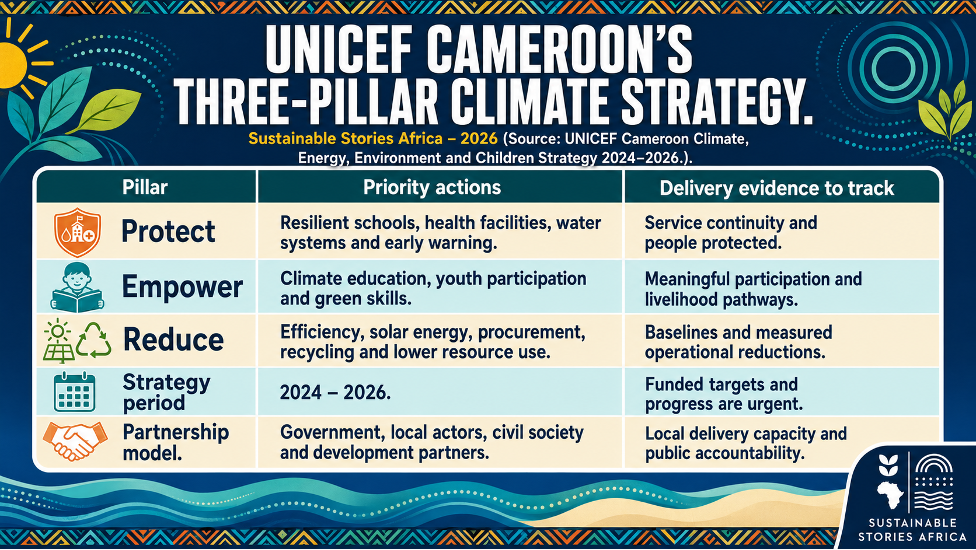
The strategy is organised around Protect, Empower and Reduce.
- Under Protect, UNICEF plans to work with government to integrate children’s vulnerability into policy, disaster preparedness and infrastructure decisions.
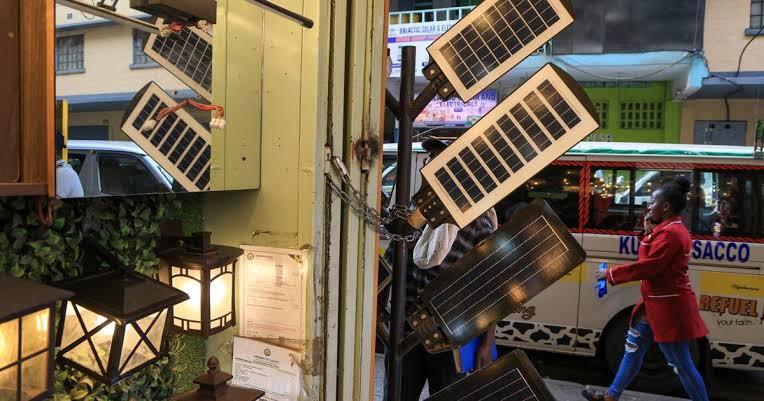
- Priorities include renewable energy for schools and health facilities, climate-resilient water and sanitation, stronger early-warning systems and better evidence for public planning.
These interventions recognise that adaptation infrastructure is not limited to dams, drainage and irrigation.
- A health centre that retains electricity during a disaster.
- A school that can withstand flooding
- A water system designed for drought all protect human capital.
Climate shocks carry economic costs
Floods can destroy roads, classrooms, clinics and water networks, forcing governments to redirect constrained budgets towards reconstruction.
Drought and rainfall changes reduce agricultural income and food availability, increasing malnutrition and household stress.
Children experience these shocks through interrupted education, disease, displacement and reduced nutrition.
The long-term effects can include reduced learning, poorer health and weaker productivity, turning climate exposure into a development and economic problem.
Protecting child services is therefore an investment rather than only a humanitarian response. Resilient systems preserve earlier spending on education and health and reduce the cost of rebuilding after each event.
Young people become climate actors
Under Empower, UNICEF plans to expand climate education through schools, community organisations and digital platforms while supporting youth participation in advocacy, innovation and policymaking.
Cameroon’s young people can contribute local knowledge and new solutions, but participation should be meaningful.
Youth consultations need feedback, resources and routes into real decisions rather than symbolic representation.
Green skills can also support employment in renewable energy, sustainable agriculture, waste management and adaptation services.
Linking climate education to technical and enterprise training would help convert awareness into economic opportunity.
UNICEF has introduced Terra, a lioness mascot designed through a youth competition, to support climate education through comics and public materials.
The campaign can improve accessibility, provided it remains connected to practical learning and action.
Reduce pillar applies standards internally
The third pillar commits UNICEF Cameroon to improving energy efficiency, expanding solar use, strengthening recycling and waste management, promoting sustainable procurement and reducing paper and water consumption.
A dedicated Green Team will support implementation. This internal focus is important for institutional credibility: organisations advocating climate action should measure and reduce their own impacts.
UNICEF should disclose baselines and progress to ensure operational commitments can be assessed. Procurement and travel may be material sources of impact alongside office electricity, and measurement should focus on the most significant categories.
Partnerships must turn strategy into delivery
UNICEF is working with Cameroon’s Ministry of Environment and Sustainable Development and the National Climate Change Observatory.
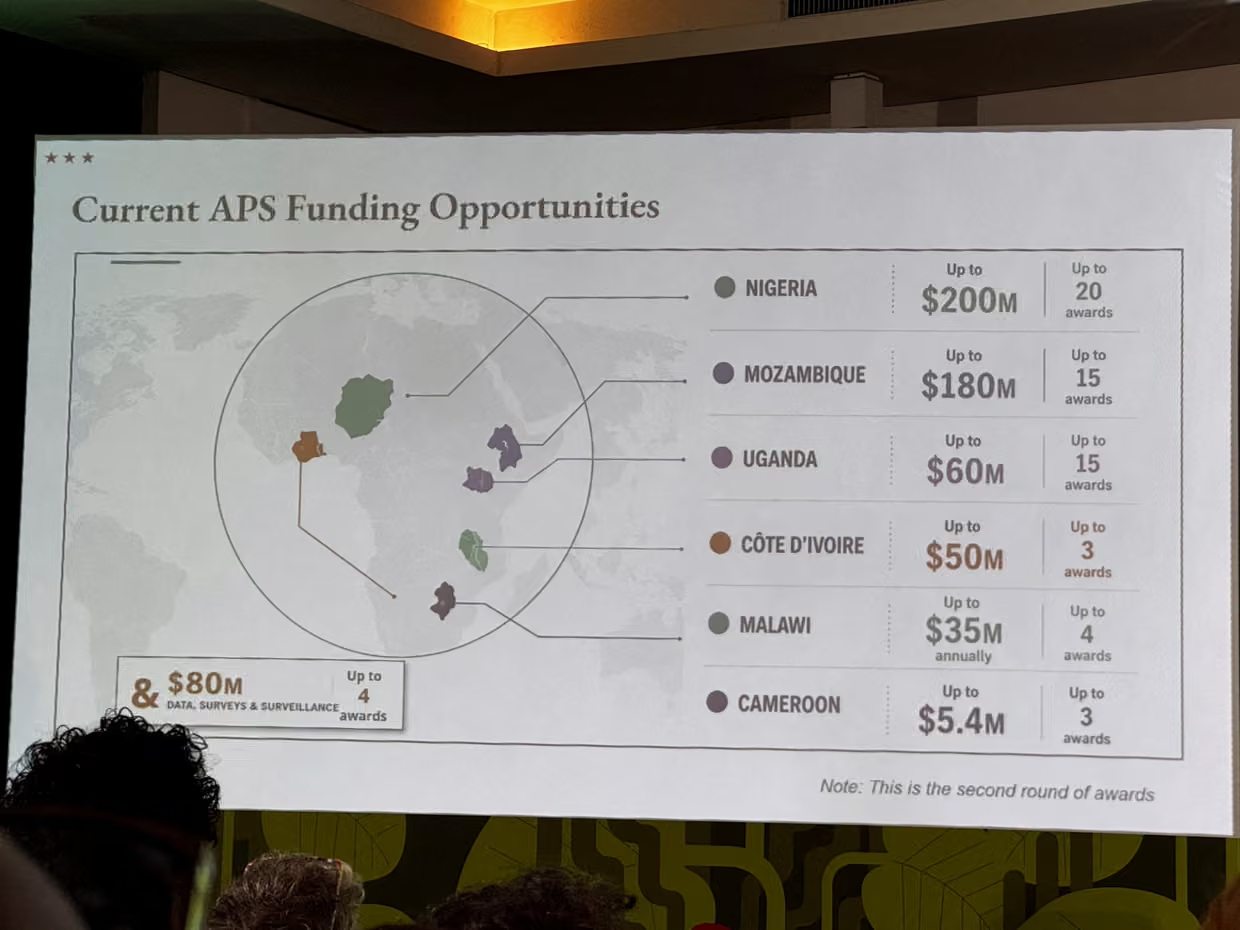
Wider cooperation with local government, civil society, businesses and development partners will be necessary to mobilise finance and technical capacity.
The strategy covers 2024-2026, leading to a short remaining implementation period.
Clear targets are needed for facilities reached, service continuity, youth participation, emissions reductions and vulnerable populations protected.
Cameroon’s approach offers a wider lesson for Africa: climate adaptation should be embedded in the systems that develop people.
When schools, healthcare, water and social protection are resilient, communities are better able to withstand shocks without sacrificing the next generation’s prospects.
Future strategy cycles should build on evaluated results from the 2024-2026 period rather than restarting with new commitments and disconnected indicators.
Continuity will matter.
Path Forward – UNICEF, Cameroon Must Fund Child-Centred Adaptation
UNICEF and Cameroon should publish funded targets and progress for resilient facilities, early warning, youth participation and operational emissions.
Partners should prioritise local delivery capacity and ensure children’s needs are integrated into national adaptation budgets, infrastructure standards and social protection systems.