Accor sustainability chief Coline Pont says hotel owners and suppliers will determine how the group’s 2030 roadmap works in practice.
The company is targeting wider independent certification and measures to manage water and energy use.
Local operating data can show where changes deliver savings and where properties need investment.
An operating plan for thousands of hotels
Accor chief sustainability officer Coline Pont has set out how the hotel group plans to turn its 2030 sustainability roadmap into investment and operating decisions at individual properties.
In a 4 November interview with OneStop ESG, Pont described hotel owners as central to financing upgrades, suppliers as important to reducing environmental impacts and hotel teams as responsible for making changes work during daily operations.
- Accor launched the roadmap, called Hosting Change, in April.
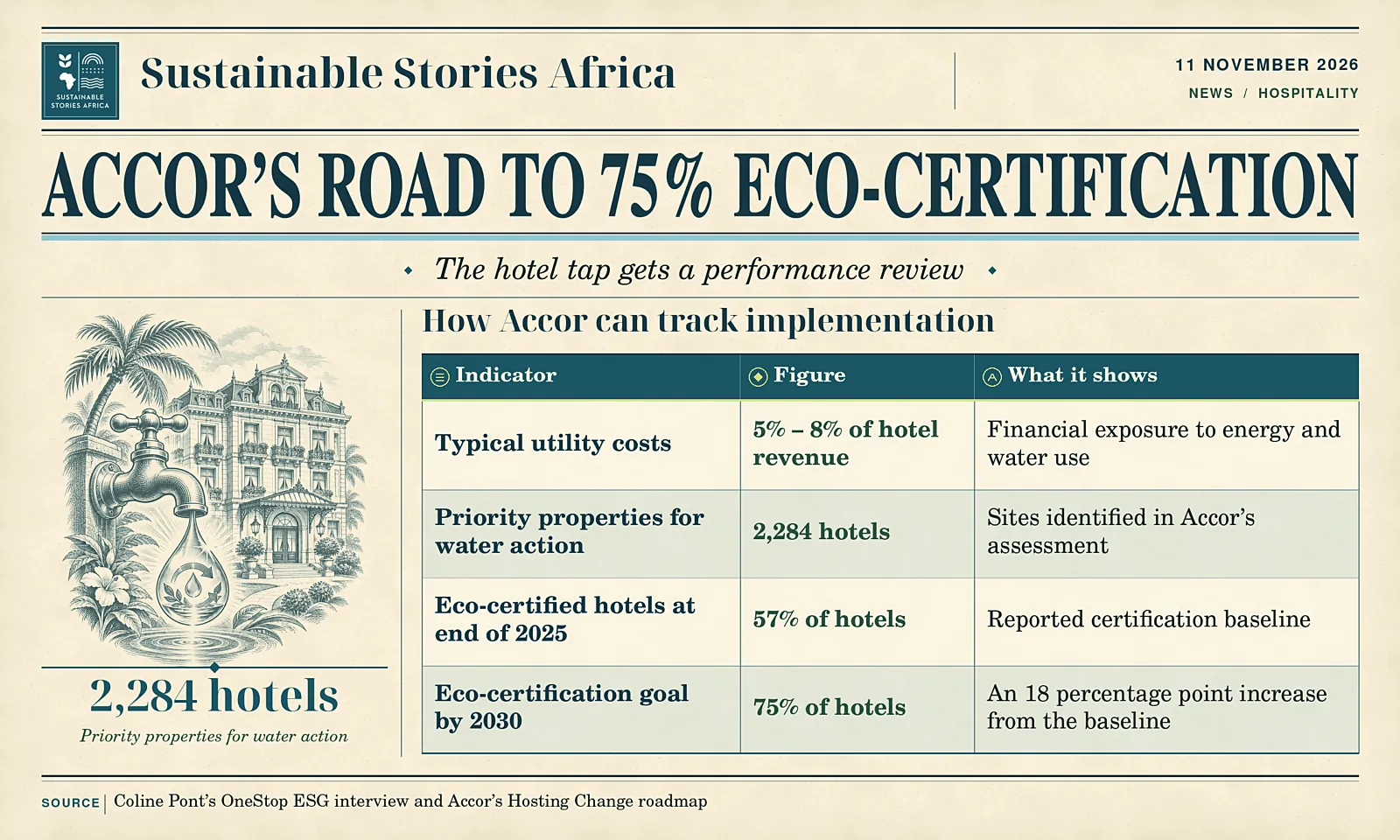
Pont said utilities typically represent 5% to 8% of hotel revenue, making them the second-largest variable expense after labour.
- Rising energy costs and periods of water stress give owners a financial reason to consider how buildings operate.
The business case varies by location, depending on utility prices and reliability, equipment age, and time an owner expects to hold the property.
Common standards meet local constraints
Accor sets group-wide expectations across energy, emissions, water, waste, employment and supply chains, Pont said.
- Brands can adopt additional measures suited to their properties and guests.
- The owners’ sustainability advisory board brings together owners representing around half the network, according to the interview.
That gives management a forum to discuss investment with the people who often control a property’s capital budget.
Water illustrates the limits of a uniform operating plan.
Pont said Accor’s latest assessment identified 2,284 priority hotels and five river basins.
- A property can track what it consumes, but the urgency of reducing use also depends on local water availability and the pressures other users face.
Accor and Water Unite invited innovators to submit solutions that hotels could test, adding a way to evaluate new approaches before wider adoption.
The roadmap extends beyond utility bills.
- Accor’s published commitments include a target for 35% of dishes across hotels and restaurants to be plant-forward by 2030.
- Meeting a group target requires thousands of kitchens and involves menu design, reliable supply and chefs’ decisions about what guests will order.
Purchasing and sales data can help a property see whether a change is taking hold beyond the launch of a new menu.
Investment decisions at property level
Pont pointed to an Accor and JLL tool in China that uses property-level information, including occupancy, energy consumption and operating hours, to estimate savings and rank potential upgrades.
The approach lets owners compare projects that require very different spending commitments.
- Lighting replacements and building controls changes may fit one budget cycle.
- A major cooling system upgrade may require a longer investment horizon.
Suppliers influence the options available to a hotel.
- Pont estimated that roughly 60% of Accor’s environmental footprint is tied to its supply chain.
- A chef trying to change a menu or a property manager replacing disposable items needs suppliers that can meet cost, quality and volume requirements.
Procurement standards therefore must reach the people placing orders and the companies supplying goods.
Measuring what changes for guests and neighbours
Certification gives corporate customers a way to compare hotels against an external standard.
- Pont said independent audits and renewals help maintain confidence in the label.
- Owners and buyers can also ask for operating measures, including energy and water use per occupied room.
Absolute consumption matters, particularly in locations where growing room demand can put pressure on local supplies even as individual rooms become more efficient.
Hotels in water-stressed destinations can make their plans more meaningful by comparing risks at property and catchment level.
- A portfolio review can show where savings are being made, while local data can guide which sites need investment first.
- Publishing both the certification rate and trends in resource use would help owners, customers and communities assess progress against the roadmap.
Owners can use a similar approach when comparing upgrades.
- A hotel that installs a more efficient cooling system can track electricity use against occupancy and weather.
- A hotel trialling water reuse can track how much freshwater it avoids drawing and what the new system costs to operate.
These measures help teams decide whether to expand, change, or test a pilot in another type of property.
Path Forward – Turning Hotel Commitments Into Operating Results
Accor is aiming for 75% of hotels to hold independent eco-certification by 2030.
Owners, brands and suppliers will need to put the roadmap into budgets and operating decisions.
Property-level water and energy data can show whether those decisions reduce consumption where pressure is greatest.