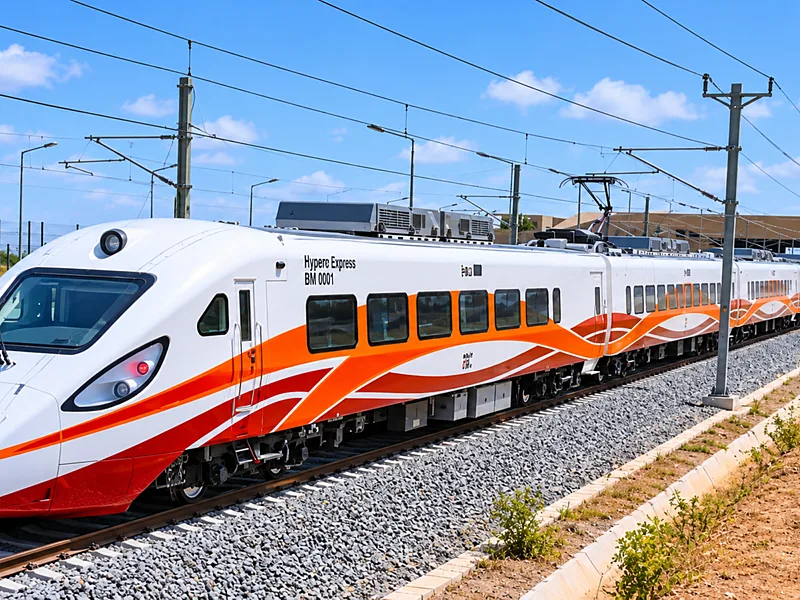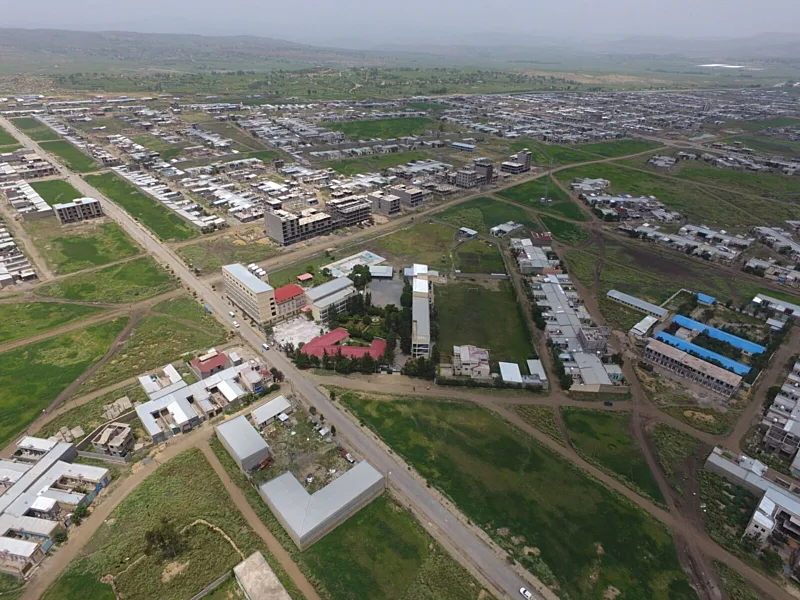
Ethiopia and China have signed a $15 million grant agreement for supplementary work on the Ethio–Djibouti Railway.
The support covers locomotive spares, track equipment and technical training.
Businesses using the corridor to reach Djibouti’s ports would benefit from a more reliable service.
A grant for the railway is already running
Ethiopia and China signed a $15 million grant agreement in Addis Ababa on 5 November to support the operation and maintenance of the Ethio–Djibouti Railway, the Ethiopian News Agency reported.
Ethiopia’s State Minister of Finance Tiguist Fisseha and Liu Xiaoguang, minister counsellor at the Chinese Embassy, signed for their governments.
The China-Aid package includes equipment and training for a corridor that carries freight and passengers between landlocked Ethiopia and Djibouti.
The agreement addresses a familiar problem for infrastructure operators.
- An electric locomotive can be available on paper but out of service while sourcing a replacement part.
- A track fault can disrupt departures even when locomotives and staff are ready.
- The package targets some of the material and skills requirements behind those delays.
The signing reports did not specify a disbursement schedule or allocate items.
What the package will support
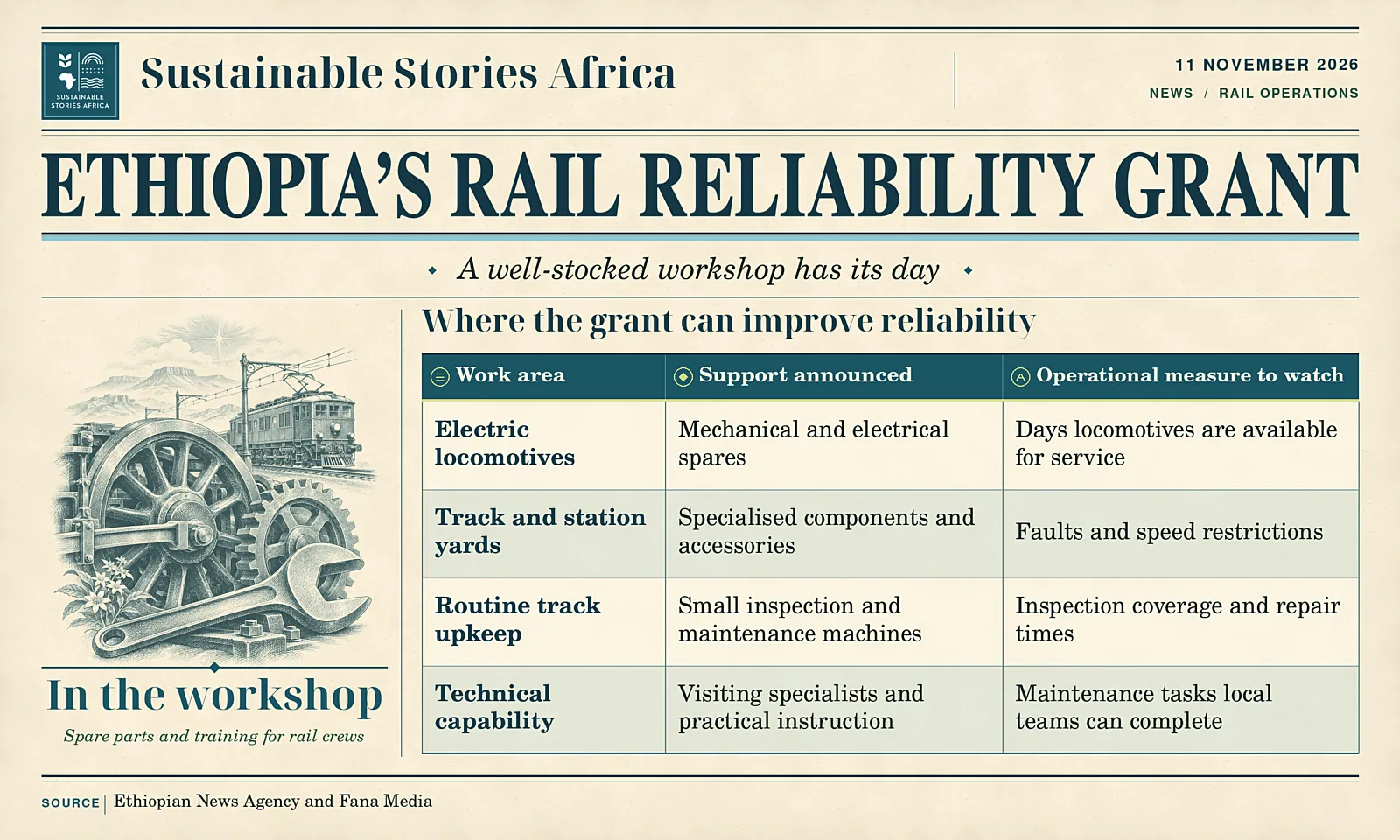
ENA reported that the support includes mechanical and electrical spare parts for electric locomotives, specialised track components and equipment for station yards.
- The scope includes mall machines for track inspection and routine maintenance.
- Chinese specialists are expected to visit Ethiopia to provide practical instruction and guidance for railway staff.
The work sits on an active trade route.
Ethiopia’s logistics masterplan diagnostic records passenger and freight services on the railway from 2018.
- An evaluation published by Japan’s foreign ministry cites railway cargo of 2.09 million tonnes in 2023 against 19.8 million tonnes of Ethiopian imports and exports in the comparison it uses.
- The historical figures put the railway’s role in context.
- They give no measure of what the grant will add to future volumes.
The funding represents supplementary works on an operating corridor.
- It gives the governments a relatively specific set of outputs to track, from spare parts reaching depots to staff completing practical instruction.
- The benefits will depend on how the operator selects components against actual maintenance needs.
Stock that sits unused offers little protection when a different component fails, so the link between procurement and the workshop’s repair records is important.
Why repeatable maintenance matters
For a freight customer, a reliable rail booking can matter as much as the published transit time.
- If a departure slips, a container may miss a vessel or sit longer at a terminal, increasing costs elsewhere in the journey.
- Having spare parts in the right depot and a workshop able to fit them can reduce one source of disruption.
Predictability also depends on port and dry-port operations and how effectively the two sides of the railway coordinate their schedules.
Training has a longer horizon than a spares shipment.
- If railway staff learn to diagnose faults, carry out repairs and pass those skills to new colleagues, a temporary technical mission can strengthen the operator’s everyday capacity.
- Workshops also need documentation, test equipment and a way to reorder components after the first stock is used.
The grant’s long-term value will depend in part on planning for these recurring costs.
How to assess the results
The next useful details from the two governments would be delivery dates, the depots receiving the equipment and how training will be assessed.
- The operator could track locomotive availability, fault-related delays, on-time freight departures and the time needed to resolve recurring breakdowns.
- A baseline before installation would help identify where the package makes a difference and where operating constraints remain.
Ethiopia and China pledged close coordination on implementation, according to ENA.
- For shippers, a published maintenance or service update would also help with planning around scheduled work.
- The railway’s commercial contribution will be easier to assess if the reporting follows a shipment from booking and departure through to handover at the terminal.
This is where customers experience the benefits of routine maintenance and dependable equipment.
Coordination extends beyond the workshop.
- Freight customers may have booked terminal time and arranged a truck to collect a container.
- Advance notice of maintenance helps them move those bookings while capacity remains available.
- The railway operator can use planned maintenance windows to schedule inspections and repairs together, reducing separate interruptions.
Comparing planned and unplanned downtime would show whether that approach is working.
Path Forward – Putting Maintenance Support To Work Locally
The next milestones are the arrival of spares and inspection equipment, followed by training for the teams that use them.
A stronger maintenance programme would reveal fewer disruptions, shorter repair times and more dependable service between Ethiopia and Djibouti.