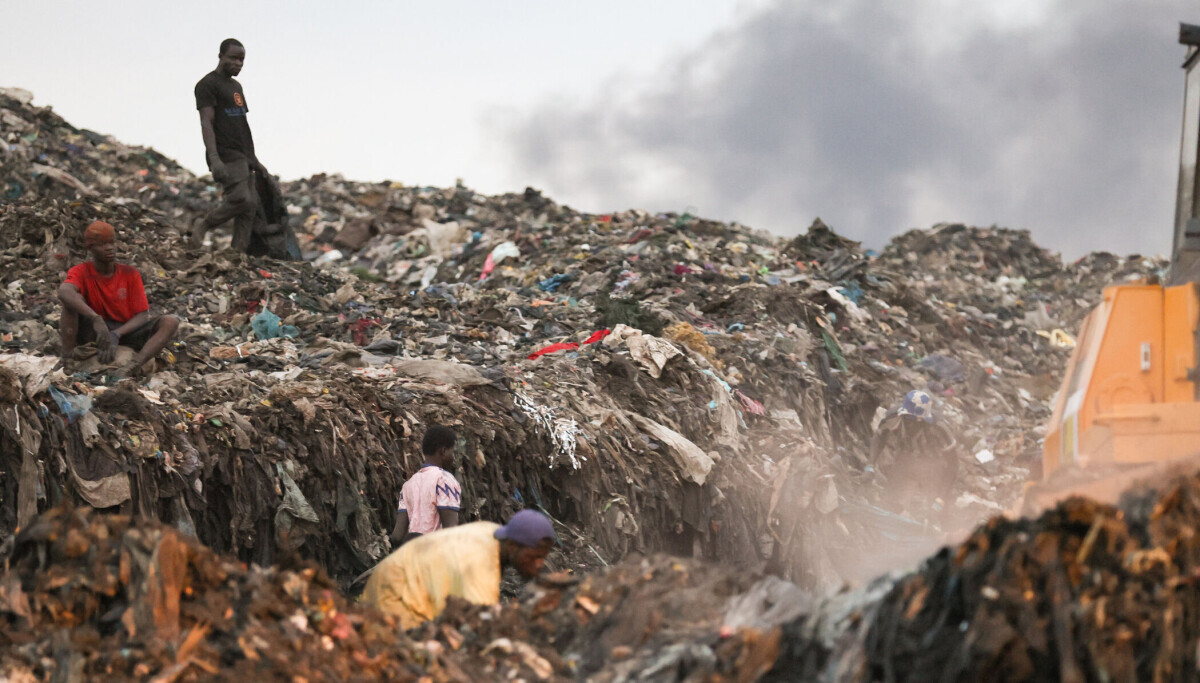
Ghana is moving waste from Agbogbloshie, where scrap workers and nearby residents face exposure to smoke and dust.
A government operation aims to remove about one million tonnes.
What happens to workers and to the waste stream will determine whether the cleanup reduces exposure over time.
Cleaning up a workplace and a neighbourhood
Ghana’s government is removing waste from Agbogbloshie, the Accra district beside Korle Lagoon where scrap dealers earn a living recovering metal from discarded equipment.
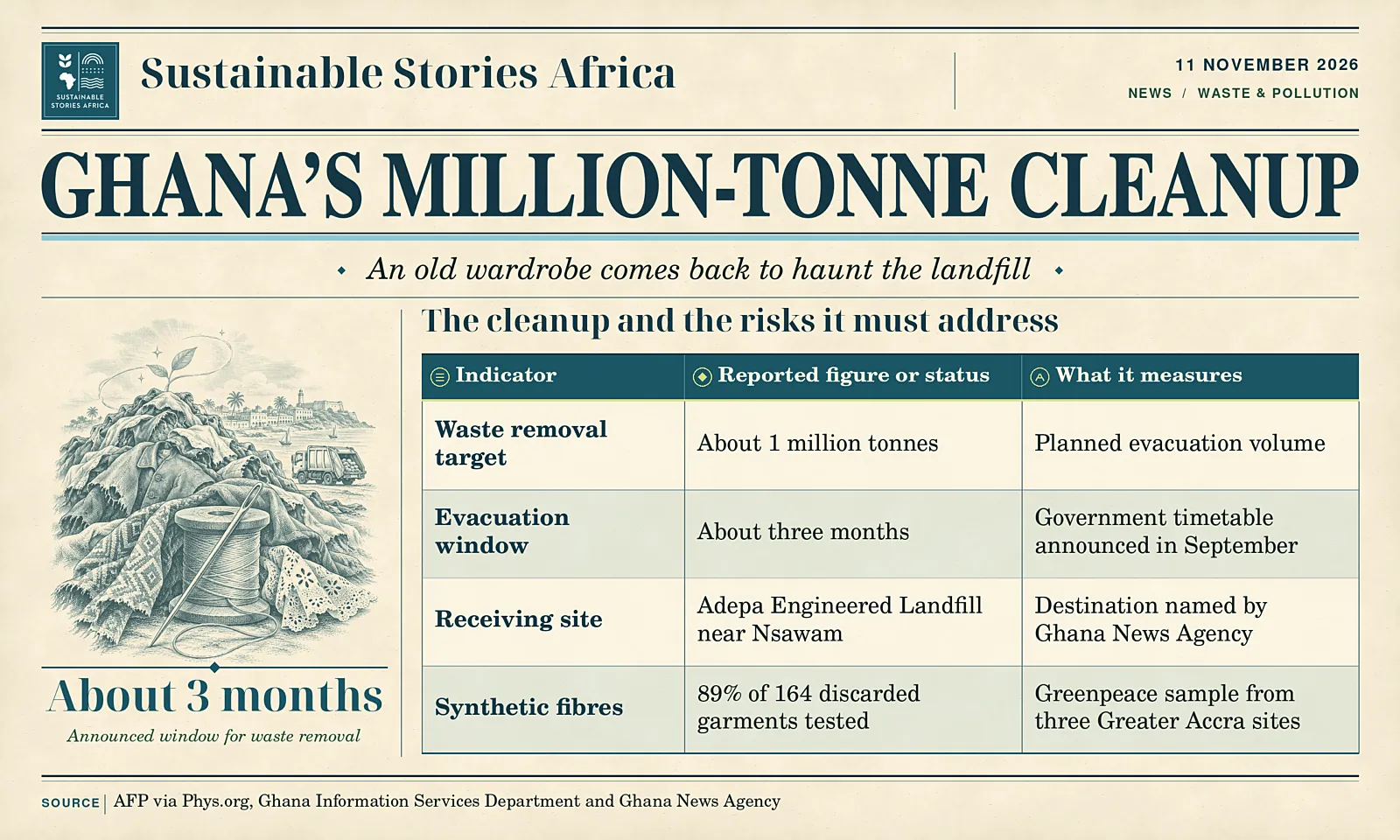
- The operation, commissioned by President John Dramani Mahama in September, targets about one million tonnes over roughly three months.
In a report published by Phys.org on 10 November, AFP documented continuing smoke and health concerns as the cleanup proceeded.
- James Hassan, a 31-year-old scrap dealer, told AFP he regularly worked without gloves or a mask and experienced headaches and coughing after long days.
- AFP also spoke to a teenager who sells water at the site and reported coughing and sometimes seeing blood in her saliva.
These are accounts of symptoms and exposure.
- University of Ghana epidemiologist Reginald Quansah told AFP that cumulative contamination raised concern and evidence had yet to establish specific local disease links.
A waste stream that crosses borders
Agbogbloshie receives multiple forms of discarded material, including appliances and textiles.
- The second-hand clothing trade provides goods for resale and income for traders.
- Greenpeace Africa has called for action on unusable imports that add to waste volumes.
Ghana News Agency reported that a Greenpeace study found synthetic fibres in 89% of 164 discarded garments tested at three sites in Greater Accra.
- This finding concerns the sampled waste, a different group from all clothing entering Ghana.
Discarded electronics and appliances can retain their metal value, which workers recover and sell.
- Burning material to recover those metals exposes people working and trading nearby.
The lagoon brings another concern.
- AFP reported that researchers warned contamination is moving from the dump into water and soil, pathways that can outlast a visible reduction in waste.
The government’s programme gives municipal agencies a way to track material leaving the site.
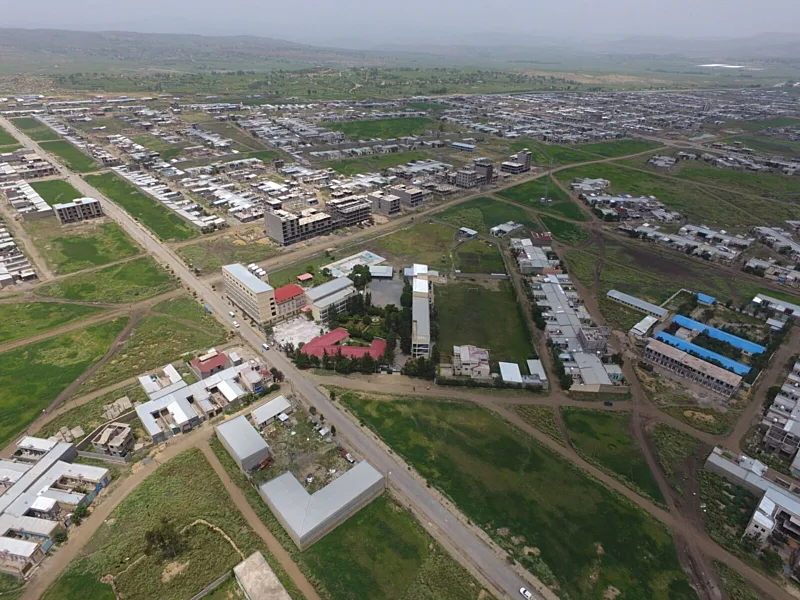
- Ghana News Agency reported that an assessment using drone imagery informed the estimate of the waste to be moved.
- The estimate describes the scale of the operation.
Records from collection and the receiving landfill can highlight separate measures of what has been removed and handled, including material that requires different treatment from ordinary refuse.
What safer work would require
Local Government Minister Mahama Ayariga told AFP he wanted to bring waste pickers and tricycle hauliers into formal recycling and hoped the wider effort would create up to 20,000 permanent jobs.
That figure is an ambition.
- A scrap dealer weighing a safer option would need to know where the work is, what it pays and whether training or protective equipment is provided.
- Workers who depend on daily sales may need income continuity during the transition.
Moving waste to an engineered facility gives the authorities a way to manage material away from the lagoon.
Monitoring at both sites would show whether workers and surrounding communities are better protected.
- At the Accra site, soil and water testing would help authorities identify areas that require further work.
- At the receiving site, records on the volume, handling and containment of material would make the transfer easier to scrutinise.
Keeping new waste from replacing old waste
Municipal officials can report how much material has been removed and where it goes.
- Public health officials can assess exposure and access to care for residents and workers.
- Trade and waste authorities can consider reducing the flow of unusable clothing and ensure electronics can be recovered safely.
The measures address different parts of the problem and require coordination between agencies.
- For people earning a living around Agbogbloshie, the changes will matter in whether safer collection and dismantling work is available, how regularly it pays and whether children and vendors spend less time near smoke.
These outcomes would make the public health case for the cleanup easier to judge alongside the number of truckloads moved.
Protection also depends on where workers can take recovered material.
- Collection points and licensed buyers can give people routes to sell scrap without resorting to open burning.
- Economics will matter, including the distance to collection points and the price paid.
Consulting workers who already know the material flows can help officials identify practical arrangements and where smaller traders risk losing access to the market.
Path Forward – Safer Recycling After The Waste Removal
Ghana’s immediate milestones are evacuation progress and safe containment at the receiving landfill.
Monitoring around the lagoon will help establish what remediation is needed.
The longer-term work is to reduce incoming waste and make safer recycling jobs accessible to the workers who depend on the site.