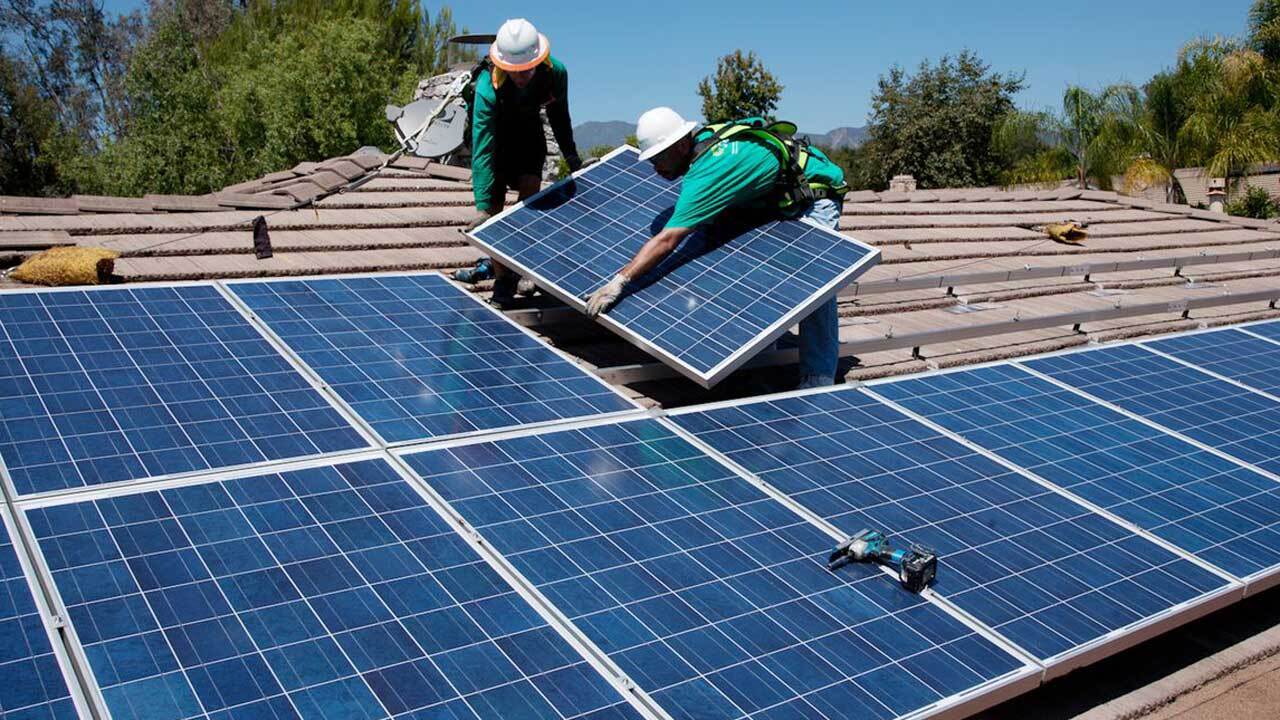
Kenya and Nigeria joined three other governments in endorsing a global rooftop solar declaration at COP31, following Australia’s initial support.
The initiative aims to double the number of solar-powered homes worldwide by 2030.
Financing, grid connections and installation capacity will determine how many households can participate.
African governments join the rooftop solar push
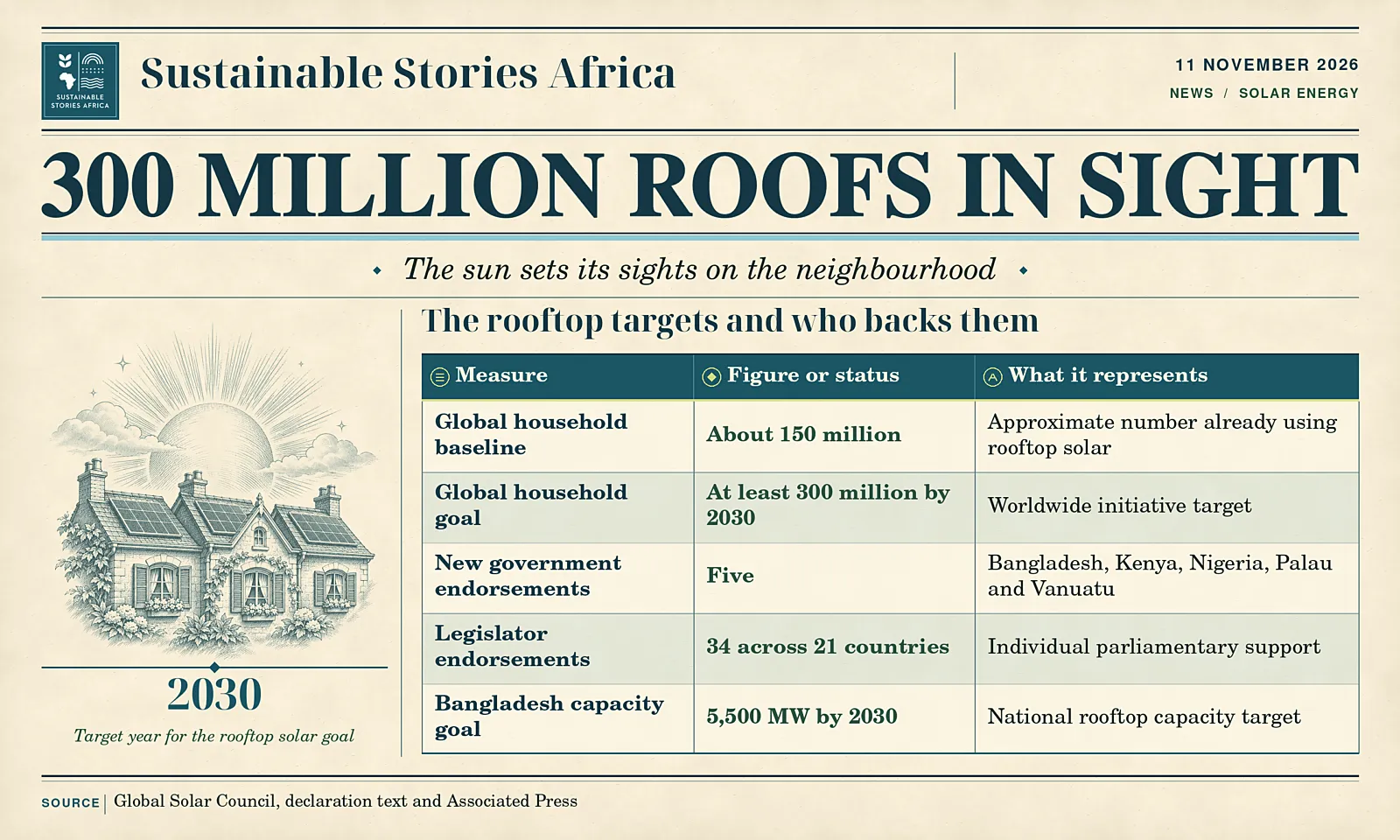
Kenya and Nigeria endorsed the Global Rooftop Solar Declaration in Antalya, Türkiye, on 10 November, joining Bangladesh, Palau and Vanuatu as new government backers of an initiative initially supported by Australia.
- The declaration supports a global goal of at least 300 million households with rooftop solar by 2030, up from about 150 million.
The endorsements give support to the initiative across Africa, Asia and the Pacific during the opening days of COP31.
The declaration asks governments to simplify permitting, improve access to finance, adapt grids for distributed power and train more workers.
- The Global Solar Council said 34 parliamentarians across 21 countries had also endorsed it.
- Indonesia’s state-owned power utility PT PLN backed the declaration, and Pakistan’s climate minister joined the discussion.
These forms of participation sit alongside the government endorsements.
The cost and capacity behind the target
A rooftop system has an upfront price and a series of decisions behind it.
- A buyer needs an installer, roof access, a way to pay and, for a grid-connected system, connection rules.
- For a household seeking backup power, equipment must be designed to supply the intended loads during an outage.
The declaration addresses several of those barriers through policy and financing commitments.
Bangladesh supplied a national example.
- Power Division secretary Mirana Mahrukh described a 5,500 MW rooftop capacity target by 2030, with an indicative pathway covering about 870,000 rooftops.
- The proposed financing scenario would support about 174,000 rooftops domestically, with about 696,000 requiring international cooperation.
That split illustrates how much the pathway depends on the availability and terms of external finance.
The Associated Press described the goal as roughly doubling today’s rooftop household-scale installations.
- An approximate baseline helps explain the ambition, but the declaration is a global total.
- Governments can contribute by consistently providing residential installation reports and explaining how shared systems are counted.
Capacity figures matter because small systems and homes with larger arrays contribute different amounts of electricity.
Who can afford to participate
Nigeria’s presidential aide on climate finance, Ibrahim A Shelleng, linked solar investment to energy security and jobs.
Australia’s climate and energy minister, Chris Bowen, cited his country’s rooftop uptake while pointing to finance, infrastructure and skills gaps elsewhere.
Countries with different power networks will need different approaches.
- A household with an unreliable connection may prioritise backup, while one on a more reliable grid may weigh bill savings and export terms.
Ownership also changes the calculation.
- A tenant may pay the electricity bill while the landlord controls the roof.
- An apartment block may have limited roof area relative to the number of households.
- Shared systems or financing designed for rental properties could widen access, where local rules allow.
Measuring uptake by housing type and income would show whether programmes reach households that face those barriers.
What governments can publish next?
The global pledge will be easier to track when participating governments explain which existing programmes count towards it, what new measures they plan and how they define a solar-powered household.
- For regulators and utilities, useful measures include connection wait times and service quality.
- For lenders, the cost of credit and deposit size matter alongside the number of systems financed. For training bodies, installer certification and after-sales support are practical indicators of capacity.
The declaration provides a shared direction for policy and investment.
- National delivery still rests with the institutions that set lending rules, train installers and maintain power networks.
- Publishing country baselines and installation milestones would give households and local businesses a clearer view of what to expect from the global initiative.
Financing terms can affect which systems prove durable.
- A household comparing offers needs to know how repayments change, what maintenance is included and how a battery replacement would be paid for.
Consumer protection and installer training matter together because a poorly installed system can leave a borrower paying for electricity it fails to deliver.
The initiative’s equity objective gives governments a reason to track those outcomes alongside uptake.
Path Forward – Making Rooftop Solar Finance Work Locally
Kenya and Nigeria can give the endorsement practical meaning by setting out how rooftop solar fits into national energy plans and how households will pay for systems.
Progress should be visible in completed installations, reasonable connection times and access for households with limited savings or roof rights.