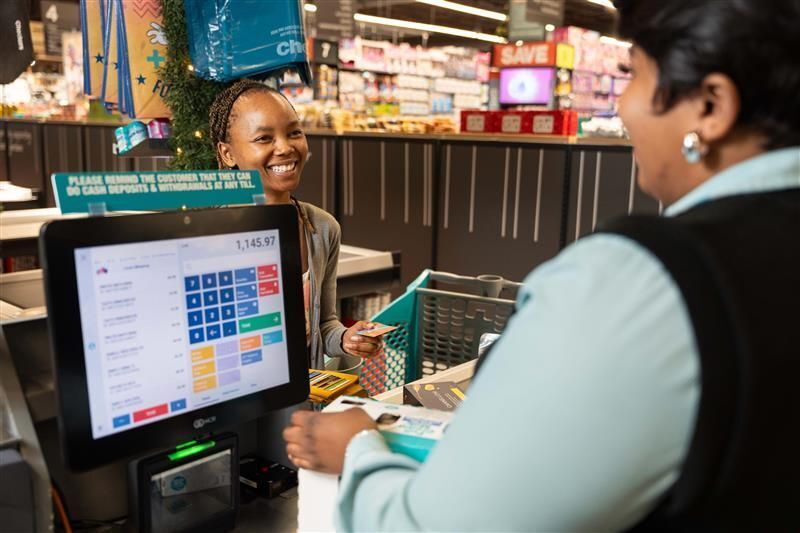
Shoprite and Investec have agreed in principle to expand the South African retailer’s transactional banking offering, including a proposed debit card.
The partnership would combine a supermarket network with regulated banking infrastructure.
For customers, the practical test is whether the expanded account makes everyday payments easier and affordable.
A debit card at the checkout
Shoprite Holdings and Investec announced on 9 November an agreement in principle to expand the South African retailer’s financial services business.
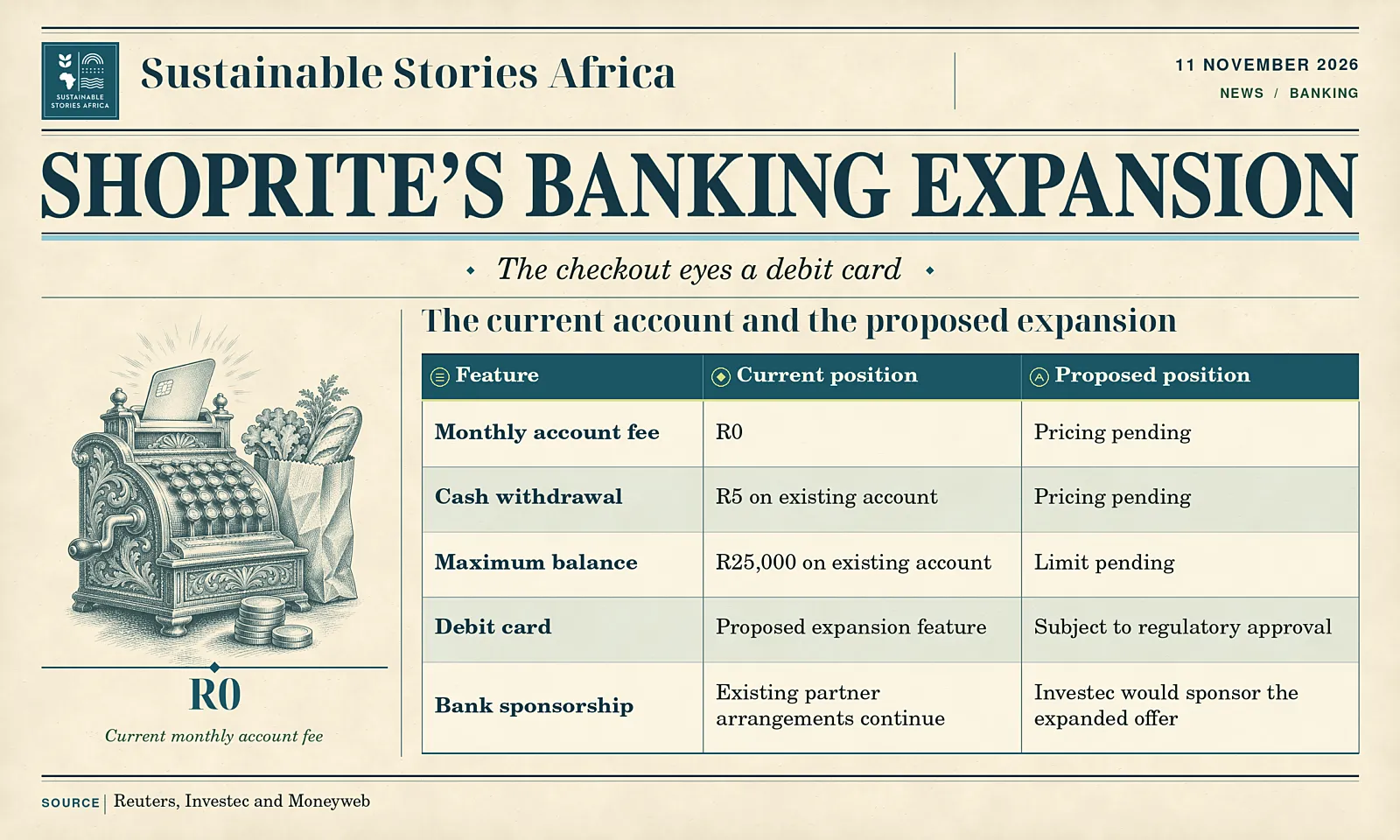
Under the plan, Investec Bank would sponsor a broader transactional account from Shoprite Financial Services, with a debit card among the proposed additions.
- The agreement requires regulatory approval.
- The companies presented the card as a way to offer customers more payment options, while leaving pricing and the launch timetable open.
For a shopper who already deposits or withdraws cash at a Money Market counter, the proposed card would extend the relationship beyond the supermarket till.
- What customers could do with it, and at what cost, will depend on the product terms.
The deal gives Shoprite a route to offer more banking services through the stores and digital channels customers already use, and gives Investec a route into everyday retail payments.
Who supplies what
The proposed division of work puts Shoprite in front of the customer.
- Its financial services business would distribute products through its brands, shops and digital channels.
- Investec would supply the banking licence, balance sheet, infrastructure and regulatory framework.
The agreement is non-exclusive, and Reuters reported that it leaves Shoprite’s existing relationships with banks and payment partners in place.
The existing account gives shoppers a reference point for judging the proposal.
- Moneyweb reported that the Money Market account has no monthly fee, charges R5 for a cash withdrawal and has a maximum balance of R25,000.
- It can receive social grants.
These are features of the current product.
Customers will need the expanded account terms to compare price and functions.
The agreement also illustrates a choice facing large retailers.
- They can draw on the reach of a store network without building every part of a banking operation themselves.
- Under the proposed division, Shoprite handles the customer-facing part of the relationship, while Investec handles the balance sheet and banking infrastructure.
The approval process and product disclosures will help establish how that division works for consumers.
What a wider payments network could change
Shoprite chief executive Pieter Engelbrecht told Reuters that the retailer wanted to make financial services more accessible and affordable.
Investec group chief executive Fani Titi described an opportunity to reach beyond private banking customers and participate more widely in the payments and retail deposits markets.
The same arrangement therefore serves two commercial aims.
- Shoprite can expand what it offers shoppers, while Investec can reach customers through a distribution network built for frequent, everyday transactions.
The household case is more specific.
- A customer receiving a grant or wages may be able to make purchases without withdrawing the entire balance in cash.
- A card could make that easier if it works where the customer shops and the charges fit small transactions.
- A nearby counter may help with cash and support, while digital channels can serve people who prefer to manage an account on a phone.
Each benefit depends on how the final service is designed.
The terms customers will need
Before customers can judge the offer, they need a fee schedule that covers card purchases, cash withdrawals, replacement cards and any inactivity charges.
- Clear terms should also explain how to block a lost card, challenge an unauthorised payment and get help in-store or remotely.
- A customer comparing products should be able to estimate the cost of a typical month, including a mix of cash and card transactions.
For Shoprite and Investec, availability and complaint handling will matter alongside account sign-ups.
- A customer who can open an account at a familiar shop still needs to know who resolves a failed transaction and how quickly.
- Published terms and service arrangements would aid customers and consumer groups to assess the companies’ accessibility claims when the proposal advances.
Transaction reliability is another practical measure of access.
- A store can handle large volumes of routine activity, but resolving an exception may require different systems and staff.
- The proposed card will therefore be judged by ordinary events such as a declined payment, a refund or an ATM withdrawal.
These experiences will help establish whether the service can become a customer’s regular account.
Path Forward – Regulatory Review Comes Before Product Launch
The agreement remains subject to approval.
The next disclosures to watch are the launch timetable, final fees, account limits and where customers can use the debit card.
The first evidence of wider access will come from how customers use the service, what typical transactions cost and how easily they can resolve problems.