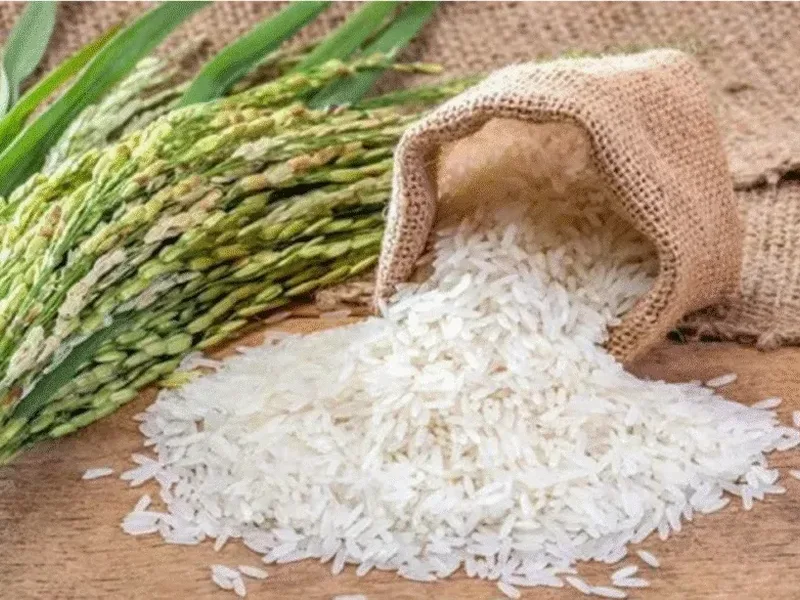
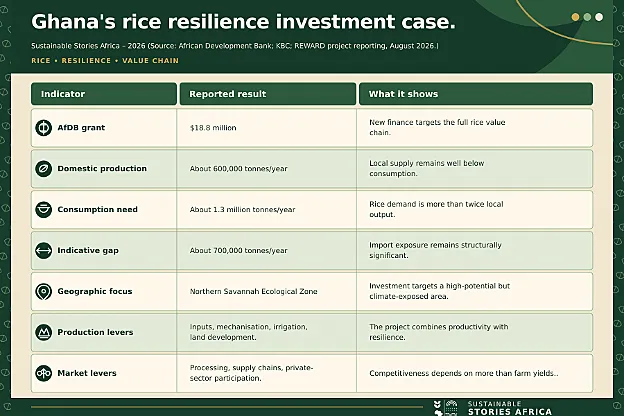
Ghana has secured an $18.8 million grant from the African Development Bank to strengthen domestic rice production under the regional REWARD programme.
The investment targets climate-resilient farming, irrigation, mechanisation, processing and stronger markets.
For a country producing roughly 600,000 tonnes against annual consumption of about 1.3 million tonnes, the intervention is also about reducing import exposure and strengthening food-system resilience.
Ghana targets persistent domestic rice gap
Ghana is putting fresh development finance behind an old food-security problem: the country consumes considerably more rice than its farms currently produce.
The African Development Bank Group has approved an $18.8 million grant to Ghana for the Regional West Africa Resilient Rice Value Chains Development, or REWARD, Project.
The investment is intended to increase domestic production, strengthen market systems and improve the competitiveness of locally produced rice while reducing dependence on imports.
Official data cited by KBC puts annual domestic production at roughly 600,000 tonnes against consumption requirements of about 1.3 million tonnes.
That roughly 700,000-tonne gap explains why rice policy is increasingly becoming an economic-resilience issue as well as an agricultural one.
Climate resilience sits at the project's core
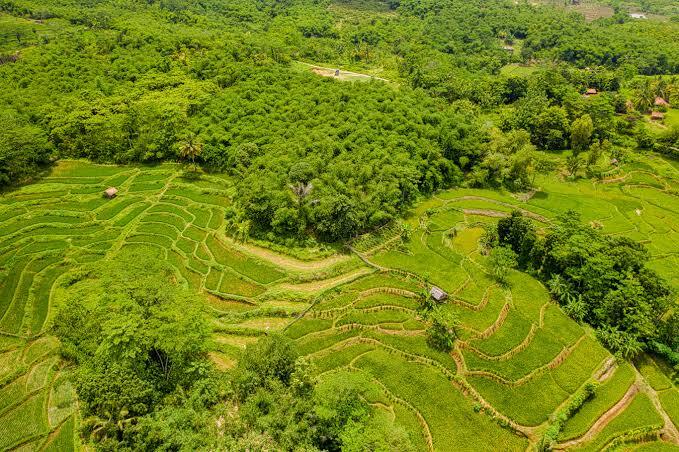
The project will focus on selected districts in Ghana's Northern Savannah Ecological Zone, an agriculturally important region where climate risks, infrastructure weaknesses and limited market integration continue to constrain productivity.
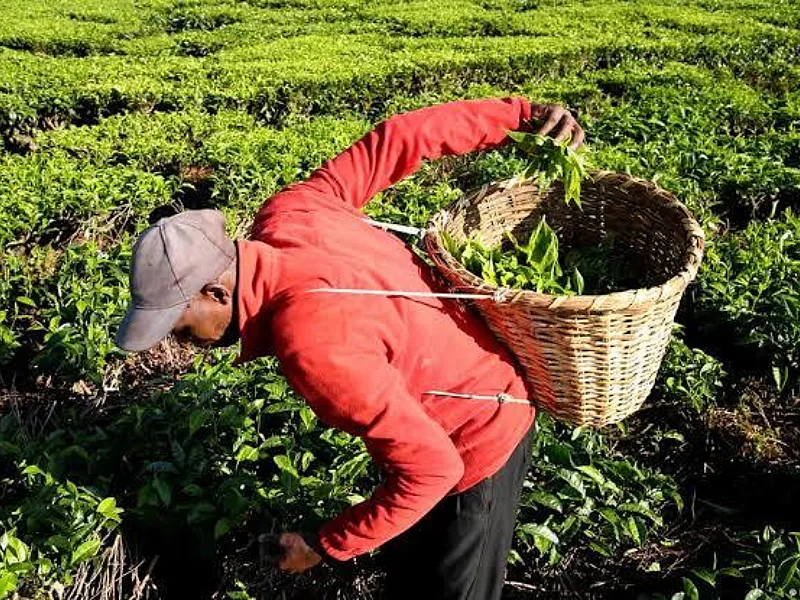
Funding will support access to improved production technologies, quality inputs and mechanisation, as well as irrigation and land development.
Processing and markets are also part of the equation.
The programme is expected to support modernisation of rice-processing facilities, strengthen market connections and encourage increased private-sector participation across the value chain.
That wider approach is important.
- Raising yields without addressing storage, processing, logistics and access to buyers risks leaving farmers with higher output but weak commercial returns.
Local production offers wider economic gains
Closing Ghana's rice gap would produce benefits beyond food availability.
- Greater domestic supply can reduce exposure to international commodity prices and supply-chain disruptions while retaining more agricultural spending within the national economy.
- Competitive local production can also support employment in farming, mechanisation, transport, milling, packaging and distribution.
Climate resilience is equally important.
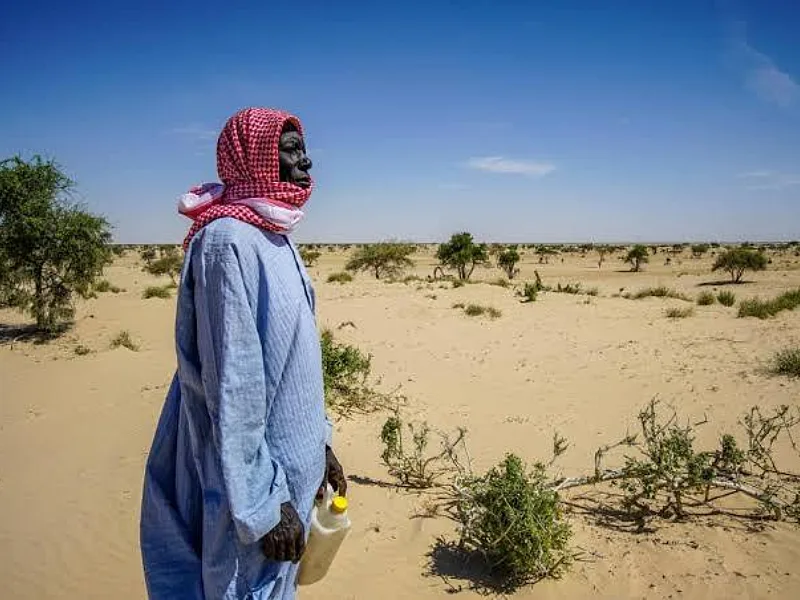
- Changes in rainfall, heat and water availability increasingly affect agricultural productivity across West Africa.
- Irrigation and better production practices can help farmers manage those risks; however, the infrastructure will need effective maintenance, farmer training and reliable market access if the investments are to produce lasting gains.
The project therefore provides an opportunity to treat rice as an integrated value chain rather than simply a crop.
Investment must reach farmers and markets
Ghana's challenge now shifts from securing funding to delivering measurable agricultural outcomes.
- Implementation should track changes in yields, farmer incomes, cultivated and irrigated land, processing efficiency and locally produced rice's share of consumption.
- Women and young agricultural entrepreneurs should also have meaningful access to inputs, equipment, finance and market opportunities.
Policymakers will need to ensure that increased production translates into commercially viable local rice rather than temporary gains dependent on continued development support.
If that happens, REWARD could demonstrate how climate adaptation, rural industrialisation and food security can reinforce each other.
Path Forward – Ghana must turn finance into harvests
The $18.8 million grant provides Ghana with additional tools to strengthen rice production, processing and agricultural resilience, but finance alone will not close the domestic supply gap.
The decisive measures will be implementation, farmer access, functioning irrigation, competitive processing and reliable markets.
Success would mean more than additional tonnes of rice: it would mean a stronger domestic food system capable of creating rural livelihoods while reducing Ghana's vulnerability to external supply shocks.