The Global Environment Facility has approved $8.4 million for a five-year Eritrean programme targeting degraded land, biodiversity and climate resilience.
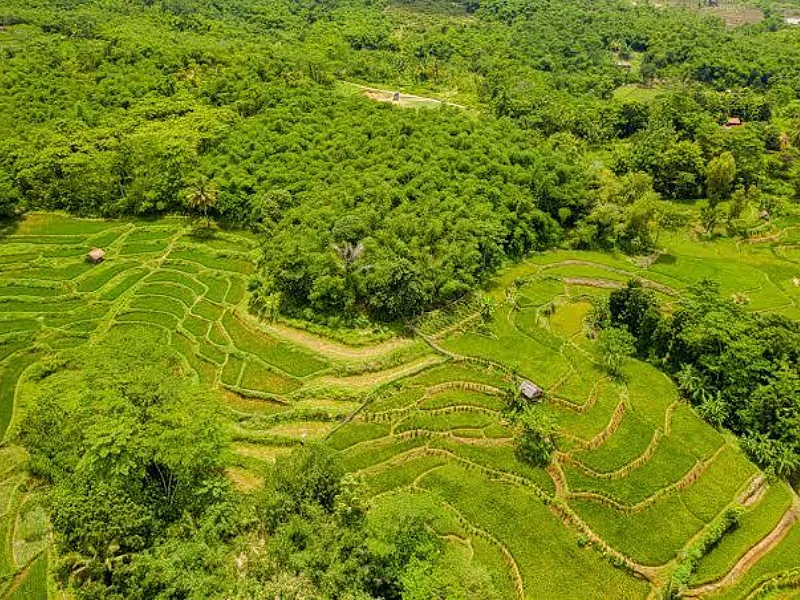
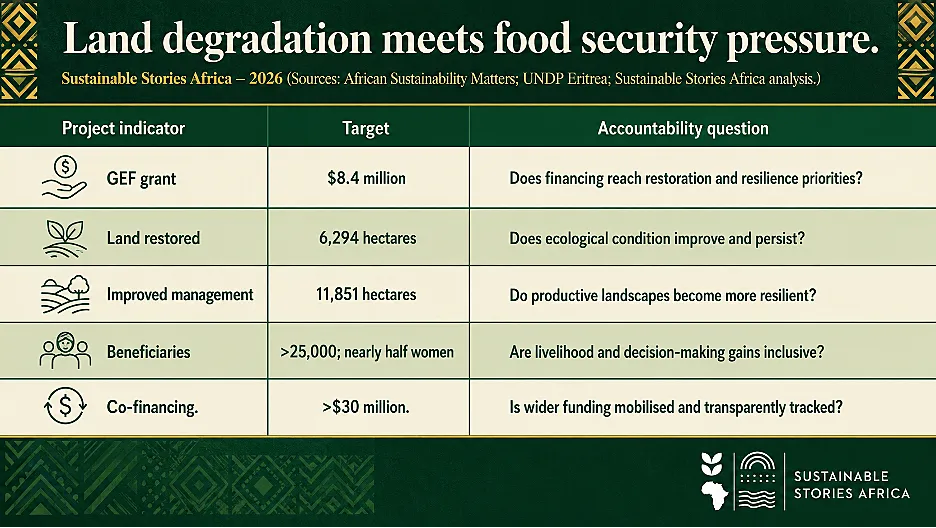
The project aims to restore 6,294 hectares and improve management across another 11,851 hectares of productive landscapes.
More than 25,000 people are expected to benefit, making the delivery to livelihoods, women’s participation and ecosystem recovery central to the investment’s credibility.
Restoration finance targets farms and ecosystems
Eritrea has secured an $8.4 million Global Environment Facility grant for a five-year land-management programme designed to restore degraded landscapes while strengthening food security and climate resilience in rural communities.
The initiative will be executed by the Ministry of Land, Water and Environment with support from the United Nations Development Programme.
Its targets are concrete: restore 6,294 hectares of degraded land, improve management across 11,851 hectares of agricultural, grazing and forest landscapes, and benefit more than 25,000 people, nearly half of them women.
More than $30 million in co-financing is also expected from government, communities and development partners.
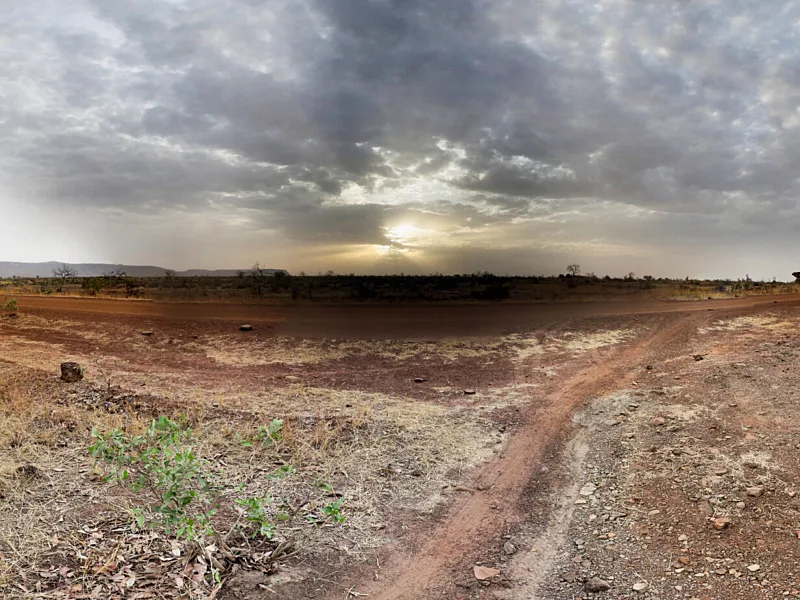
Land degradation meets food security pressure
The programme;
- Formally focuses on sustainable land management and land degradation neutrality.
- Addresses interconnected challenges farming households experience as a single system.
- These include declining soil fertility, water stress, biodiversity loss, climate shocks and weaker productivity.
- Rather than treating restoration as standalone conservation, the project links ecosystem recovery with climate-resilient agriculture and livelihoods.
Planned measures include integrated land-use plans, stronger community and institutional governance of land and water, gender-responsive management committees, and technical support for extension services.
Improved soil and water conservation is expected to boost productivity and carbon sequestration while strengthening drought resilience.
The land degradation neutrality objective reframes success as more than planting vegetation.
- It requires preventing new degradation while recovering stressed land.
- In farming and grazing areas, that means balancing production needs against soil cover and water management, with integrated planning making these trade-offs visible at community level, where decisions determine whether restoration endures after funding ends.
Livelihoods make restoration economically durable
The project’s development case depends on whether restored landscapes can also support household incomes.
UNDP says it will promote climate-resilient livelihood options and expand value chains in agriculture, livestock and beekeeping, alongside climate-smart farming and alternative income activities intended to reduce pressure on natural resources.
That combination matters because restoration limits resource use without offering viable alternatives is difficult to sustain.
By aligning healthier soils and watersheds with income opportunities, the programme can make conservation more valuable to the communities expected to maintain it after project finance ends.
Nearly equal participation by women is also important because access to land, extension support and value chains determines who captures the benefits.
Track outcomes beyond hectares and spending
Implementation now needs to turn ambitious area targets into measurable ecological and social outcomes.
- Monitoring should show not only hectares treated, but whether vegetation and soil health recover, water retention improves, farm productivity becomes more resilient, and household incomes diversify.
- Gender-responsive committees should also translate into meaningful influence over local land and water decisions.
The programme includes national learning, monitoring and reporting systems for land degradation, biodiversity and climate outcomes.
- Used well, those systems can help Eritrea identify which practices work, scale them to other landscapes and demonstrate value to co-financiers.
- Transparent reporting on the more than $30 million expected in co-financing will be equally important to show that the GEF grant is genuinely leveraging wider investment.
Durable evidence will matter as future restoration finance is mobilised.
Path Forward – Scale proven restoration through local ownership
Eritrea’s next task is delivery: restore land that remains productive, strengthen institutions that communities trust, and make climate-resilient livelihoods commercially viable beyond the five-year project cycle.
If monitoring captures ecological recovery, women’s participation and income resilience alongside hectares restored, the programme can provide a stronger model for scaling land degradation neutrality while advancing Eritrea’s commitments on climate, biodiversity, food security and sustainable development.