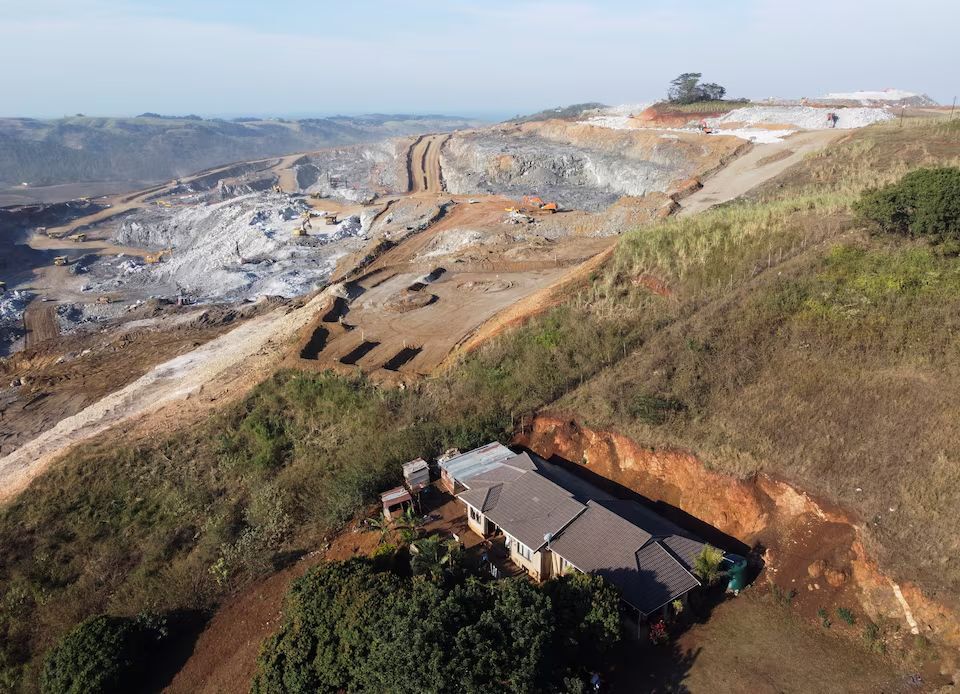
South Africa's drive to turn lithium into a pillar of its green industrial economy is meeting resistance from farming communities in KwaZulu-Natal.
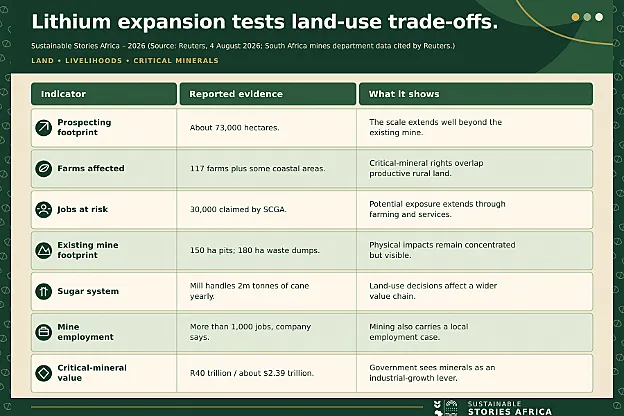
Prospecting rights cover about 73,000 hectares, much of it productive farmland, as demand for battery minerals grows.
The dispute exposes a difficult question for Africa's energy transition: how can the continent extract minerals needed for a lower-carbon future without sacrificing food production, rural livelihoods and community rights?
Green mineral ambitions meet farmland resistance
The minerals needed to decarbonise the global economy are creating a new sustainability dilemma in South Africa: some of the land being targeted for lithium could also be needed to keep farms, rural businesses and food systems alive.
More than a dozen lithium prospecting licences have been granted since 2023 along the country's southeast coast.
Data from South Africa's mines department reviewed by Reuters show that the licences cover about 73,000 hectares across 117 farms and some coastal areas.
A local campaign group says 30,000 jobs across farming, agricultural labour and related services could be threatened.
That creates an uncomfortable collision between two sustainability priorities: expanding the critical-minerals economy and protecting productive agricultural landscapes.
Farming communities count transition costs
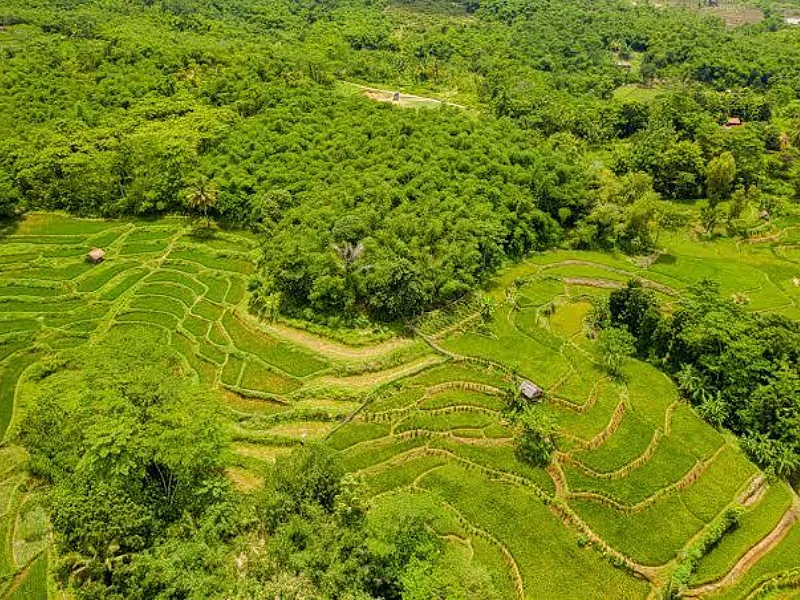
The tension is particularly visible in KwaZulu-Natal, where sugarcane and macadamia production support commercial farmers, smallholders, workers, processors and local businesses.
The sugar mill referenced in Reuters' reporting processes about two million tonnes of cane annually from roughly 2,000 small-scale and 600 commercial growers.
Farmers in the wider prospecting area produce about one million tonnes of cane and macadamia nuts a year.
For households closest to existing mining operations, the debate is already personal.
Reuters reported that some residents blamed blasting for cracks in homes, dust and damage to vegetation, while families were being relocated.
SA Lithium director Ian Harbottle said the company had relocated 150 farmers voluntarily and argued that affected households were better off after relocation.
The company also says its operation has generated more than 1,000 jobs and disputes claims that mine water is polluting rivers.
The competing accounts underline why transparent environmental monitoring and meaningful community participation will be essential.
Critical minerals still offer economic gains
South Africa has strong economic reasons to develop critical minerals. President Cyril Ramaphosa said in February that the country held an estimated R40 trillion, approximately $2.39 trillion, in critical-mineral resources, describing the sector as capable of strengthening industrial development and employment.
Nor should the dispute obscure the material advantages of shifting away from fossil fuels.
Research cited by Reuters estimated average extraction of 1,180 tonnes of material per gigawatt for coal, compared with 59 tonnes for wind and 45 tonnes for solar, including minerals required for battery storage.
The issue, therefore, is not whether the energy transition needs minerals.
It is whether extracting those minerals reproduces environmental damage, displacement and unequal benefit-sharing in the communities hosting them.
Just transition needs stronger land safeguards
That makes land-use governance as important as mineral policy.
- Authorities will need to assess cumulative impacts across multiple prospecting and mining applications instead of treating each licence as an isolated project.
- Water quality, agricultural productivity, rehabilitation liabilities, relocation standards and community livelihoods should form part of the economic calculation.
For mining companies, compliance alone may prove insufficient.
- Building durable community consent will require credible environmental data, transparent compensation and evidence that local people receive lasting economic value.
South Africa's lithium opportunity can strengthen its place in the clean-energy economy. But a green transition that weakens rural food systems would exchange one sustainability problem for another.
Path Forward – A just transition must protect livelihoods
South Africa now has an opportunity to establish a stronger model for critical-mineral development, one that values agricultural land, water, communities and minerals within the same decision-making framework.
The measure of success should extend beyond lithium production or mining jobs.
A genuinely just transition must demonstrate that the communities supplying the minerals of tomorrow are not required to surrender their own economic security to make that future possible.