The financing demonstrates Africa's deeper integration into the electric-vehicle value chain, from cathode materials to battery cells and packs.
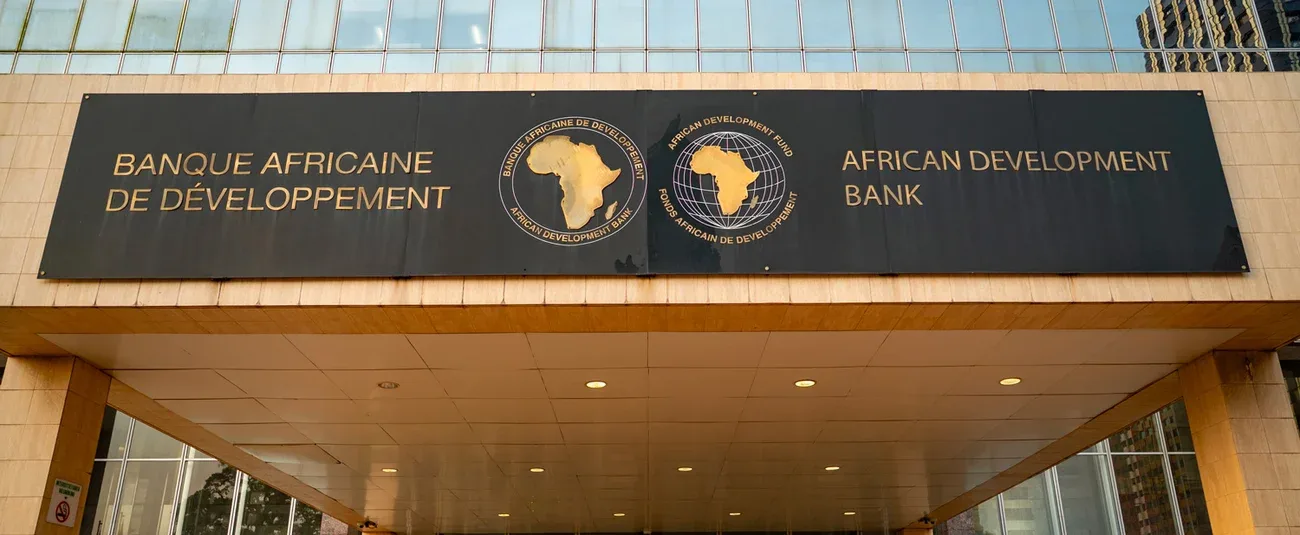
The African Development Bank has approved a €100 million loan to Gotion Power Morocco for an integrated gigafactory for lithium iron phosphate batteries.
Its first phase targets 10 GWh of annual cell-and-pack capacity, with expansion planned towards 100 GWh.
The investment could move Africa from raw-material supply towards manufacturing, but local skills, clean power and responsible sourcing will determine its development value.
Africa Enters The Battery Factory Race
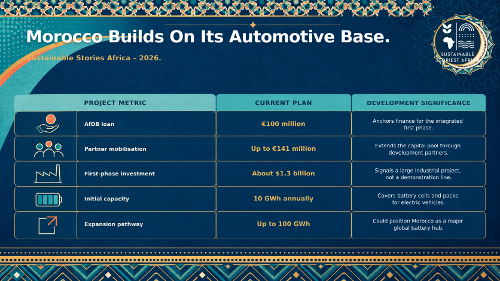
The African Development Bank has approved a €100 million loan to Gotion Power Morocco for what it describes as Africa’s first integrated lithium iron phosphate battery gigafactory, placing the continent closer to the industrial centre of the global electric-mobility transition.
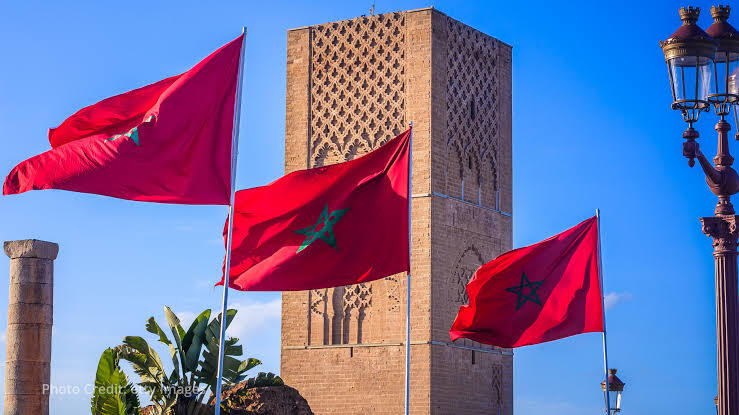
The project will be built in the Atlantic Free Zone in Morocco’s Rabat-Salé-Kénitra region and cover the chain from cathode materials to battery cells and packs.
The first phase is expected to cost about $1.3 billion and deliver 10 gigawatt-hours of annual capacity, with a longer-term expansion pathway to 100 GWh.
Alongside its own loan, AfDB plans to mobilise up to €141 million from partner institutions under the New African Financial Architecture for Development.
The project is led by Gotion High-Tech, the Shenzhen-listed battery manufacturer headquartered in Hefei, China.
Morocco Builds On Its Automotive Base
Morocco already has a mature automotive export industry, port links to Europe, renewable energy assets and industrial zones designed for global manufacturers.
The battery plant seeks to connect those strengths to one of the fastest-growing segments of the vehicle value chain.
Lithium iron phosphate batteries are widely used in electric vehicles and stationary storage because they avoid nickel and cobalt, offer strong thermal stability and can provide long cycle life.
Producing cells locally can capture more value than exporting processed minerals or importing completed battery packs.
The opportunity is also regional. Affordable battery systems can support renewable energy storage, electric buses, two- and three-wheelers and more resilient power for businesses.
However, the project’s export orientation means the scale of domestic and African benefits will depend on supplier development, workforce training and access for local manufacturers.
A Gigafactory Can Anchor New Industry
At 10 GWh, the initial phase represents industrial-scale production rather than a pilot.
- If local firms enter maintenance, logistics, component production and recycling, the investment can create a broader manufacturing ecosystem and improve Morocco’s position in green trade.
The plant could also strengthen Africa’s bargaining power in the energy transition.
- The continent holds important critical-mineral resources, but value has often been left at the extraction stage.
- An integrated factory offers a route towards engineering, process control, testing and intellectual capability.
However, a “green” label is not automatic.
- Battery manufacturing is energy- and water-intensive, while mineral supply chains can carry environmental and human rights risks.
- Transparent sourcing, lifecycle emissions reporting, water stewardship and credible end-of-life plans will be essential.
Make Local Value A Financing Condition
AfDB and its financing partners should tie disbursement and monitoring to measurable development outcomes:
- Local procurement, apprenticeships, women’s participation, renewable electricity, water efficiency, worker safety and recycling capacity.
Moroccan authorities can reinforce the investment through technical education, supplier finance and clear battery-waste rules.
- Regional trade frameworks should also help African mobility and power-storage companies access locally produced cells, rather than leaving the factory as an export enclave.
Path Forward – Connects Scale With Inclusion
The next milestones are financial close, construction, responsible supply contracts and workforce preparation.
Public reporting should show how the project performs on emissions, water, jobs and local content.
If Morocco connects 10 GWh of production to African suppliers and users, the gigafactory can become more than a first for manufacturing.
It can demonstrate how green industrial policy converts transition demand into durable skills, exports and shared economic value.