The Greater Horn of Africa could face a severe multi-country polycrisis from late 2026 into 2027 as poor rains, conflict, high prices, disease risks and aid cuts converge.
Experts warn these pressures may multiply rather than add together, weakening food systems and response capacity.
Prevention now depends on local institutions, flexible finance, reliable monitoring and sustained diplomacy.
Several Crises Are Beginning to Collide
The Greater Horn of Africa risks a major multi-country polycrisis in the second half of 2026 and into 2027 as poor rainfall, a strengthening El Niño, violent conflict, higher food and fertiliser costs, disease threats and weakened humanitarian capacity converge, a group of famine and conflict specialists has warned.
The warning is not that every feared outcome has occurred. It is that multiple stressors are aligning in ways that can amplify one another.
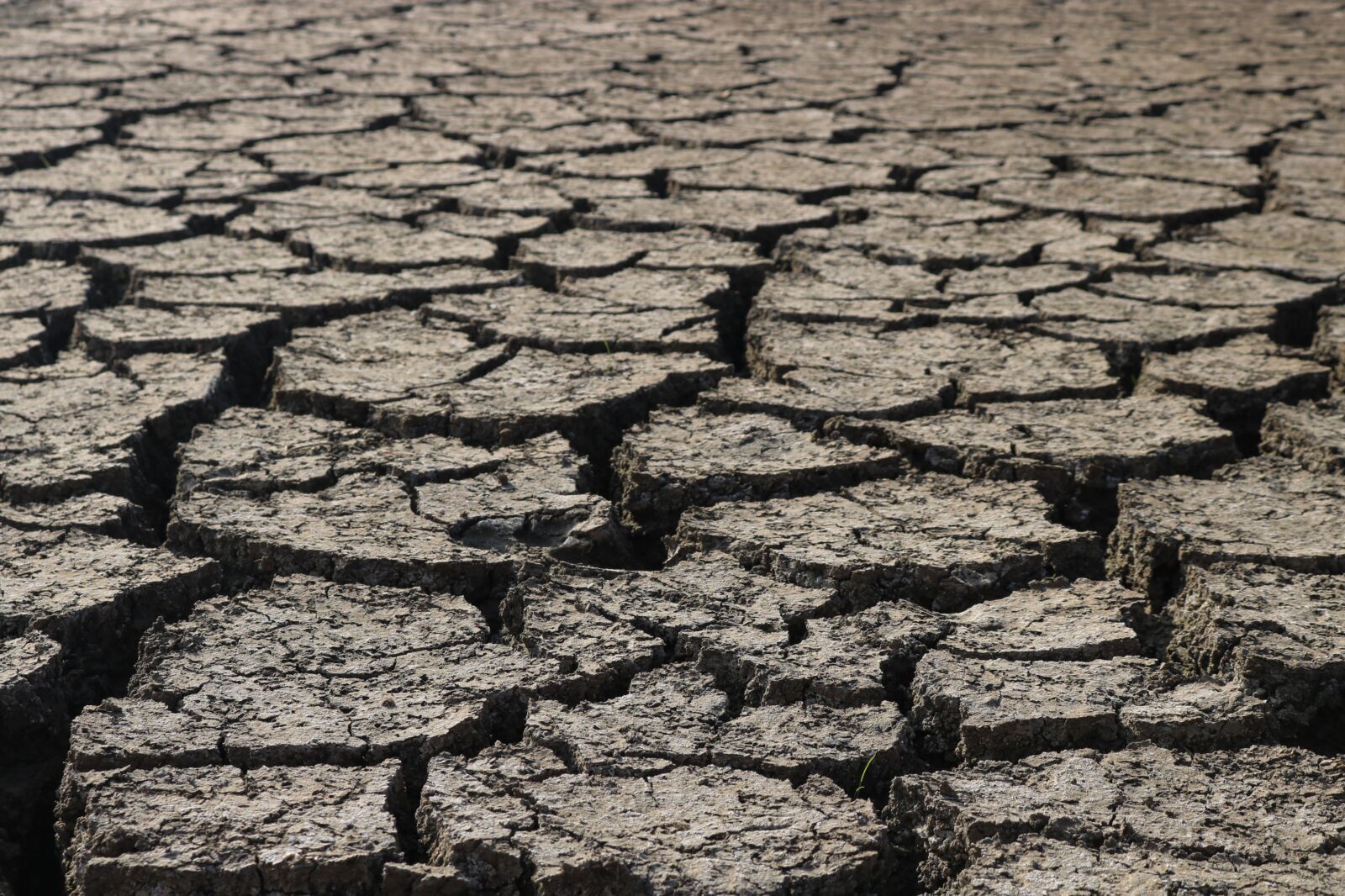
The eastern Greater Horn, including parts of Somalia, eastern Kenya and eastern Ethiopia, received well-below-average short rains in late 2025 and weak long rains from March to May 2026, damaging crops, grazing and water access.
Below-average rainfall is also forecast across parts of the northern Horn.
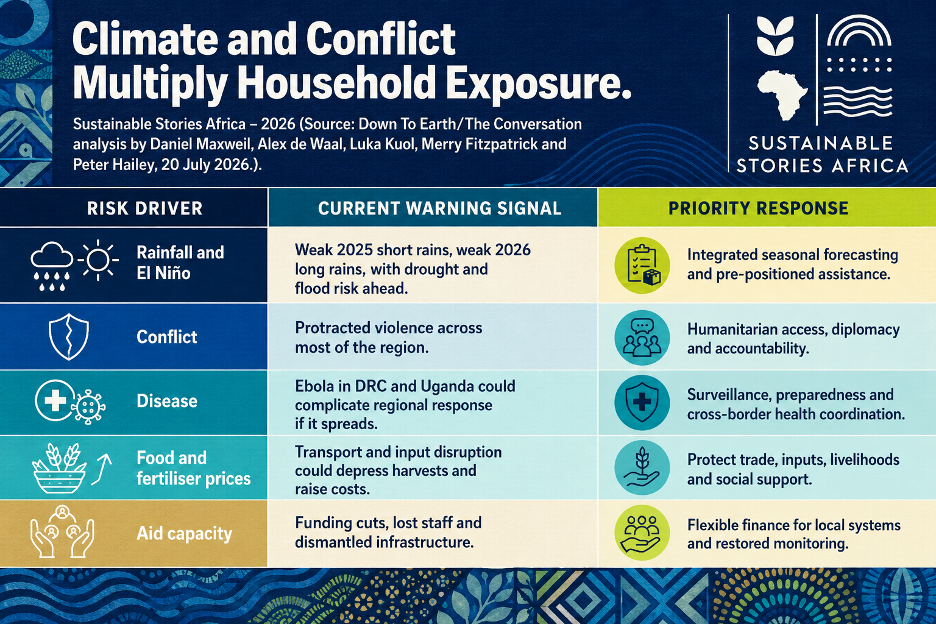
Climate and Conflict Multiply Household Exposure
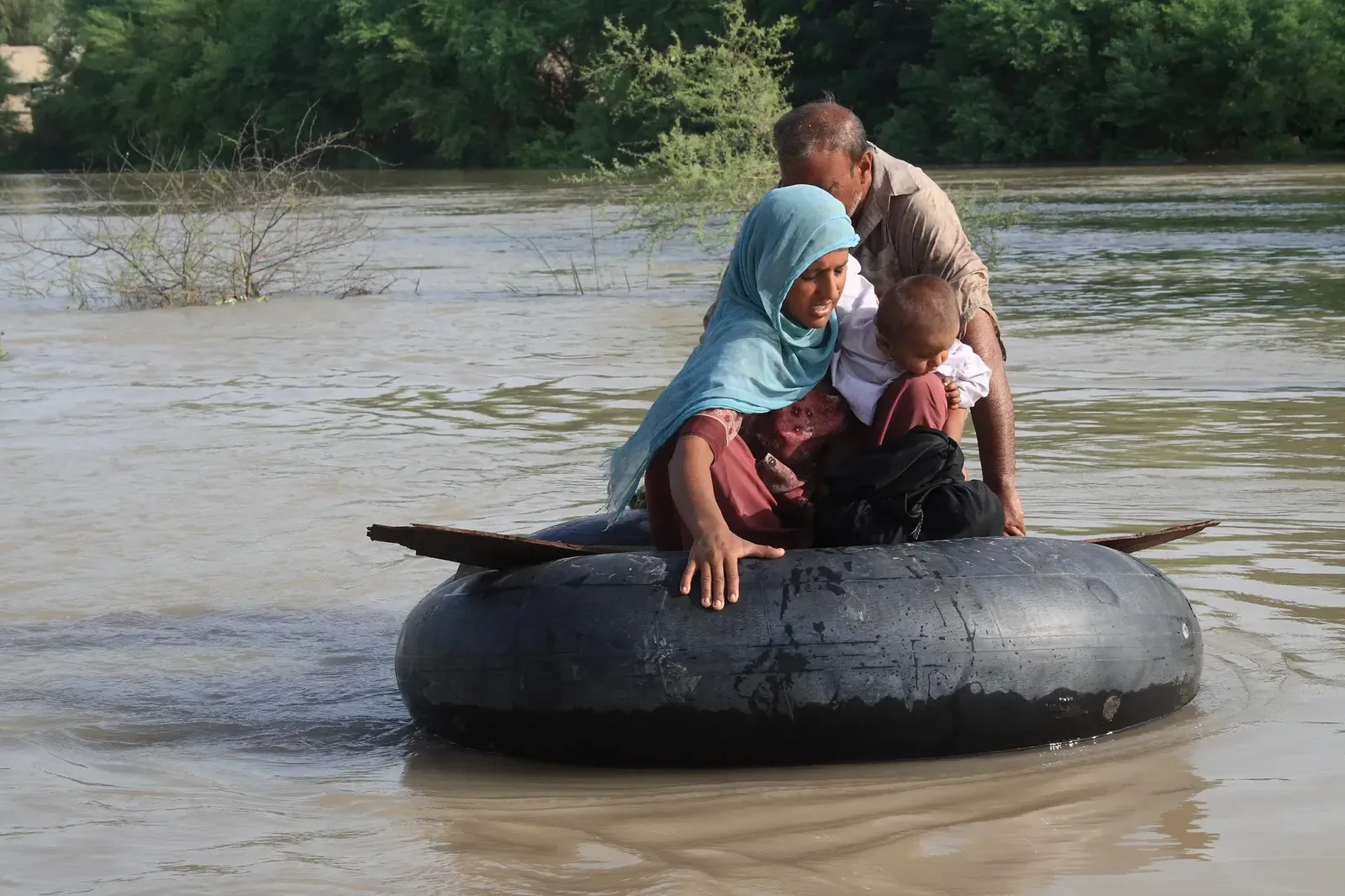
A powerful El Niño could bring both drought and extensive flooding across different locations, destroying livelihoods and displacing people.
At the same time, all countries in the Greater Horn except Kenya are experiencing protracted violent conflicts, while analysts have flagged risks of worsening violence in Ethiopia and South Sudan.
Conflict restricts trade, access and humanitarian operations; it can also turn hunger into a weapon.
A separate Ebola outbreak in the Democratic Republic of the Congo and Uganda has not spread throughout the Greater Horn.
However, experts warned that movement into South Sudan would add epidemic pressure and complicate responses to other shocks.
The risk therefore sits in the interaction: malnutrition raises vulnerability, displacement weakens surveillance, and insecurity obstructs healthcare.
Prices and Aid Cuts Deepen Vulnerability
External conflict is also transmitting economic stress.
This is linked to the war in Iran, including higher transport and food costs, and warns that fertiliser shortages could reduce harvests later in 2026.
The Horn could be hit twice: lower local production and higher global prices. Poor agricultural labourers may face fewer work opportunities while paying more for food.
At the same time, the formal humanitarian system has lost funding, staff and infrastructure following the closure of USAID and wider donor cuts.
Restoring money alone cannot immediately rebuild dismantled programmes, supply chains or technical teams.
Monitoring systems have also weakened, making it harder to judge severity, target assistance and document abuses.
Local Responders Need Flexible Direct Support
The first response is already local.
- Families, neighbours, mutual-aid networks and diaspora communities have expanded support as formal systems recede.
These structures can move quickly and understand local conditions, but the scale of the threat exceeds what self-financing can sustain.
- Donors and governments should direct more flexible funding through credible local organisations, reduce unnecessary restrictions on diaspora transfers and protect humanitarian access.
Regional institutions also need integrated early warning that combines rainfall, crop, market, conflict, nutrition and disease data.
- Separate dashboards will miss the way one shock accelerates another. Prevention should include pre-positioned food and medical supplies, livelihood support, water services, vaccination and surveillance capacity, alongside diplomacy and accountability for actors who obstruct aid or use starvation against civilians.
Path Forward – Prevent the Crisis Cascade
Governments, regional bodies and donors must act before multiple thresholds are crossed: finance local responders, restore monitoring, safeguard trade and remittance channels, and prepare health and food systems for simultaneous shocks.
Peace efforts remain the most important form of resilience.
The Greater Horn does not need another late emergency appeal after livelihoods collapse.
It needs anticipatory action that treats climate, conflict, prices and disease as one connected risk system, and protects people before displacement, hunger and mortality reinforce one another.