Rainfall, temperature and vegetation shape malaria transmission across sub-Saharan Africa in delayed, nonlinear ways, a major multi-country study has found.
The analysis links 2,400 monthly observations across 20 countries to climate, population density and elevation.
Turning those signals into local early warnings could help health systems position nets, spraying and treatment before cases rise.
Climate Signals Arrive Before Malaria Cases
Rainfall, temperature and vegetation greenness can influence malaria incidence weeks or months later, offering African health systems a potential window to act before transmission accelerates.
A study published in Scientific Reports analysed monthly data from 20 sub-Saharan African countries between January 2015 and December 2024.
The researchers linked 2,400 observations of malaria incidence with rainfall, near-surface temperature and vegetation, while accounting for population density and elevation.
The scale makes the work one of the largest multi-country assessments of climate-sensitive malaria transmission.
Its central message is practical: weather does not merely accompany outbreaks; under certain conditions, it can help anticipate them.
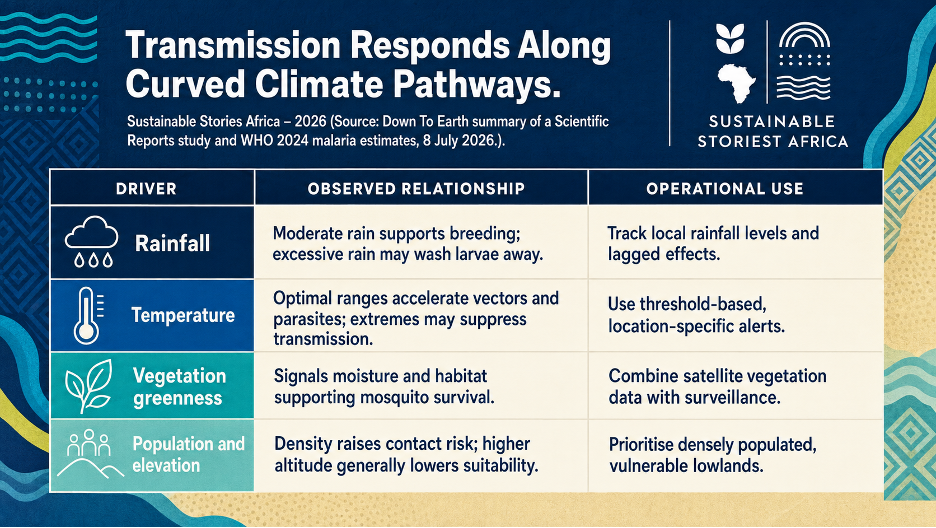
Transmission Responds Along Curved Climate Pathways
The relationships were neither linear nor immediate. Moderate rainfall can create breeding sites, while excessive rain can wash away mosquito larvae.
- Temperatures within a favourable range speed mosquito growth and parasite development, but extreme heat can make transmission less suitable.
- Greener vegetation often signals moisture and habitat conditions that support mosquito survival.
Population and geography further shape risk.
Dense settlements increase opportunities for mosquito-human contact, while higher elevations tend to reduce transmission because cooler temperatures constrain mosquito development.
This means a national average rainfall is not enough.
Forecasting must combine local weather, landscape and settlement conditions, then account for the lag between an environmental change and recorded illness.
Africa Carries the Greatest Human Burden
The urgency is visible in the 2024 malaria burden.
- The World Health Organisation estimated 282 million cases and 610,000 deaths worldwide.
- Its African Region accounted for about 265 million cases and 579,000 deaths, roughly 95% of both totals.
- Children under five represented about three-quarters of malaria deaths in the region.
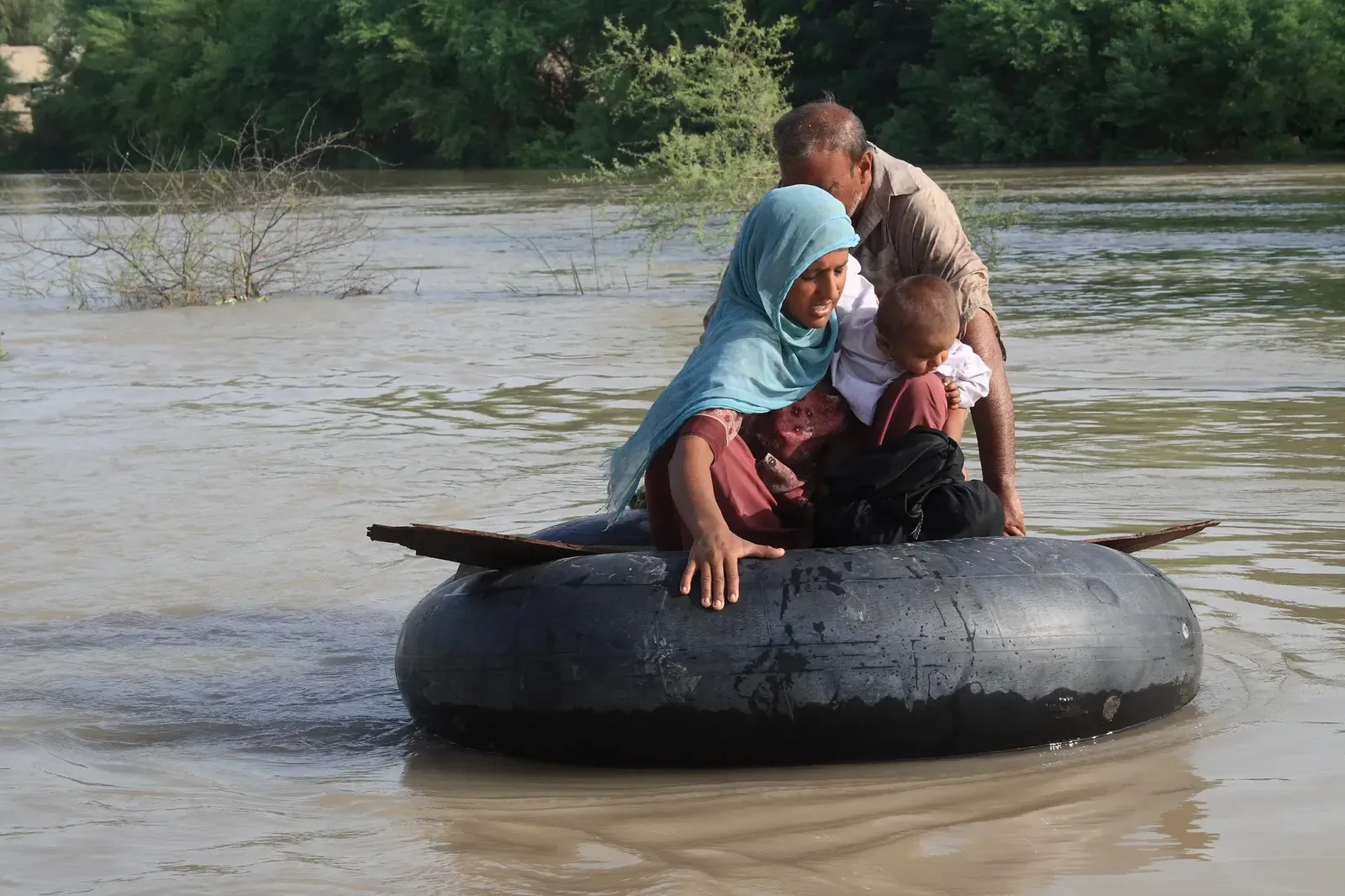
Behind those figures are households navigating fever, transport costs, lost work and overstretched clinics.
- A delayed response can leave rural facilities without diagnostics or medicines precisely when cases rise.
- Conversely, advance notice can help officials pre-position commodities, target vector control and alert communities before seasonal conditions translate into preventable deaths.
Forecasting Must Become Local Public Infrastructure
The study recommends integrating climate information into malaria surveillance and early-warning systems.
That requires routine data sharing among meteorological agencies, health ministries and local governments; interoperable dashboards; reliable case reporting; and clear thresholds that trigger action.
- Forecasts should guide insecticide-treated net distribution, indoor residual spraying and case management, particularly in vulnerable lowland communities.
Climate information cannot replace testing, treatment, vaccination or vector control.
Nor should algorithms divert resources from communities with weak reporting.
- Where they are used responsibly, however, they can improve timing.
Governments and funders should invest in local analytical capacity so that forecasting tools are maintained in African institutions and adjusted to changing mosquito behaviour, land use and climate patterns.
Path Forward – Forecast Earlier, Protect Communities
Countries should pilot district-level malaria alerts that combine rainfall, temperature, vegetation, elevation, and verified case data, then measure whether alerts improve intervention timing and health outcomes.
Community health workers must be part of both design and response.
As climate variability changes familiar disease seasons, prevention must become more anticipatory.
The prize is simple but profound: more time to position supplies, warn families and stop favourable mosquito conditions from becoming a surge in severe illness.