The Bank of England says climate risks to firms and UK financial stability are becoming more immediate, with severe repricing capable of matching recent market-stress episodes.
Flood damage and retreating insurance could transmit physical risk to households, lenders and public finances.
The warning turns climate preparedness from a sustainability exercise into a core test of financial resilience.
Climate Risk Enters The Immediate Horizon
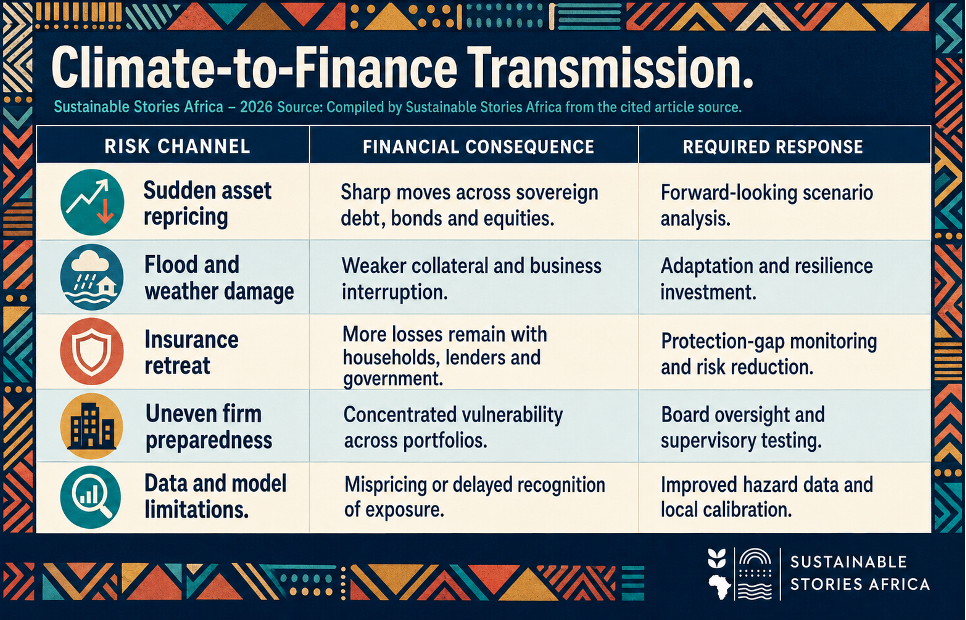
The Bank of England has warned that climate change poses an increasingly proximate threat to UK financial stability, with extreme weather, insurance withdrawal and sudden asset repricing capable of spreading losses through households, businesses, banks and government.
In its annual climate-related disclosure, the Bank said a severe but plausible repricing of government debt, corporate bonds and equities could produce moves comparable with recent market-stress episodes.
The language marks a shift from distant climate scenarios to risks that boards and supervisors must manage now.
Insurance Retreat Can Amplify Every Shock
Floods and other physical hazards can damage property, interrupt businesses and weaken borrowers.
If insurers respond by raising prices or leaving exposed areas, losses migrate elsewhere: households hold more risk, property values fall, banks face weaker collateral, and governments come under pressure to provide relief.
The Bank highlighted resilience programmes that help households protect homes from flooding.
It also said financial firms need stronger capabilities to price and manage climate exposure, particularly through scenario analysis.
Chief operating officer Sarah John said the Bank had integrated climate considerations across supervision, macroeconomic and monetary policy assessment, and financial-stability analysis.
The Prudential Regulation Authority has tightened expectations for banks and insurers, requiring that climate risk can be integrated into governance, strategy and board decisions.
Progress, however, remains uneven.
Prepared Finance Protects People And Markets
Better climate data and forward-looking models can prevent abrupt corrections by revealing risk earlier.
Banks can adjust underwriting; insurers can reward resilience; investors can price adaptation; and public authorities can target protective infrastructure where it reduces losses most.
For African financial systems, the transmission channels are familiar and often sharper.
Flooding, drought and heat can affect food prices, sovereign balance sheets and collateral while insurance penetration remains low.
The UK warning reinforces the case for African supervisors to integrate physical risk without importing models that overlook local informality and data gaps.
Physical Risk Is Already Macro-Critical
For African central banks, climate exposure often enters through food inflation, foreign-exchange earnings and sovereign risk before sophisticated asset markets reprice it.
- A drought can reduce exports and hydropower, while floods simultaneously damage roads, homes and bank collateral.
- Low insurance penetration leaves more losses with families, businesses and governments.
Supervisors therefore need locally calibrated scenarios that connect climate hazards to the structure of national economies.
- They also need to avoid indiscriminately penalising vulnerable sectors.
- If prudential responses withdraw credit from agriculture or exposed communities, they can amplify the shock.
- Risk-sensitive regulation should be paired with adaptation finance, public resilience investment and better data so institutions can distinguish vulnerability from unmanaged vulnerability.
Move Scenario Analysis Into Real Decisions
- Financial institutions should connect climate scenarios to lending limits, capital planning, insurance pricing and client engagement, rather than treat them as standalone disclosures.
- Boards need clear accountability, while supervisors should test whether risk frameworks change actual decisions.
- Governments must invest in adaptation and climate information, because finance cannot price risk that public systems fail to measure.
- Protection for vulnerable households should accompany reforms to avoid creating climate-driven financial exclusion.
Path Forward – Price Risk Before Markets Reprice Suddenly
The Bank’s warning makes delays costly. Firms must build climate risk into core models, governance and capital decisions while policymakers invest in physical resilience.
Early, transparent adjustment is safer than disorderly repricing after disaster. The objective is not to eliminate uncertainty.
However, towards ensuring that banks, insurers and households can absorb shocks without turning climate damage into a wider financial crisis.
Culled From: UK financial stability under risk from climate change, says Bank of England - Green Central Banking