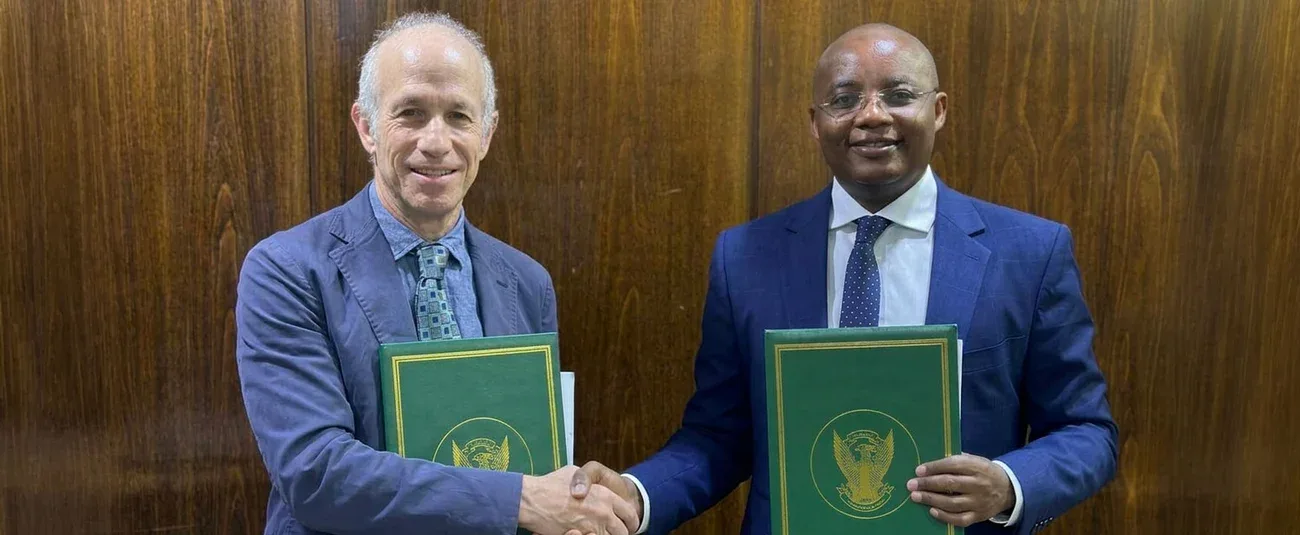
The African Development Bank and UNICEF have launched a $58 million response to Port Sudan’s worsening water crisis.
The project comes as conflict-driven displacement stretches already fragile water and sanitation systems.
For families, children and host communities, the intervention could mean safer drinking water, fewer disease risks and restored dignity.
Water Becomes Sudan’s Frontline Emergency
In Port Sudan, the search for safe water has become one of the clearest signs of how conflict turns public services into a struggle for survival.
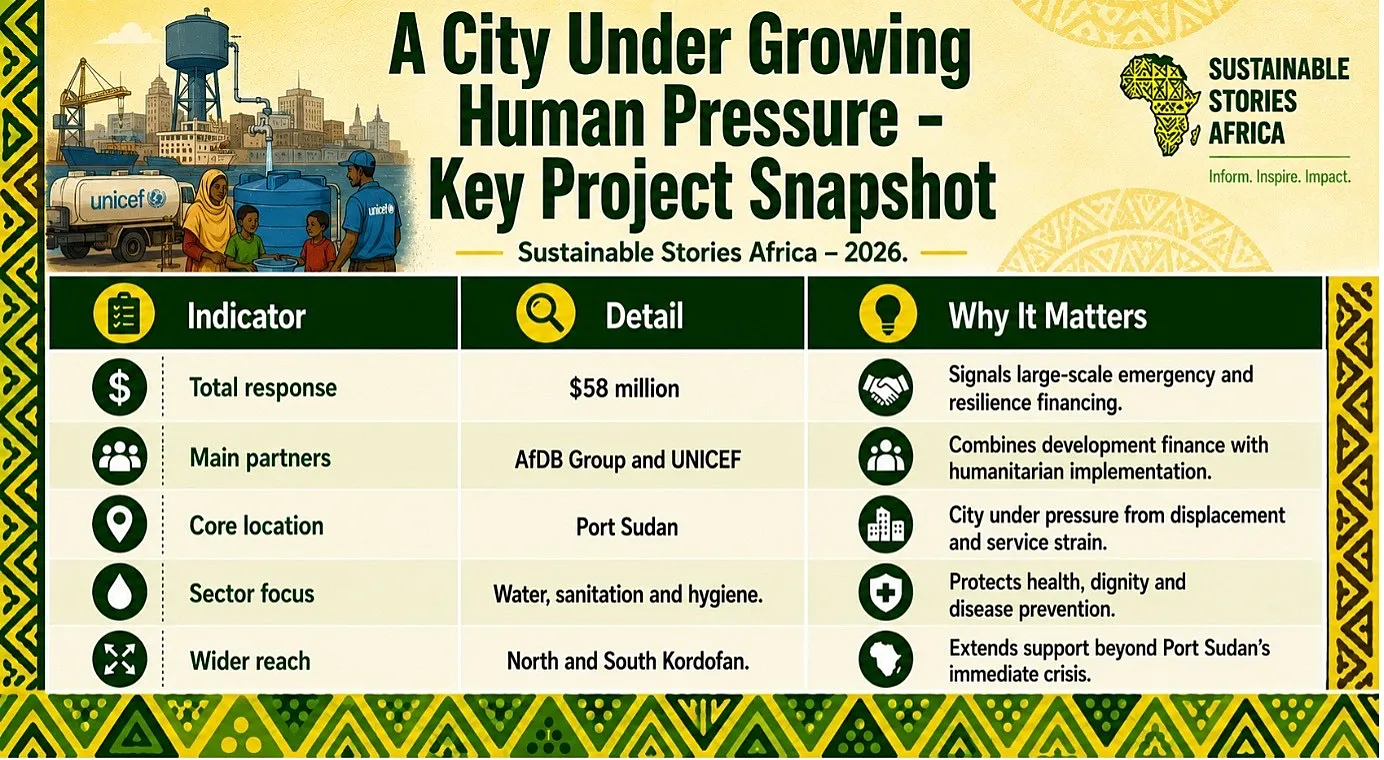
The African Development Bank Group and UNICEF have launched a $58 million emergency water and sanitation response to help restore safe services in a city carrying the weight of Sudan’s displacement crisis.
The initiative is designed to improve access to drinking water and sanitation for vulnerable communities in Port Sudan and other affected areas, including North and South Kordofan.
At the centre of the response is a simple but urgent objective: keep families healthy, reduce disease risks and help public systems cope with population pressure.
Port Sudan has become an administrative and humanitarian hub since the conflict disrupted life across Sudan.
However, as displaced families arrive, water demand has grown faster than local systems can carry.
In many communities, the result is longer queues, rationed supply and rising exposure to unsafe water.
A City Under Growing Human Pressure
The project responds to a crisis that is both humanitarian and infrastructural. Water scarcity in conflict settings does not only mean thirst.
It affects child health, school attendance, hospital hygiene, women’s time, household income and community stability.
UNICEF will implement the project, with support from the African Development Bank. The work will include rehabilitating damaged water infrastructure, improving distribution systems, strengthening sanitation services and supporting local water institutions.
- For a displaced mother, this kind of intervention can change the rhythm of the day. Less time spent searching for water can mean more time caring for children, seeking income or sending young people to school.
- For a health worker, reliable water can mean cleaner facilities and lower infection risks.
- For local authorities, it can mean fewer emergency breakdowns and more predictable service delivery.
The project also reflects a wider development lesson for fragile African markets: emergency response and long-term resilience cannot be separated.
A city cannot recover if its water systems fail.
Safe Water Can Rebuild Confidence
If delivered effectively, the response could help Port Sudan move from emergency coping to more stable service provision.
The benefits are immediate and structural: safer water, reduced disease exposure, better sanitation, stronger local systems and improved resilience for displaced and host communities.
This matters because water insecurity can deepen fragility.
When families cannot access safe water, public health risks rise.
- Children are more exposed to waterborne diseases.
- Women and girls often carry a heavier burden of collection.
- Local tensions can increase when scarce services are stretched across host and displaced populations.
However, the opposite is also true.
- Reliable water can build trust.
- It can show communities that institutions are still capable of delivering.
- It can protect the most vulnerable while laying foundations for recovery.
Make Water Security A Recovery Priority
Sudan’s partners now need to treat water infrastructure as essential recovery infrastructure, not just humanitarian relief.
- That means financing repairs, protecting water facilities, strengthening local utilities and ensuring communities are involved in the restoration of services.
- Development finance institutions, humanitarian agencies and national authorities should also prioritise climate-resilient systems.
Conflict has already weakened infrastructure; climate stress will make water management harder.
- Investments must therefore be durable, inclusive and accountable.
For African policymakers, the Port Sudan response offers a wider message: water security is public health, social protection and economic resilience in one system.
When water systems fail, every other development outcome becomes harder to protect.
Path Forward – Clean Water Must Anchor Sudan’s Recovery
The priority is to restore safe water quickly while building systems that can withstand conflict, displacement and climate pressure.
AfDB financing and UNICEF implementation can help bridge the gap between emergency relief and long-term resilience.
For Sudan’s communities, success will be measured in fewer unsafe water journeys, healthier children, stronger sanitation and public services that begin to work again.
Culled From: Sudan: The African Development Bank and UNICEF launch a $58 million response to Port Sudan's water crisis