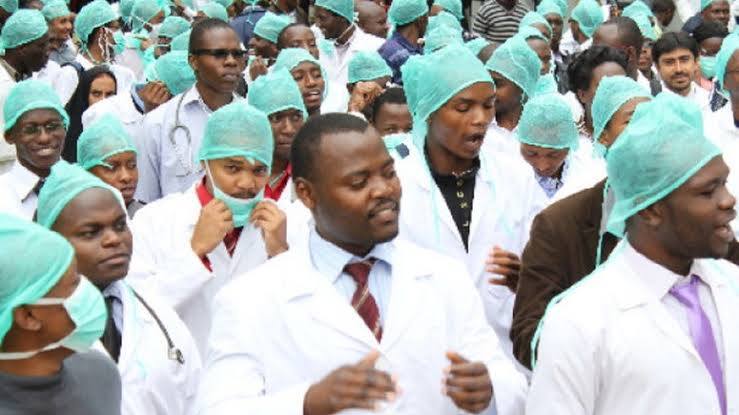
New WHO rules put co-investment, transparency and workforce retention at the centre of cross-border hiring.
The World Health Assembly has revised global recruitment guidance, urging destination countries to co-invest in the health systems that train their imported workers.
The shift matters as Africa accounts for half of the global health workforce shortage while wealthy systems remain reliant on foreign-trained staff.
For clinicians such as Uganda’s Dr Biira, fair mobility must mean career choice without leaving vulnerable communities to absorb the loss.
Africa’s Health Workforce Reaches Breaking Point
A global rethink of health-worker recruitment has moved from moral argument to formal policy after the World Health Assembly on May 23 adopted changes requiring richer destination countries to pursue transparent, measurable co-investment with the countries that educate the staff they hire.
The resolution does not prevent doctors, nurses or midwives from moving. It instead asks governments, employers and recruiters to stop treating mobility as a one-way transfer of publicly financed skills.
That distinction is personal for Dr Biira, the pseudonym used by Health Policy Watch for a Ugandan doctor who qualified amid severe shortages but found no funded post and left for work abroad.
Her experience captures Africa’s contradiction: hospitals need staff, universities produce professionals, yet constrained budgets often fail to absorb them.
The result is unemployment at home and recruitment abroad, not because African workers lack commitment, but because the labour market offers them too few viable choices.
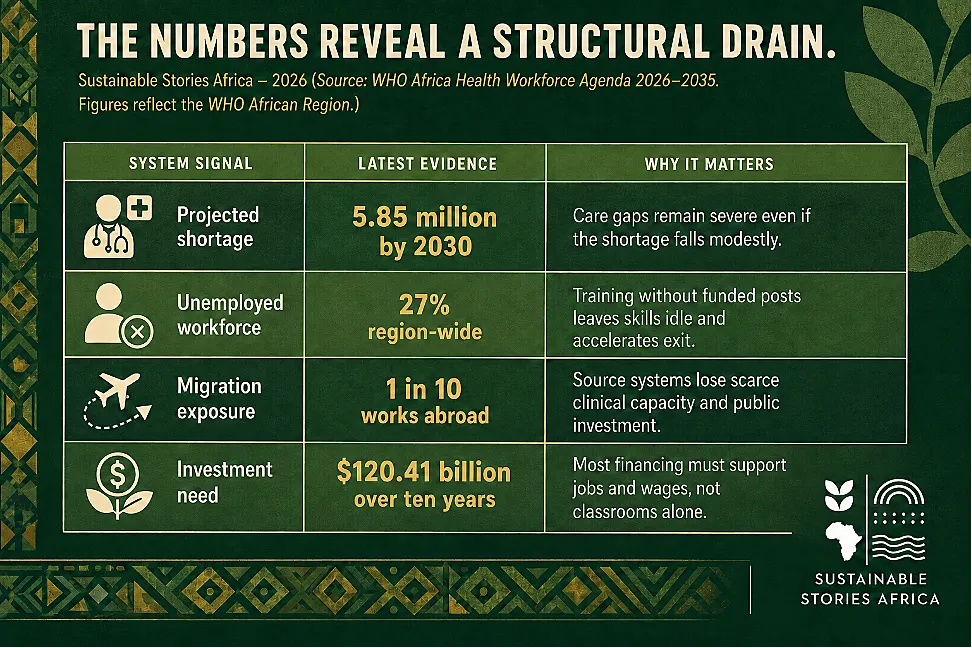
The Numbers Reveal A Structural Drain
The WHO African Region’s July workforce agenda estimates a 5.85 million shortfall by 2030 and notes that the gap could exceed six million by 2035 without decisive action.
It also reports a 27% workforce unemployment rate despite needs-based shortages, rising to between 46% and 69% among new graduates. Closing half the regional gap may require about $120.41 billion over a decade, with 81% devoted to employment and wage support rather than education alone.
Migration intensifies that financing mismatch.
- One in every 10 doctors and nurses trained in Africa works abroad, while 42% indicate an intention to emigrate.
- The same agenda notes that 44 of the 55 countries classified in 2023 as needing safeguards from active international recruitment are African.
Nursing data show the demand pull.
- WHO says 23% of nurses in high-income countries are foreign-born, compared with 3% in low-income countries.
The original 2010 recruitment code was voluntary; the 2026 amendments add clearer expectations for bilateral agreements, data reporting and proportional benefits; however, they remain non-binding unless translated into national law.
Fair Mobility Can Strengthen Both Systems
Well done, mobility can circulate skills instead of permanently extracting them.
- Time-limited placements, recognised qualifications, diaspora return routes and jointly funded specialist training can offer workers better careers while expanding capacity at home.
- Recruiting countries can finance faculty, residency posts, rural incentives and digital workforce systems in proportion to the benefit they receive.
That approach also creates wider development gains.
- Health jobs strengthen outbreak readiness, climate resilience and universal health coverage.
- They also support gender equity in a sector where women form most of the global workforce.
Malawi’s 43 paediatricians serving more than 20 million people, cited by the Health Policy Watch authors, illustrate why retaining even a small number of specialists can change access for entire regions.
Recruitment Must Now Carry Shared Costs
African governments still hold the first duty:
- Convert workforce plans into funded posts, fair pay, safe conditions and credible promotion pathways.
- Destination governments should meanwhile publish recruitment flows, regulate private agencies and attach measurable source-country benefits to bilateral deals.
- Development banks and donors can help finance the costly employment stage that turns training into actual care.
Martin Msukwa of Seed Global Health and Isaac Ntwiga of Amref Health Africa put the argument bluntly: “Africa is not the medical school for the world.”
The new WHO framework gives that warning an implementation test.
By the 2028 reporting cycle, success should be judged not by agreements signed, but by vacancies filled, workers retained, rights protected and co-investment reaching frontline services.
Path Forward – Building A Fairer Health Workforce Future
The immediate priorities are binding national recruitment rules, transparent government-to-government agreements, reliable migration data and co-investment tied to source-country workforce plans.
African states must also budget for employment, specialisation, and decent conditions so training leads to care.
If those measures align, mobility can support worker choice without hollowing out vulnerable systems, advancing decent work, gender equity, universal health coverage and stronger social resilience across African markets.
Culled from: https://healthpolicy-watch.news/time-to-rethink-global-health-recruitment-as-africas-health-workers-deserve-better/