Extreme heat is moving from weather forecast to financial statement.
Evidence reviewed by Hybrid Economics links abnormal temperatures to higher energy demand, lower productivity, illness, inflation pressure and corporate earnings misses.
For African businesses already operating on fragile grids, outdoor workforces and limited cooling, the message is immediate: heat resilience must become a funded operating priority, rather than a distant climate pledge.
Heat Moves Onto Corporate Ledgers Now
When temperatures rise far beyond local norms, the cost appears almost everywhere: electricity bills, worker output, hospital admissions, food prices and company earnings.
A July analysis by Hybrid Economics argues that exceptional heat works like an energy shock, forcing households and firms to spend more on cooling while reducing the hours and intensity people can safely work.
The risk is not simply a high temperature. It is the gap between current conditions and the climate for which buildings, grids, workplaces and habits were designed.
30 degrees Celsius can be routine in one city and disruptive in another.
That makes adaptation local and makes historical averages an increasingly weak guide to operating conditions.
A Climate Shock Spreads Through Economies
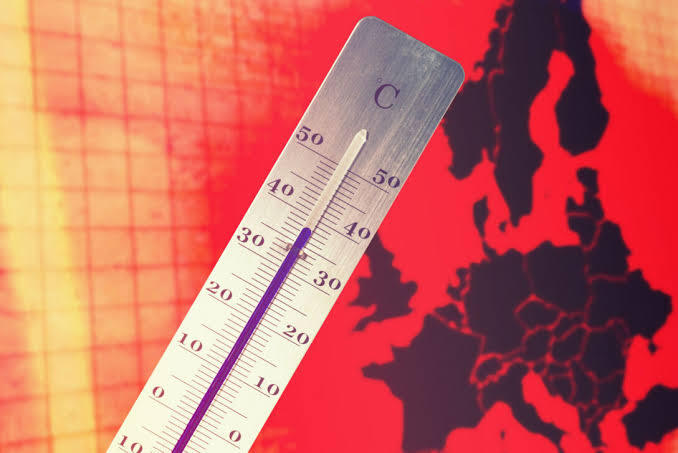
The analysis notes that Western Europe’s June 2026 temperature was more than 3°C above the 1991 – 2020 average.
It cites research linking heat with lower labour productivity, reduced working hours, worsening health and strained emergency services.
A referenced European study estimated that a summer heatwave at least 1.5°C above normal reduced eurozone output by 0.5%.
The corporate effects are uneven.
Research covering nearly nine million European firms found that unusually high temperatures hit lower-productivity companies hardest, with some losing output, market share or viability.
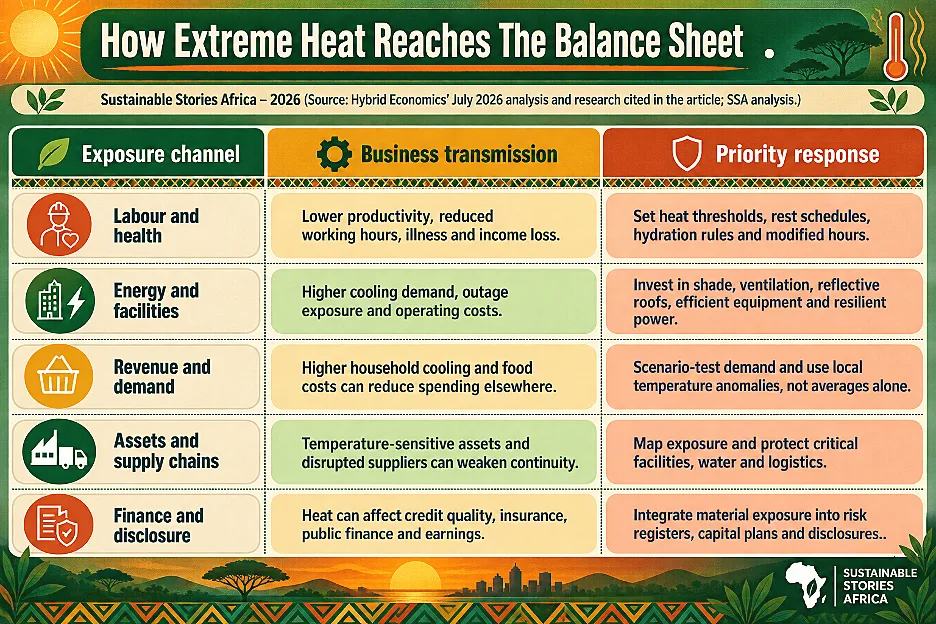
Better-prepared firms could gain at the expense of others. In practical terms, air conditioning, resilient facilities, flexible schedules and management readiness can become competitive advantages.
Africa’s exposure is sharper in many sectors.
- Construction workers, farmers, miners, transport staff and informal traders cannot always move indoors.
- Small firms may depend on expensive generators when grid demand surges.
- Households facing higher cooling and food costs have less income to spend elsewhere.
Heat, therefore, travels from physical risk to demand, credit quality and public finance.
Adaptation Can Protect Workers And Value
Businesses can reduce losses without waiting for perfect climate forecasts.
- Heat action plans can define temperature and humidity thresholds, rest schedules, hydration requirements, medical escalation and modified hours.
- Passive cooling, shade, ventilation, reflective roofs and efficient equipment can lower energy demand while improving worker safety.
Boards should ask where heat affects revenue, operating costs, asset performance, insurance, suppliers and workforce health.
Banks can include heat exposure in sector risk assessments and finance practical retrofits for smaller businesses.
Cities can map neighbourhood heat, expand tree cover and cooling centres, and protect power and water systems during peaks.
These measures create a social dividend.
A heat-resilient workplace reduces avoidable illness and income loss for workers least able to absorb them.
It also protects productivity without normalising unsafe exposure.
Fund Heat Resilience Before Crisis Strikes
Companies should establish a baseline now: days above safe work thresholds, heat-related incidents, outage hours, cooling costs and output losses.
Material exposures should be critical to enterprise risk registers, capital plans and climate disclosures.
Governments need enforceable occupational heat standards, early-warning systems and targeted support for schools, clinics and small enterprises.
Climate finance providers should treat cooling, resilient power and urban heat reduction as core adaptation infrastructure.
The decisive shift is to account for heat prevention before emergency response and lost output make the bill larger.
Path Forward – Treat Heat As Operating Reality Now
Extreme heat is already a health, productivity and earnings issue.
Every employer with exposed workers or temperature-sensitive assets needs thresholds, responsibilities and funded responses.
For African economies, adaptation must combine worker protection, reliable clean power, resilient buildings and accessible finance.
Measuring losses will make the risk visible; investing before the hottest days arrive will protect lives, margins and economic continuity.
Culled from: Too darn f*****g hot - by Hybrid Economics