Research in Kenya and South Africa finds renewable projects can compensate communities without giving them meaningful control or lasting benefits.
Jobs, social facilities and delayed dividends may not replace customary land, water access or pastoral livelihoods.
A just transition requires negotiated value, enforceable rights and community participation from project design onward.
Clean Power Can Still Exclude Communities
Africa’s expanding wind and solar investment is confronting a legitimacy gap: projects can deliver low-carbon electricity while leaving the people who host them with little influence over land, benefits or long-term ownership.
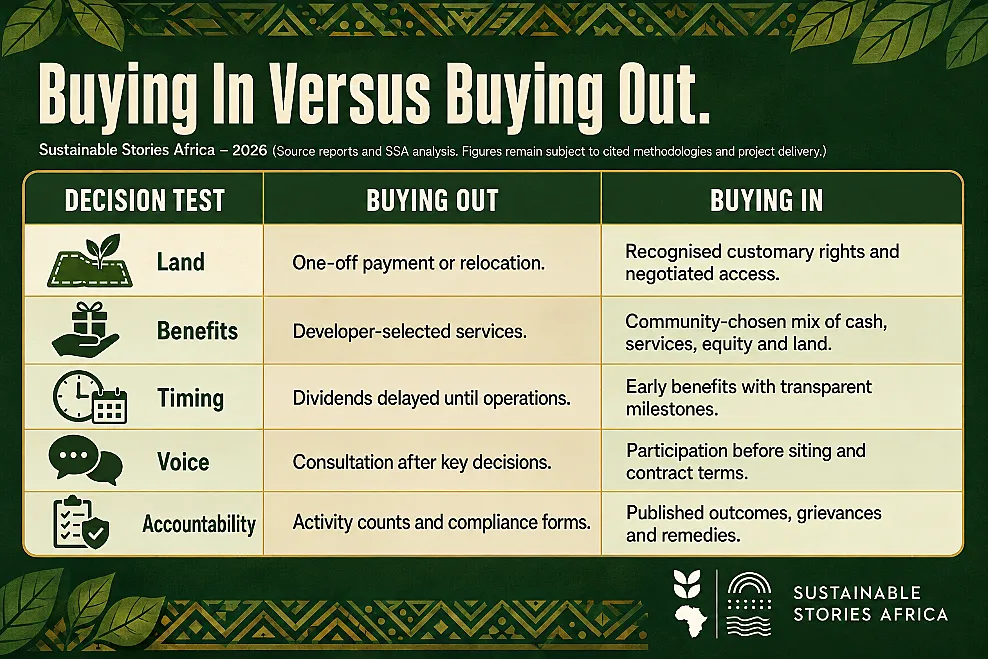
Research on Kenya and South Africa argues that the distinction is between buying communities into a transition and merely buying them out.
The 2026 study by Lars Buur and Jacob Ulrich examined South Africa’s Renewable Energy Independent Power Producer Procurement Programme and Kenya’s Lake Turkana Wind Power project.
It found that compensation, jobs and infrastructure often become substitutes for community-defined value rather than outcomes negotiated with affected people.
Compensation Does Not Equal Meaningful Consent
South Africa’s procurement programme contains explicit social obligations.
- Developers must commit to local employment, Black ownership and community development, and host communities are required to receive at least 2.5% ownership.
On paper, this is a structured buy-in model.
- In practice, researchers found that benefits may arrive years after construction and that companies can choose facilities or services without giving residents meaningful control over priorities.
That delay matters in areas of deep poverty.
- A community that gives up land today may not receive dividends until a project is operating and profitable.
- A hall or social programme may have value, but it is not automatically equivalent to lost land, direct income or a durable stake in the asset.
- Compliance with tender conditions can therefore fall short of shared decision-making.
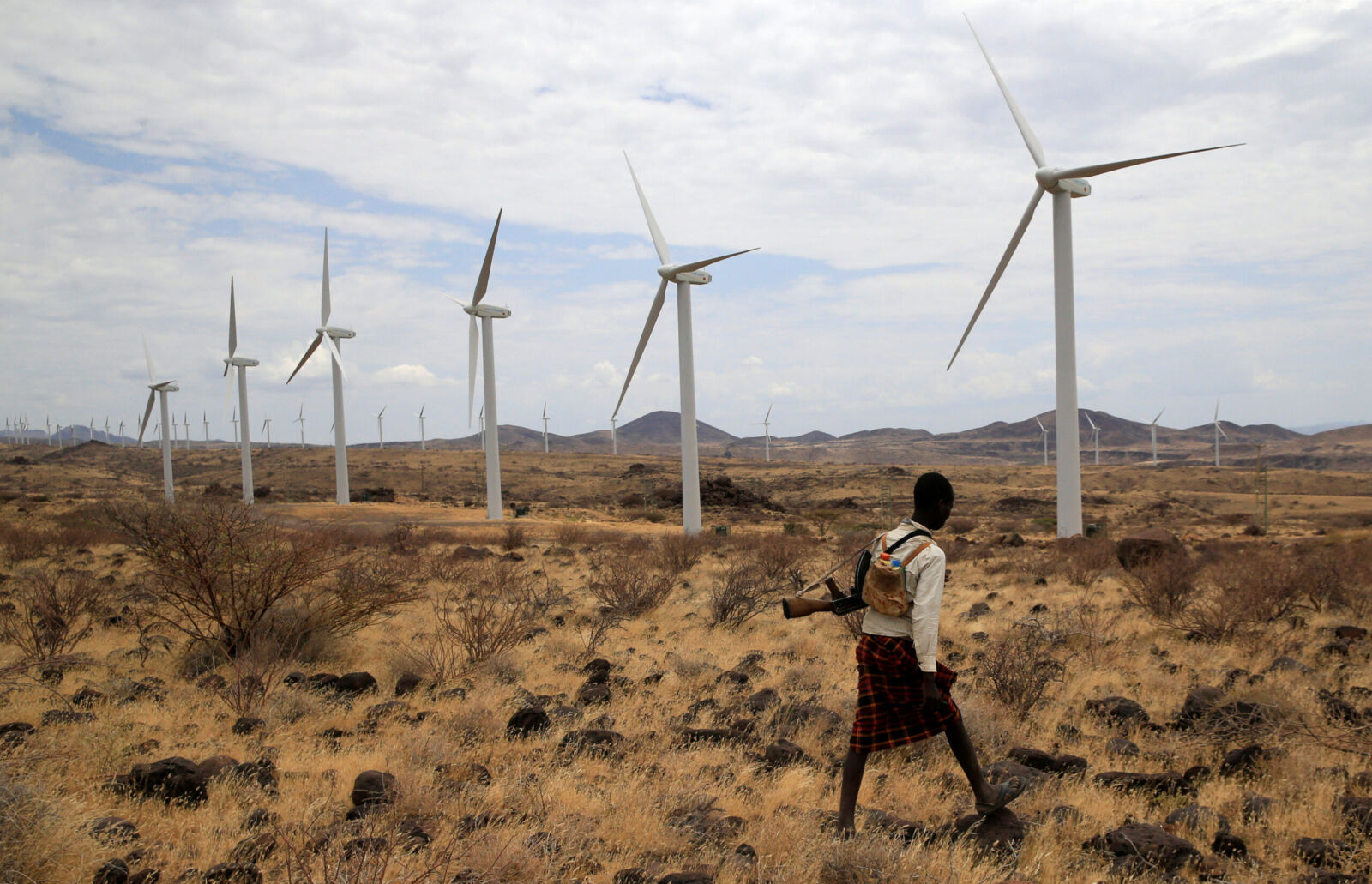
At Lake Turkana, the stakes include customary land and mobile pastoral livelihoods. Rendille, Samburu, Turkana and El Molo communities reported losses to include grazing routes, water access and cultural practices.
Compensation systems centred on permanent settlements struggled to recognise nomadic groups.
Kenyan courts later found irregularities in the land acquisition, but the wind farm continued operating, illustrating the distance between legal recognition and practical remedy.
Shared Value Builds More Durable Projects
The alternative is not to stop investments in renewable energy.
- It is to design projects around what communities define as valuable.
- Some residents may prioritise cash; others may want replacement land, grazing access, electricity connections, revenue shares, jobs with advancement pathways or co-ownership.
- Different groups within one community may have differing needs, and women, young people and mobile resource users can be overlooked by consultations dominated by local elites.
Early participation can also protect investors.
- Projects facing protests, roadblocks, litigation and reputational damage carry delays and financing risk.
- Clear land rights, negotiated benefit agreements and trusted grievance systems create a more stable operating environment.
- Community buy-in is therefore both a justice principle and a form of project-risk management.
Private clean-energy investment in sub-Saharan Africa is approaching $40 billion annually, according to the International Energy Agency figure cited by Down To Earth.
As capital scales, weak community models will be replicated unless lenders and governments make participation measurable.
Megawatts and avoided emissions cannot be the only indicators of a successful transition.
Put Community Value Into Project Contracts
Governments should require participatory value assessments before land agreements are signed.
Contracts should specify who qualifies as affected, how customary and mobile land use will be recognised, when benefits begin, and how revenue or equity will be governed.
Independent legal and technical support can help communities negotiate on more equal terms.
Financiers should test whether consent influenced project design, not simply whether meetings occurred.
Public dashboards can report local ownership, dividend timing, household energy access, livelihood restoration, grievances and remedies.
Where courts find rights violations, enforcement must deliver practical correction rather than symbolic recognition.
Path Forward – Make Communities Partners In The Transition
Africa’s renewable build-out will be more durable when host communities retain agency, livelihoods and a negotiated share of value.
Compensation should be one option within a wider agreement, not the default definition of fairness.
Governments, developers and lenders must move participation upstream, before sites, land terms and benefit packages are fixed.
A transition that produces clean electricity but repeats extractive relationships cannot credibly call itself just.