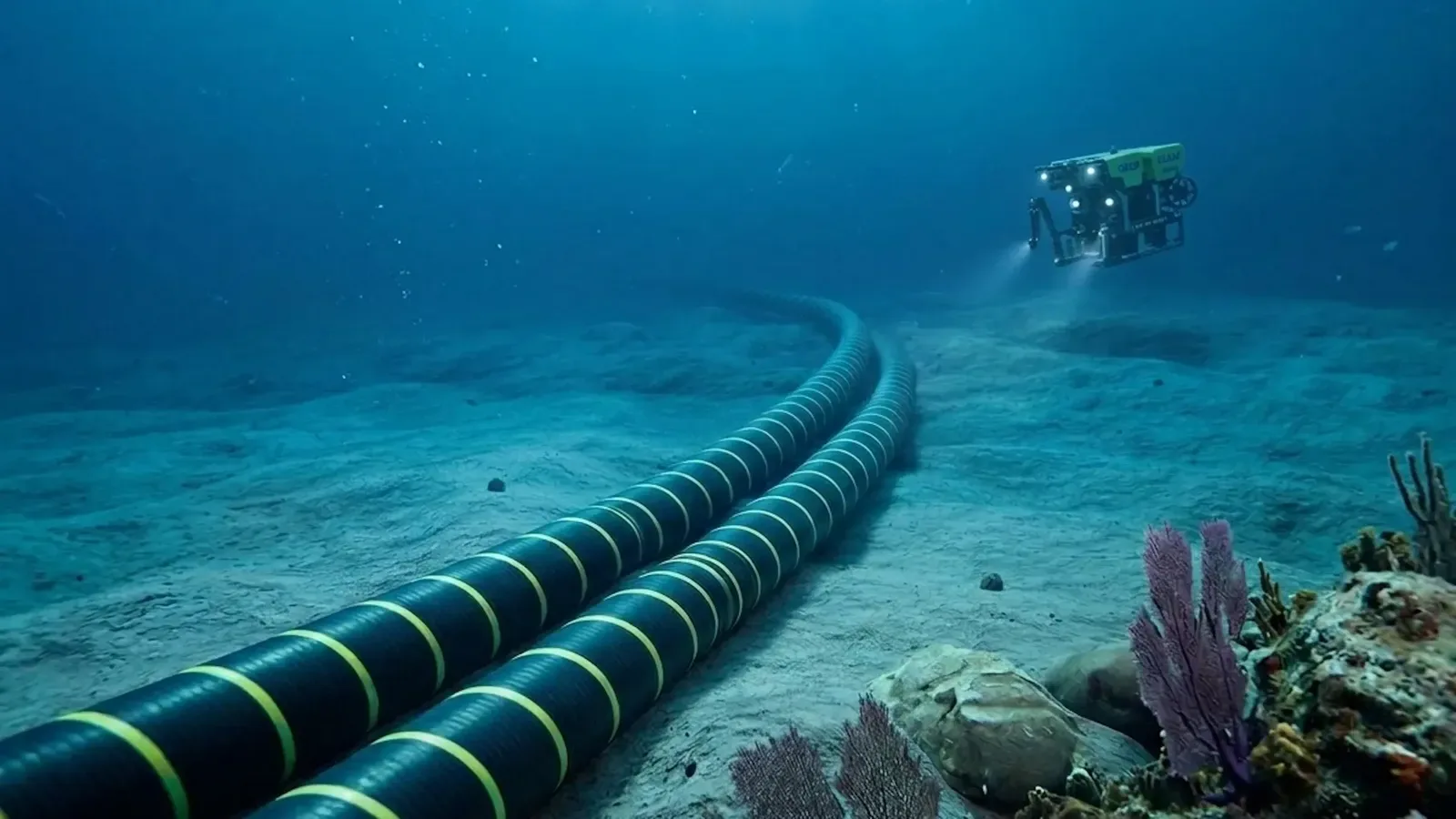
Kenya expects two additional submarine fibre-optic cables to land before 2027.
The planned systems would expand international capacity and provide alternative routes as the requirements of cloud, AI and data centres grow.
Their value, however, will depend on resilient landing infrastructure, competitive access and reliable inland networks.
Two Cables Extend Kenya’s Digital Reach
Kenya is preparing to add two submarine fibre-optic cable systems before 2027, a move that could strengthen the country’s position as an East African connectivity hub while providing additional capacity for cloud computing, artificial intelligence and data centres.
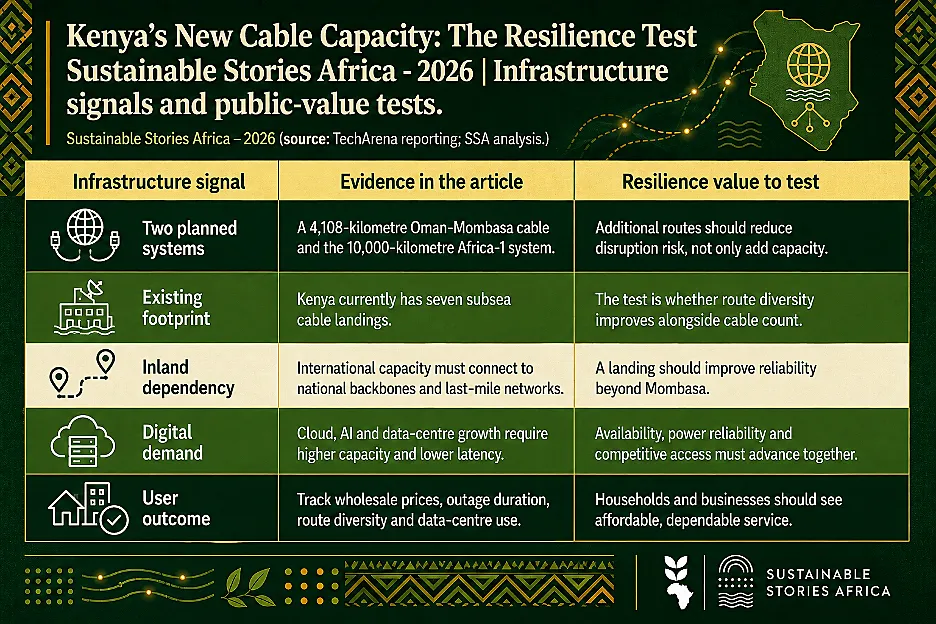
TechArena reports that one system is a 4,108-kilometre cable connecting Oman to Mombasa through a partnership involving Meta and Safaricom.
The second is Africa-1, a planned 10,000-kilometre international system running from France through Africa to the Middle East, with Kenya expected to become a landing point.
Kenya currently has seven subsea cable landings, ranking behind Egypt, Djibouti, South Africa and Nigeria in the cited comparison.
Adding two routes would increase the number of physical connections; however, the more important benefit is redundancy: the ability to divert traffic to another path when a cable is damaged, or a route is disrupted.
For investors, that resilience can be as important as headline capacity.
A digital service cannot promise dependable regional operations if a single external fault repeatedly slows access to customers, platforms or critical data.
Redundancy Matters Beyond Faster Internet Speeds
Subsea systems carry the bulk of international internet traffic.
- For businesses, an outage can interrupt payments, cloud software, customer service and access to data stored outside the country.
- For households, the same failure can affect work, learning, communication and entertainment.
East African users have already seen how cable faults, including disruptions around the Red Sea, can affect service.
Additional landings can lower the concentration risk, although two cables arriving at the same city or following similar offshore routes will not automatically eliminate vulnerability.
The Oman-Mombasa partnership is also strategically relevant for Safaricom. Serving as a landing partner can deepen its role in enterprise connectivity, cloud services and edge computing.
For Meta, more direct and reliable capacity can improve delivery of its platforms and support data-intensive workloads.
Capacity Can Unlock Local Digital Investment
If the new systems are connected to competitive terrestrial networks, they could improve the case for locating data centres and digital services in Kenya.
Higher capacity and lower latency matter to banks, content platforms, research institutions and startups building services that must process information quickly and remain available.
The broader development opportunity lies in connecting international capacity to local demand.
A cable landing in Mombasa does not reduce costs for a school, clinic or small business inland.
Benefits depend on national fibre backbones, open and fairly priced access, reliable electricity, internet exchange points and last-mile competition.
That is why cable counts should not become the only measure of progress.
Policymakers should track wholesale prices, outage duration, route diversity, data-centre utilisation and the share of people and businesses able to buy reliable broadband.
Kenya Must Build Resilience Beyond Mombasa
Government and industry should require strong continuity plans at landing stations and ensure that inland routes do not create a new single point of failure.
Environmental and coastal risks also need attention, from route selection and marine permitting to physical security and repair capacity.
Transparent access arrangements will be equally important.
New capacity can support competition only if multiple providers can use it on reasonable terms.
Without that, the cables may strengthen a few large operators without delivering proportionate gains to smaller providers and end users.
Path Forward – Resilient Networks Must Reach Every User
Kenya’s next connectivity milestone should be judged by service reliability, affordability and wider access, not only by kilometres of cable.
The two planned landings offer a valuable foundation for digital growth.
To convert capacity into public value, Kenya must link subsea diversity with inland redundancy, open competition, dependable power and measurable improvements for users across the country.
Culled From: Kenya to Add Two New Subsea Cables Before 2027 - TechArena