A Nature study finds human-caused warming has modestly increased childhood malaria overall while redistributing risk across sub-Saharan Africa.
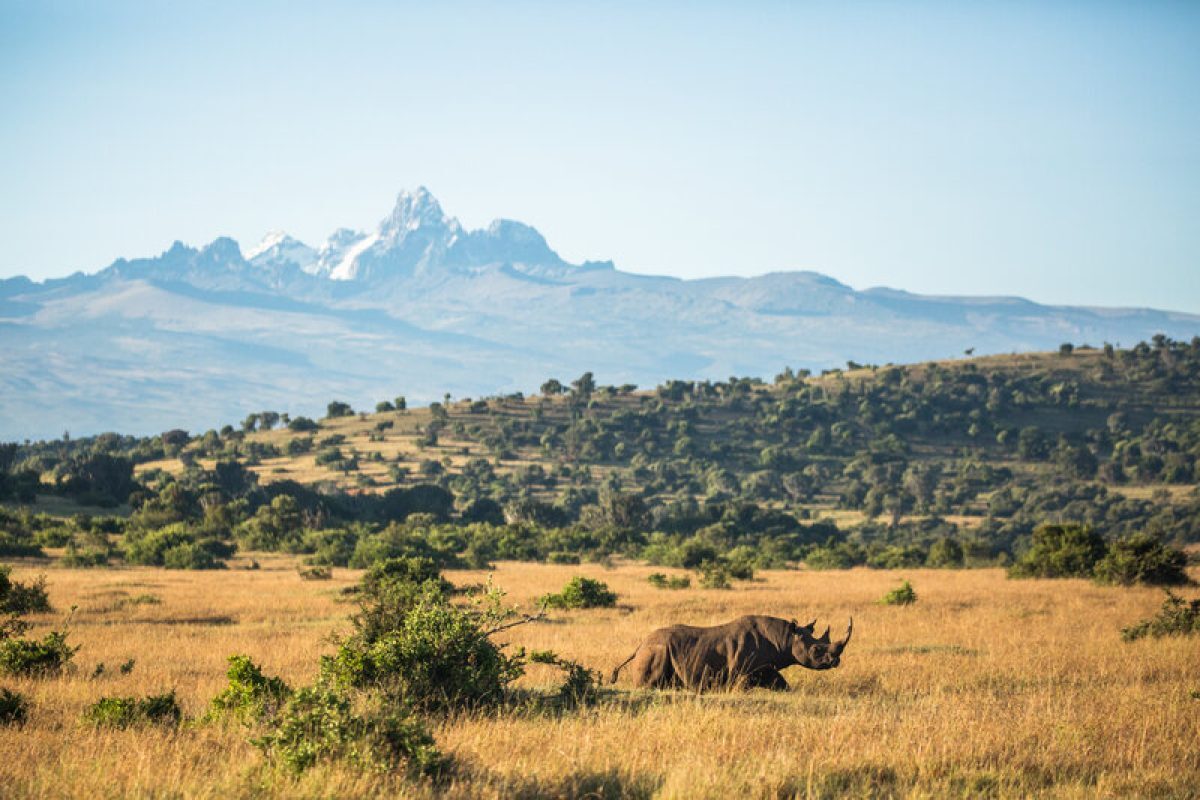
Cooler highlands in East Africa and parts of southern Africa are becoming more suitable for transmission.
Health systems must follow the moving risk without withdrawing proven control from today’s high-burden regions.
Warming Redraws Africa’s Childhood Malaria Map
Climate change is shifting childhood malaria risk across sub-Saharan Africa, increasing transmission in cooler East African highlands and parts of southern Africa even as some very hot regions may become less suitable for the parasite.
The finding challenges a simple narrative of uniform continental increase and demands more precise public health planning.
The peer-reviewed study, published in Nature on July 29, 2026, analysed a century of malaria surveillance alongside human-caused changes in temperature and rainfall.
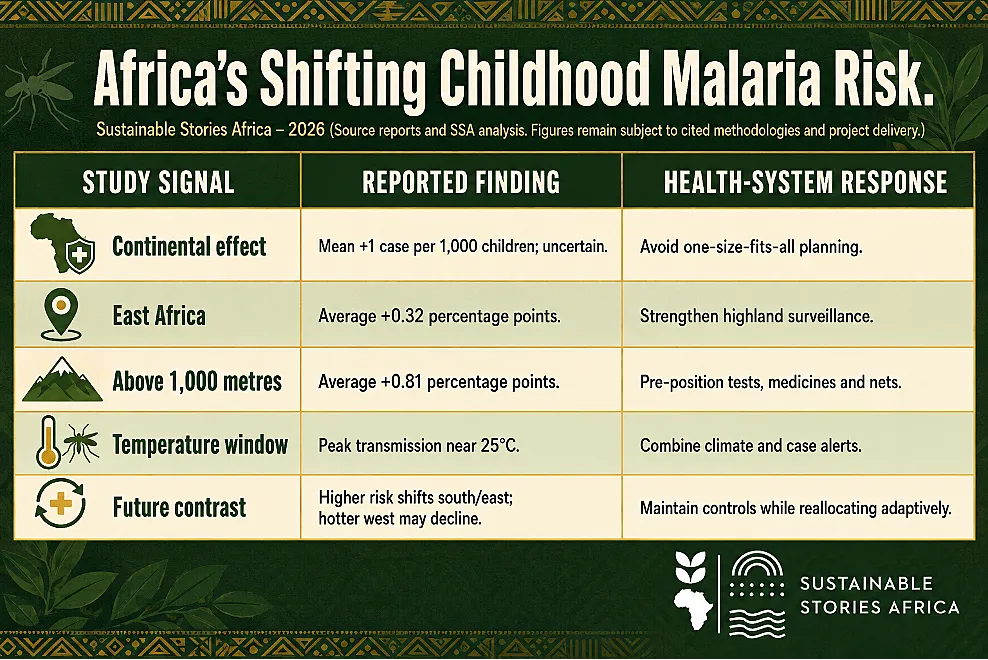
Its authors estimated a 59% likelihood that anthropogenic climate change since 1901 has increased malaria burden across the region; however, the continent-wide average effect was small and uncertain: about one additional case per 1,000 children.
Highlands Face A Newly Permissive Climate
Regional effects are more pronounced. The researchers estimated a 91% likelihood that climate change increased present-day prevalence in southern Africa and an 84% likelihood in East Africa.
- Down To Earth reported an average increase of 0.32 percentage points in East Africa, rising to 0.81 percentage points at elevations above 1,000 metres.
- Parts of the Ethiopian Highlands and Greater Rift Valley recorded increases of one to two percentage points.
Biology helps explain the movement. Transmission of the malaria parasite peaks around 25 degrees Celsius and declines to approximately 16 degrees or above 34 degrees, while heavy rainfall can expand mosquito populations.
Warming can therefore make previously cool locations more permissive. In some hot lowlands, further warming may push conditions beyond the most favourable range.
Under a high-emissions scenario, the Nature paper projected reductions of up to 45 cases per 1,000 children in West Africa and 16 per 1,000 in Central Africa by 2100, while East and southern Africa retain excess risk even under a lower-emissions pathway.
These are long-term climate effects, not year-to-year forecasts, and they do not mean malaria control can be relaxed where burden remains high.
Precision Prevention Can Outrun Climate Risk
The study’s most practical message is that climate is not destiny. Surveillance, treatment, vector control, economic development and vaccination have far larger and more actionable effects on malaria than the estimated historical climate signal.
The RTS, S and R21 vaccines now add to insecticide-treated nets, indoor residual spraying, preventive medicines, diagnosis and treatment.
A better future depends on moving those tools with the disease. Highland clinics that historically experienced fewer cases may need stronger diagnostics, trained staff, medicine stocks and community awareness.
Weather-informed early warning can help target spraying and bed-net distribution before unusually suitable seasons.
Cross-border data sharing is crucial where climate zones and mosquito movement do not follow national boundaries.
The counter-risk is misinterpretation. Projected declines in parts of West and Central Africa could be overwhelmed by health-system disruption, conflict, insecticide resistance, drug resistance or invasive vectors.
Climate suitability is only one driver of transmission. Governments should use the new evidence to refine allocation, not to justify withdrawing services from children already at risk.
Move Surveillance With The Changing Risk
Health ministries should update malaria risk maps to include elevation, temperature, rainfall, vector species, cases and intervention coverage.
Financing formulas need flexibility so districts can respond before caseloads surge.
Climate agencies and malaria-control programmes should share forecasts, while routine reporting distinguishes local outbreaks from long-term geographic change.
Global funders must protect core prevention during a period of constrained health finance.
Researchers warned that system disruptions can rapidly reverse progress.
The arrival of Anopheles stephensi in East African cities increases uncertainty because this vector tolerates urban conditions and temperature changes.
Adaptive surveillance must therefore track both the climate and the mosquito.
Path Forward – Follow Children As Malaria Risk Moves
Africa’s malaria strategy should remain universal in ambition but local in deployment.
New highland hotspots require early detection, while established high-burden areas still need sustained vaccination, nets, testing and treatment.
Limiting warming reduces future risk, but health adaptation cannot wait for emissions policy to work.
The path forward is a joined climate-and-health system that sees geographic change early and reaches children before changing weather becomes a preventable outbreak.
Culled from: https://www.downtoearth.org.in/africa/climate-change-is-shifting-childhood-malaria-hotspots-across-africa-finds-study