Botswana has validated voluntary investor guidelines on responsible business conduct and decent work.
The framework brings labour rights, human rights and local development into investment promotion and aftercare.
Its significance will depend on whether officials and investors turn guidance into measurable jobs, skills and supply-chain improvements.
Botswana Redefines What Quality Investment Means
Botswana is introducing Investor Guidelines for Responsible Business Conduct and Decent Work, which provide public officials and investors a framework for foreign capital to align with labour rights, human rights and stronger domestic economic benefits.
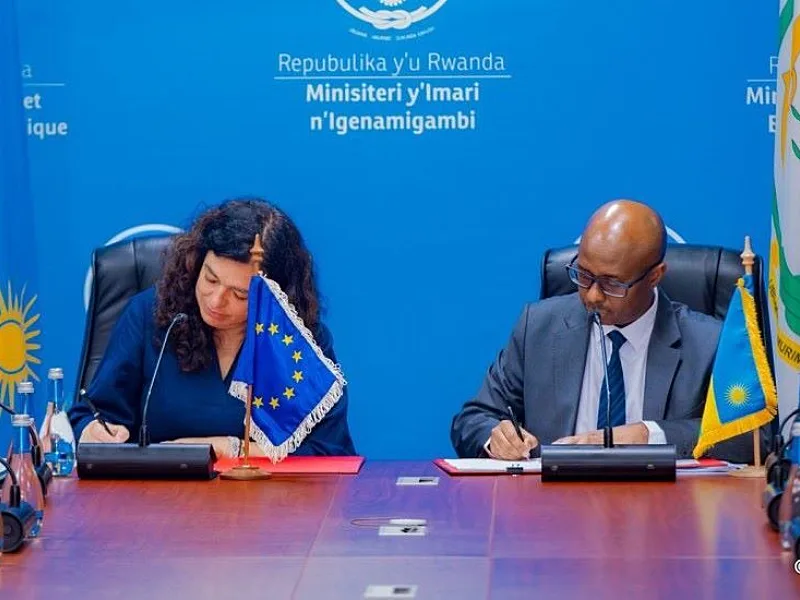
The voluntary guidelines are part of the International Labour Organisation’s Sustainable Trade and Investment in Southern Africa programme.
Funded by the European Union, SUSTAIN operates in Botswana, Lesotho, Namibia and South Africa from November 2024 to February 2027.
The policy shift is important because investment promotion has traditionally focused on the value of capital committed or the number of projects attracted.
Botswana’s approach asks a harder question: does investment create safe, productive and fairly rewarded work while building skills, suppliers and local enterprise capacity?
Social Standards Enter Investment Facilitation Early
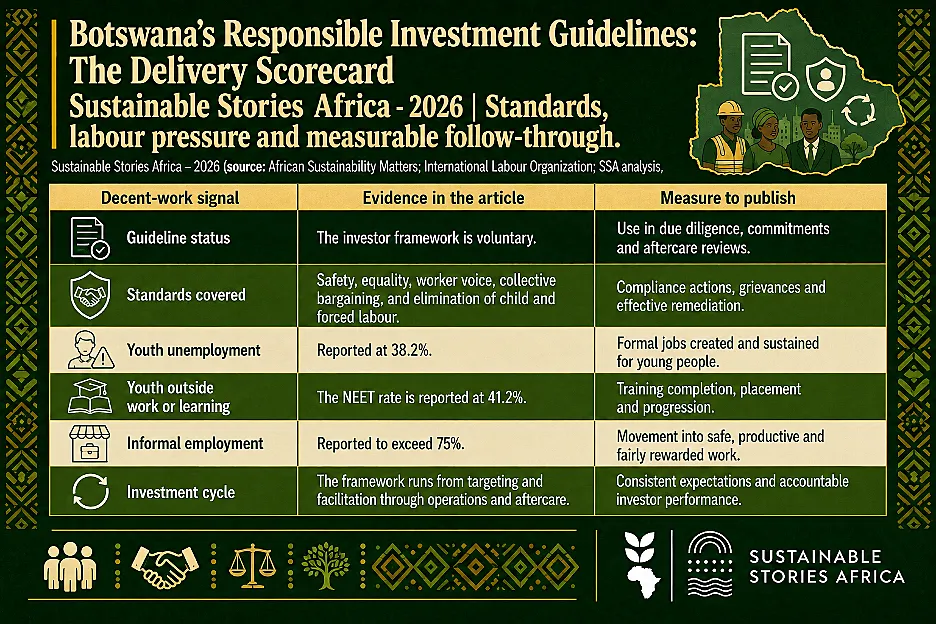
The framework is intended for use across the investment cycle, from targeting and facilitation to operations and aftercare.
That timing matters. Labour standards are harder to retrofit after business models, contractor arrangements and site practices have already been established.
The guidelines cover occupational safety and health, equality of opportunity, freedom of association, collective bargaining and the elimination of child and forced labour.
They draw on the ILO Multinational Enterprises Declaration, the OECD Guidelines for Multinational Enterprises on Responsible Business Conduct and the UN Guiding Principles on Business and Human Rights.
Botswana’s need for better employment outcomes is pressing. African Sustainability Matters, citing the ILO, reports youth unemployment of 38.2% and a 41.2% rate of young people not in employment, education or training. Informal employment exceeds 75%.
Responsible Investment Can Support Diversification
As Botswana seeks to reduce dependence on diamonds, foreign investors can bring capital, technology, management knowledge and access to markets.
Those gains are not automatic.
- They remain limited when companies import most inputs, create few skilled jobs or operate without meaningful links to domestic suppliers.
Clear expectations can improve predictability for responsible investors and help officials identify projects aligned with national development priorities.
Companies facing tighter human rights and environmental due-diligence requirements in global supply chains may also value a host-country framework that reflects recognised international standards.
The guidelines can therefore support competitiveness rather than merely add compliance. Safer workplaces, stronger worker voices and better skills can improve retention and productivity, while local supplier development can strengthen resilience.
Voluntary Guidance Needs Measurable Follow-Through
The central risk is that the framework remains a document used only in workshops but not in investment decisions.
Botswana should translate its principles into practical due diligence questions, investor commitments, aftercare reviews and public indicators, while keeping the guidelines’ voluntary status clear.
Workers’ and employers’ organisations need a continuing role in implementation. Labour inspectorates require capacity, and investment officials need training to discuss business conduct without creating inconsistent or opaque expectations.
Accessible grievance channels should allow concerns to surface before they become serious harm.
Performance reporting could cover formal jobs created, wages, safety incidents, training, local procurement, gender equality and remediation.
Disclosure would help distinguish investment volume from development quality.
Path Forward – Quality Capital Must Deliver Decent Work
Botswana’s next step is to embed the guidelines in everyday investor engagement, strengthen institutional coordination and test whether voluntary commitments influence business practice.
The framework will earn credibility when foreign investment produces safer jobs, stronger skills, competitive local suppliers and effective remedies.
That is how responsible capital can support durable economic diversification.