Norway’s sovereign wealth fund has urged the US Securities and Exchange Commission not to discard climate disclosure rules outright.
The fund argues that materially relevant climate information supports investment, voting and risk management, while acknowledging concerns about cost and scope.
Its intervention matters far beyond Washington: fragmented reporting standards could raise costs for global issuers and weaken the information investors use to price transition and physical risk.
A Major Investor Rejects Full Repeal
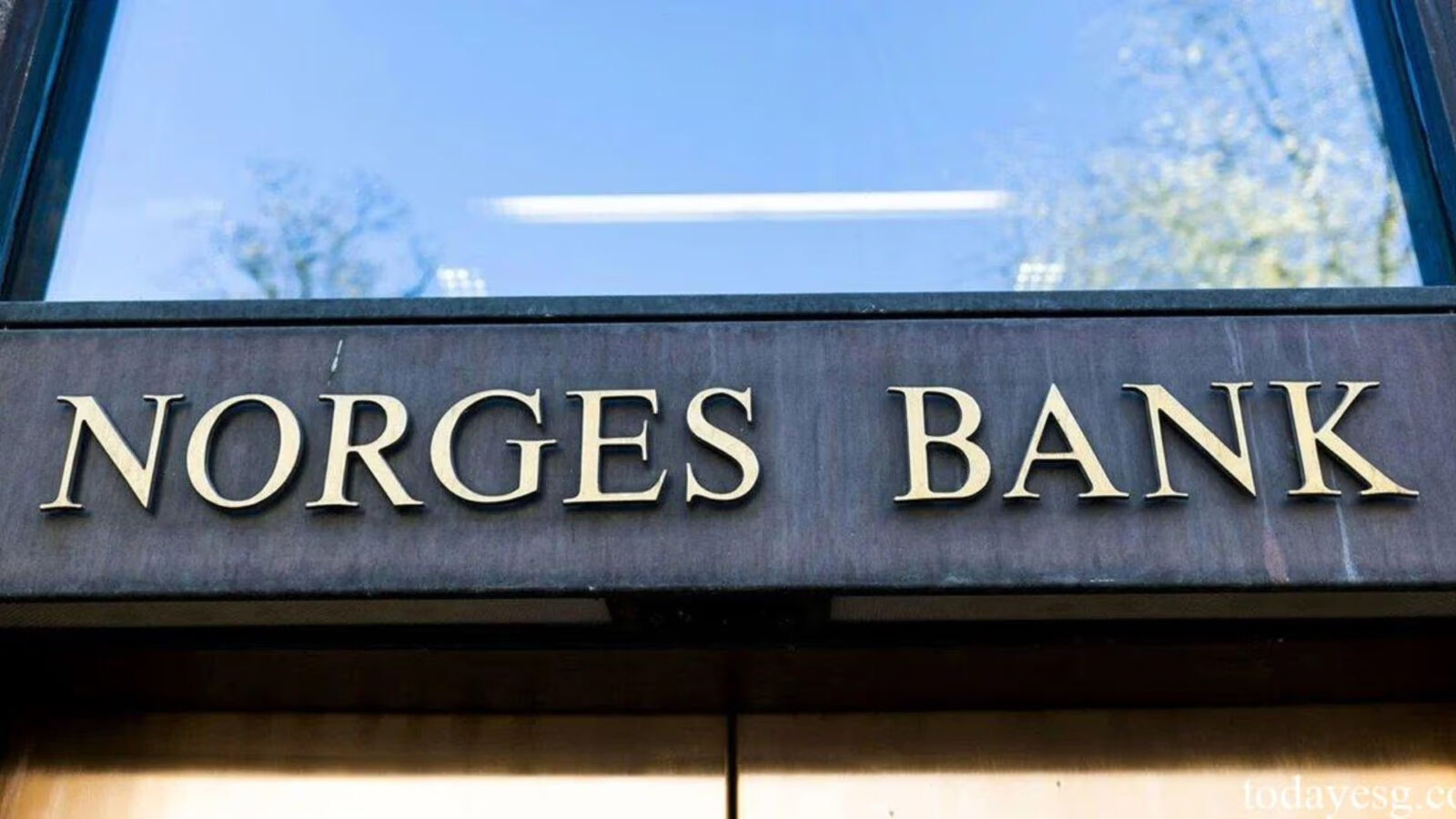
Norges Bank Investment Management, manager of Norway’s Government Pension Fund Global, has told the US Securities and Exchange Commission that it does not recommend outright rescission of the agency’s climate-related disclosure rules.
The 3 August letter supports preserving a baseline of financially material information while exploring alternatives that address compliance cost and scope.
The position carries weight because the fund managed more than $2 trillion at the end of 2025.
The United States represented 53% of its investments, including $822 billion in shares of 1,306 US public companies. Its average ownership in US-listed companies was 1.2%.
Materiality Sits At Debate’s Centre Today
The SEC adopted final climate-disclosure rules in 2024, but their implementation was stayed amid litigation. In May 2026, the Commission proposed rescission as part of a broader reconsideration of climate regulation.
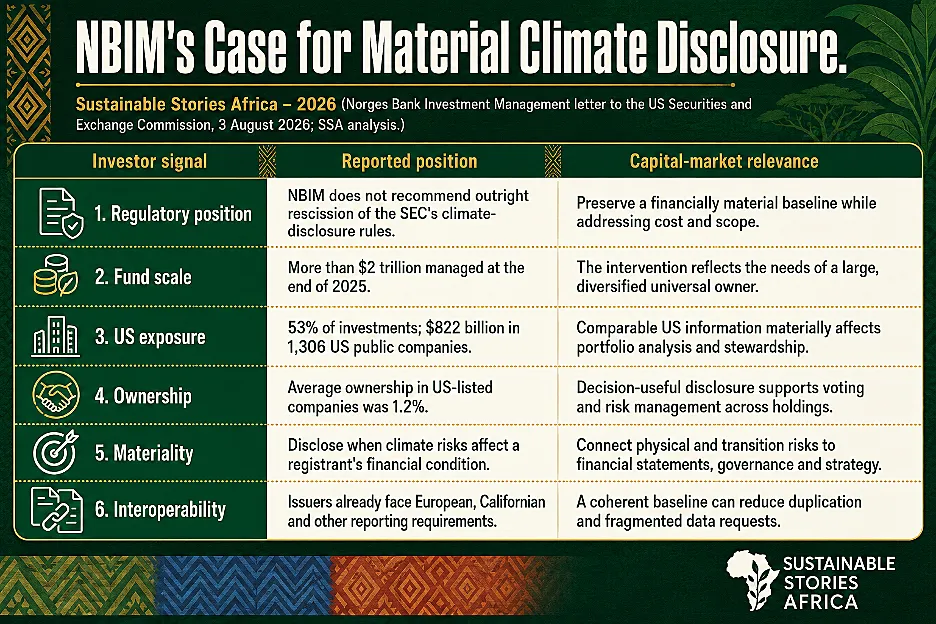
NBIM’s response is calibrated. It did not argue that every requirement must remain unchanged. Instead, it backed the framework’s materiality standard, disclosure when climate-related risks affect a registrant’s financial condition, and said structured reporting adds analytical context to financial statements, governance and strategy.
That context is important to a universal owner whose returns depend on the broader economy.
- Physical hazards can damage assets and disrupt supply chains; transition policies can reshape demand, cost and asset values.
- Without comparable information, investors must assemble data from voluntary reports, estimates and competing regimes, increasing uncertainty and expense.
Comparable Data Can Lower Friction Globally
A well-designed baseline can benefit issuers as well as investors.
- Companies operating across jurisdictions already face European, Californian and other reporting requirements.
- A coherent federal approach could reduce duplication and limit a patchwork in which similar climate risks are calculated and described differently.
For African companies seeking global capital, the debate is not remote.
- Exporters, banks and infrastructure developers increasingly answer climate questions from lenders, customers and investors even where domestic rules are still developing.
- If major markets fragment, African issuers may face multiple data requests with limited reporting capacity.
The opportunity is interoperability: material disclosures built on consistent definitions, connected to financial statements and proportionate to company size and exposure.
Such a system can improve capital allocation without turning reporting into a compliance performance detached from decision-useful risk.
Preserve Baselines And Reduce Duplication Globally
The SEC should test targeted revisions before full rescission, clarify liability and scope, and coordinate with other standard setters.
- Investor needs, issuer costs and the consequences of fragmented data should be assessed together.
African regulators and companies should continue building capacity around material climate risk rather than waiting for a single jurisdiction’s political cycle.
- Boards need governance, controls and evidence behind reported claims.
- Regulators can phase requirements, provide proportional relief and pursue interoperability with widely used sustainability standards.
Path Forward – Keep Climate Information Financially Decision-Useful Always
NBIM’s intervention reframes the choice: the alternative to a burdensome rule need be no rule.
A narrower, materiality-led baseline can preserve investor information while addressing cost.
The path forward is disciplined disclosure, comparable enough for capital markets, proportionate enough for issuers and closely connected to financial decisions.
For African markets, building that capability can strengthen credibility and access to long-term capital.
Culled from: Norway's $2.3 Trillion Fund Opposes SEC Plan to Scrap Climate Disclosure Rules