Africa's next energy leaders may not be those with the largest natural resources, but those able to make faster, smarter policy decisions.
As global energy markets become increasingly competitive, governments are being challenged to accelerate reforms, approvals and investment frameworks.
The pace of policymaking could now determine which countries secure jobs, capital and long-term energy security.
The Race Is No Longer About Resources
Africa's energy transition is becoming less about what countries possess beneath the ground and more about how quickly governments can respond above it.
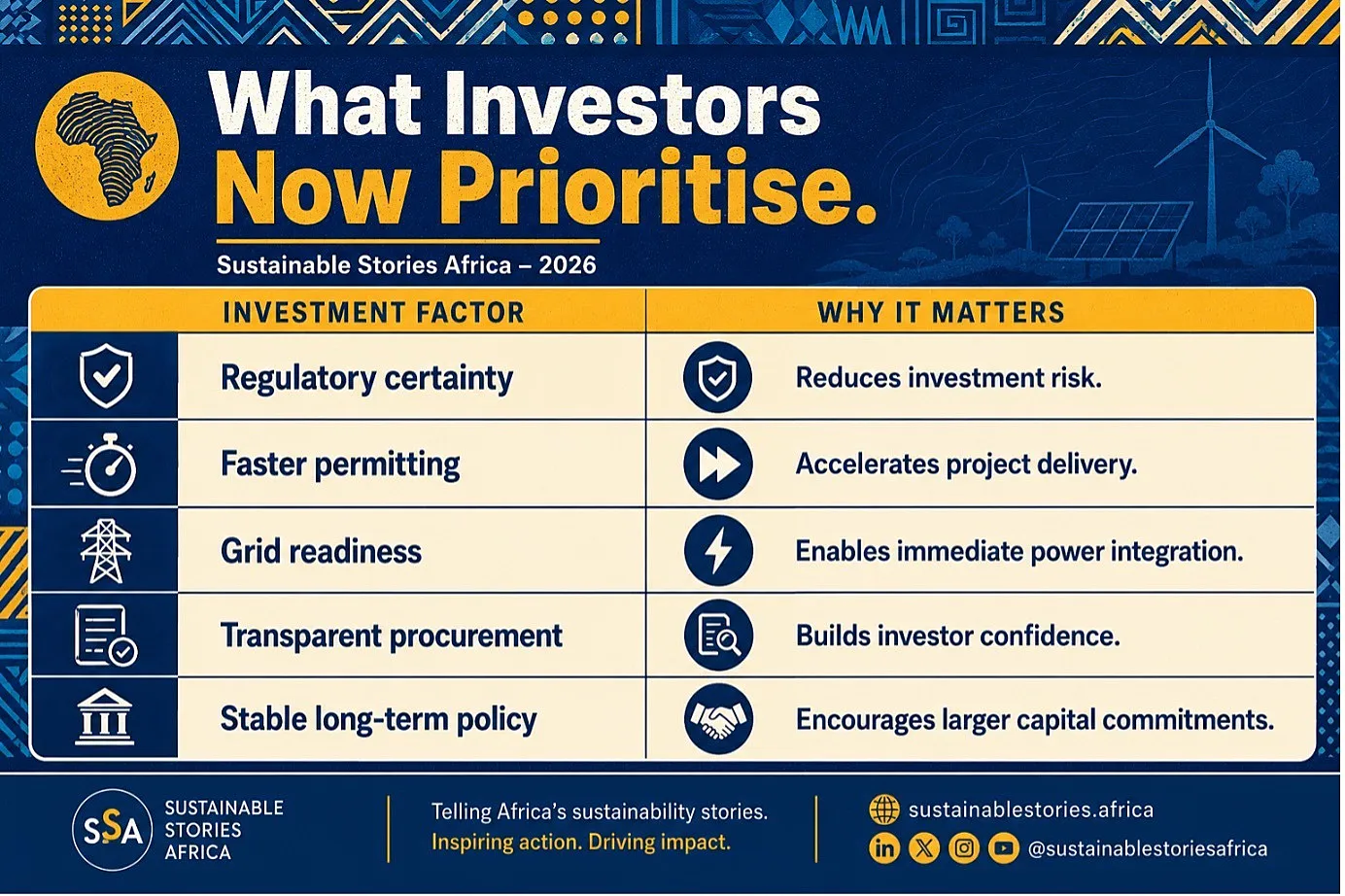
Across the continent, investors are increasingly directing capital toward jurisdictions capable of delivering regulatory certainty, faster permitting, stable institutions and predictable energy policies.
While Africa holds roughly 60% of the world's best solar resources, according to the International Energy Agency, many projects continue to face delays caused by lengthy approvals, fragmented regulation and weak implementation.
The result is a growing divide between countries moving rapidly to attract clean energy investment and those watching opportunities shift elsewhere.
Increasingly, energy security is becoming a governance challenge as much as an engineering one.
Policy Speed Has Become a Competitive Advantage
The global energy transition is unfolding at unprecedented speed.
Countries are competing not only to generate renewable electricity but also to attract manufacturing, battery production, green hydrogen projects, transmission infrastructure and critical mineral processing industries.
Investors evaluating billion-dollar energy projects now assess more than natural resources.
They examine licensing timelines, regulatory transparency, contract enforcement, grid readiness and government responsiveness.
Across Africa, several countries are demonstrating what agile governance can achieve.
- Morocco has spent years developing clear renewable energy strategies supported by long-term policy consistency, helping position the country as a regional renewable energy leader.
- Namibia has rapidly emerged as a destination for green hydrogen investment by introducing dedicated strategies and engaging investors early.
- Egypt continues expanding renewable capacity while strengthening transmission infrastructure and attracting blended finance partnerships.
Conversely, projects in several other markets continue to experience delays caused by land acquisition challenges, overlapping regulatory mandates, inconsistent procurement processes and prolonged environmental approvals.
The cost of delay extends beyond individual projects.
Every postponed investment represents deferred employment, delayed industrialisation, constrained electricity access and reduced competitiveness in an increasingly carbon-conscious global economy.
Meanwhile, Africa's electricity demand continues rising alongside population growth, urbanisation and industrial expansion. According to the International Energy Agency, nearly 600 million Africans still lack access to electricity, highlighting the urgency of expanding reliable, affordable and sustainable energy systems.
Agility Can Unlock Inclusive Prosperity
Governments that move quickly stand to gain far more than renewable electricity.
Efficient energy governance can stimulate local manufacturing, attract international finance, reduce electricity shortages, strengthen industrial productivity and improve living standards across urban and rural communities alike.
- For businesses, faster project approvals translate into earlier operations and lower financing costs.
- For households, expanded electricity access supports education, healthcare, digital connectivity and entrepreneurship. For governments, diversified energy systems strengthen fiscal resilience while reducing dependence on volatile fuel imports.
Agility also improves resilience.
Countries capable of rapidly adapting policies to technological innovation, changing market conditions and evolving climate risks will be better positioned to capture emerging opportunities in battery storage, electric mobility, green hydrogen, carbon markets and distributed renewable systems.
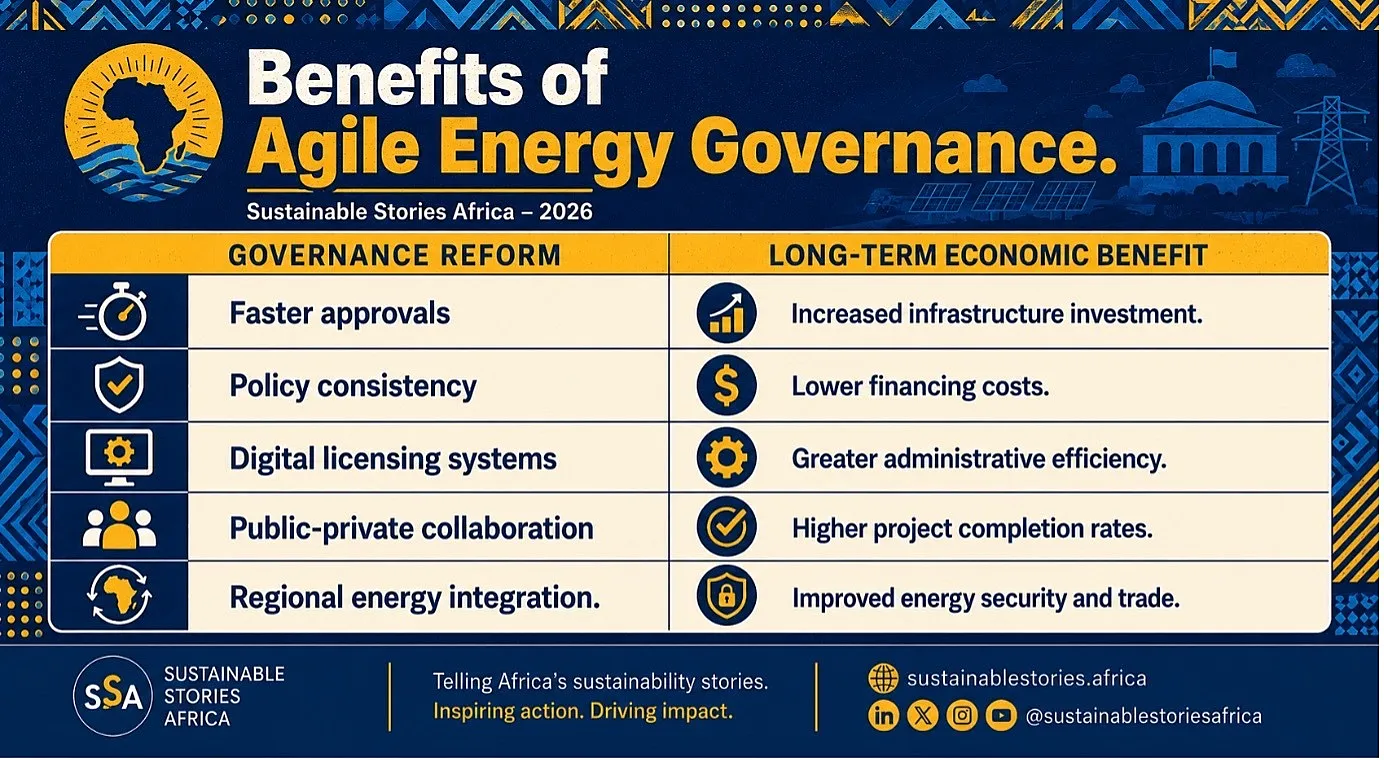
Ultimately, the continent's greatest energy advantage may not be sunlight, wind or minerals alone, but institutions capable of transforming these resources into sustainable economic value.
Reform Must Move At Market Speed
Africa's energy transition cannot afford policy cycles that move more slowly than investment decisions.
- Governments should modernise permitting systems, streamline regulatory agencies, digitise approvals, strengthen independent energy institutions and improve coordination among ministries responsible for finance, environment, planning and energy.
Equally important is creating predictable regulatory environments that provide investors with confidence over project lifecycles extending twenty or thirty years.
- Development finance institutions, regional organisations and private investors also have a role to play by supporting technical assistance, project preparation facilities and policy reforms that improve execution capacity rather than simply financing infrastructure.
The countries that combine abundant resources with agile governance will likely define Africa's next generation of energy leadership.
Path Forward – Faster Decisions Will Shape Energy Leadership
Africa's energy future depends on governments matching abundant natural resources with equally ambitious institutional reform and execution.
By accelerating policy implementation, strengthening regulatory certainty and embracing adaptive governance, African economies can attract greater investment, expand energy access and build resilient, competitive energy systems that advance both sustainable development and long-term economic prosperity.
Culled From: Africa’s energy future will be won by governments that can move with agility