A BBC World Service discussion asks whether Africa's fast-rising solar uptake can overcome the continent's persistent electricity-access deficit.
Chinese panel imports rose sharply as households and businesses sought alternatives to unreliable grids and costly diesel.
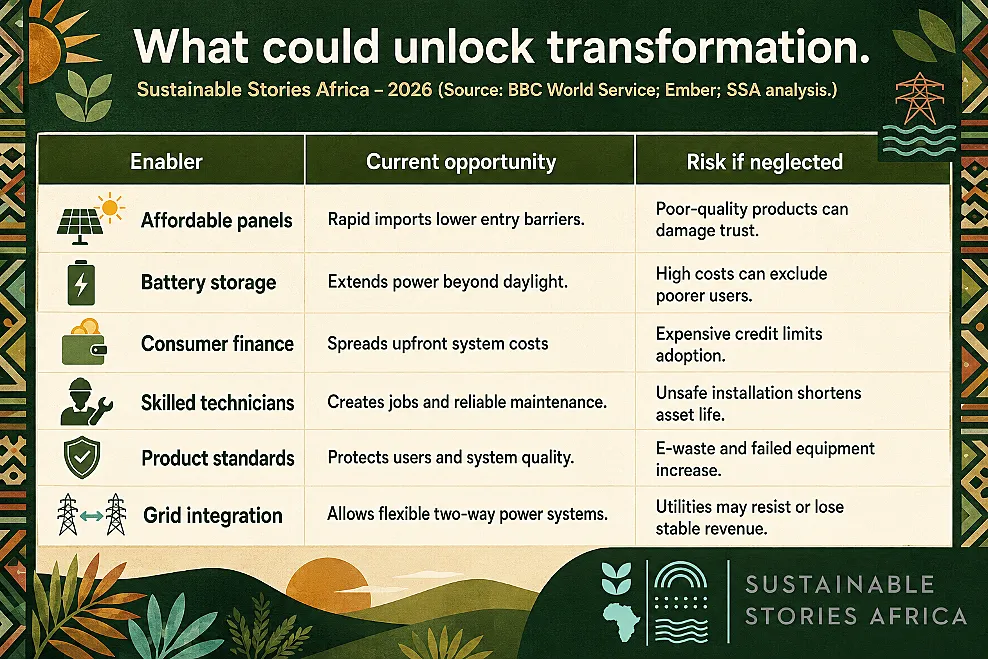
The opportunity is enormous, but batteries, finance, local skills, product quality and utility reform will determine whether the boom delivers inclusive transformation.
Panels spread where grids fall short
Solar power is moving from a future promise to an everyday electricity choice across Africa, a BBC World Service Climate Question discussion highlighted.
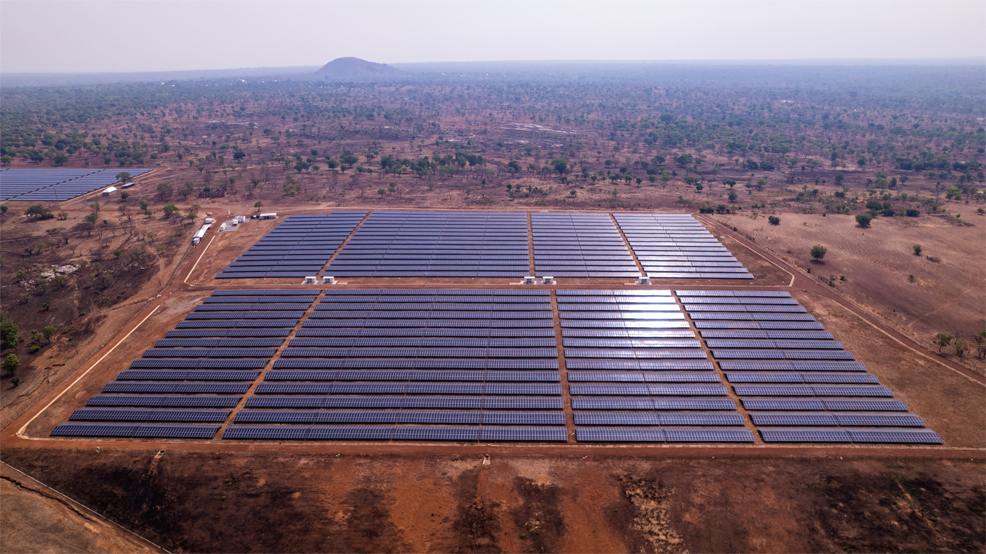
The shift is visible in small panels charging phones and televisions, rooftop systems supporting homes and shops, and larger arrays powering farms, factories and commercial facilities.
The programme drew on evidence that solar-panel imports from China rose 60% in the 12 months to June 2025, reaching about 15 gigawatts.
- 20 African countries set import records, and Nigeria became the continent's second-largest importer with about 1.7 gigawatts.
- Growth also accelerated in markets including Algeria, Zambia, Liberia, the Democratic Republic of Congo, Benin, Angola and Ethiopia.
Demand is solving reliability problems directly
Much of this expansion is occurring outside conventional utility procurement.
- Consumers are buying systems because the grid is absent, power cuts are disruptive or diesel generation is expensive.
- Modular solar can be installed faster than a power station or transmission line, while batteries can extend service beyond daylight hours.
That decentralised pattern changes the energy debate.
- Solar is not only a climate technology; it is a productivity tool for clinics, schools, cold chains, irrigation, digital work and small businesses.
- It can reduce fuel spending and local air pollution while making electricity costs more predictable.
A boom can still deepen inequality
Households and companies with cash or credit can drop unreliable utility supply behind, while poorer customers remain on weaker networks.
- Utilities may then lose high-paying users but retain the cost of maintaining grids and serving customers who cannot self-generate.
- Without tariff reform and new business models, distributed solar can weaken the institutions still needed for industry, cities and universal service.
Africa also imports most panels, inverters and batteries.
- That accelerates access but exposes countries to foreign exchange movements, shipping disruption and overseas policy changes.
- Local assembly, repair networks, recycling and eventually component production could keep more value and technical capacity on the continent.
Policy must connect access and industry
Governments should simplify licensing for small systems, enforce product and installation standards and expand concessional finance for low-income households, clinics and productive users.
Utilities should be rewarded for connecting, balancing and purchasing distributed power rather than treating it only as lost demand.
Investors can support pay-as-you-go models, local-currency lending, mini-grids and storage while measuring service quality, affordability and productive use.
The goal is not panel imports alone; it is dependable electricity that improves livelihoods.
Path Forward – Scale Solar Access With Reliable Systems
African governments should pair rapid solar deployment with consumer protection, technician training, battery finance, recycling and utility reform.
Development partners and investors should prioritise affordable systems for underserved households and productive enterprises while supporting local assembly and maintenance.
Solar can transform the continent when distributed assets and national networks operate as complementary parts of an inclusive, reliable electricity system.