A large US study found that older adults receiving the recombinant shingles vaccine had a lower cardiovascular disease burden than recipients of the older live vaccine.
The association covered ischaemic heart disease and heart failure, with some additional outcomes differing by sex.
Researchers stress that the observational findings do not yet prove the vaccine prevents heart disease, but they justify clinical trials and mechanistic studies.
One vaccine, two possible protections
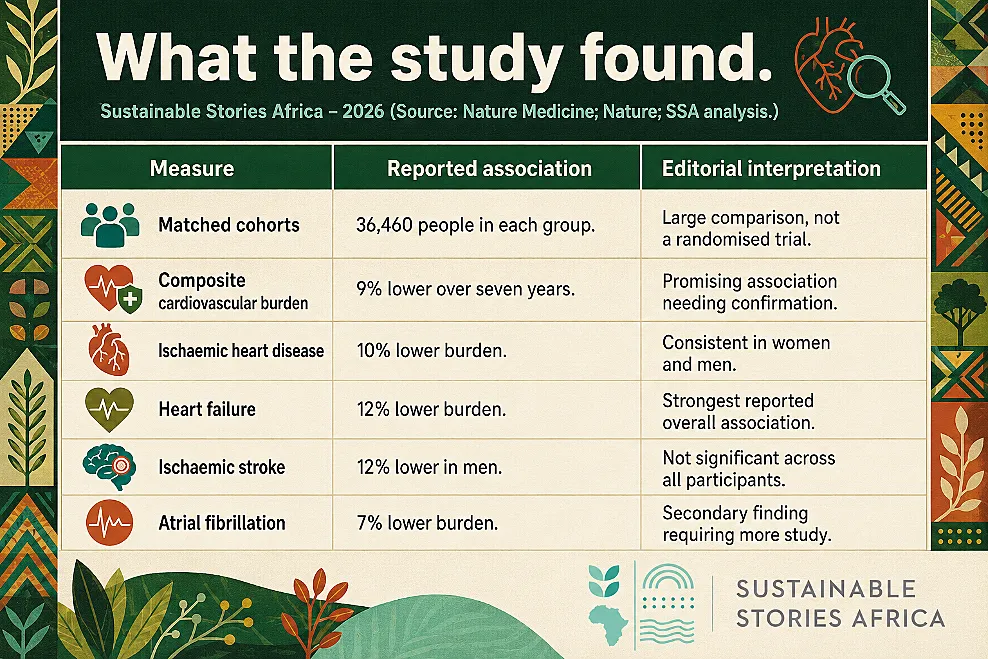
The recombinant shingles vaccine used today was associated with a 9% lower cardiovascular disease burden over seven years than the older live-attenuated vaccine, according to a Nature Medicine study published on 26 August.
Researchers compared 36,460 people vaccinated in 2018, when 93.5% received the recombinant product, with an equally sized matched group vaccinated in 2017, when 98.6% received the live vaccine.
Participants were at least 60 years old.
- The newer-vaccine cohort recorded 10% less burden from ischaemic heart disease and 12% less from heart failure.
- Men also showed a 12% reduction in ischaemic stroke burden, while the overall stroke result was not statistically significant.
- Atrial fibrillation burden was 7% lower.
Strong association still needs clinical proof
The study design used the US transition between vaccines as a natural experiment and matched patients to reduce differences between the groups.
- That is stronger than simply comparing vaccinated and unvaccinated people, because people who seek vaccines can differ in income, health behaviour and access to care.
It remains observational research.
- Unmeasured factors may still explain part of the association, and the apparent benefit weakened over time.
- Experts responding through the Science Media Centre said a randomised trial would provide the clearest answer on whether the recombinant vaccine itself causes better cardiovascular outcomes.
Biological explanations remain under investigation
One possibility is that preventing reactivation of the varicella-zoster virus reduces inflammation or vascular injury that can follow shingles.
Another is that the recombinant vaccine's immune-stimulating adjuvant has effects beyond preventing infection.
- These mechanisms remain hypotheses, not established clinical explanations.
For Africa, the finding arrives in a difficult health context.
- Cardiovascular disease is rising while adult immunisation programmes remain less developed than childhood vaccination.
- Many systems also face constrained cold chains, workforce shortages and high out-of-pocket costs. A vaccine that eventually proves to prevent two major burdens could strengthen the economic case for adult vaccination, but affordability and local evidence would determine whether that promise reaches patients.
Prevention policy should not outrun evidence
Clinicians should continue recommending shingles vaccination according to approved age and risk guidelines, not as an unproven heart-disease treatment.
Patients should still manage blood pressure, diabetes, cholesterol, smoking, diet and physical activity through established care.
Researchers should now conduct randomised trials, investigate mechanisms and examine more diverse populations.
Health ministries can improve adult immunisation records and cardiovascular surveillance so future benefits and safety signals are measurable.
Path Forward – Test The Heart Benefits Through Trials
Randomised trials should test whether recombinant shingles vaccination directly reduces cardiovascular events, how long any protection lasts and which patients benefit most.
African health systems should assess adult-vaccine affordability and delivery while avoiding premature claims
Shingles prevention is already valuable; any confirmed heart benefit would be an additional public-health gain, not a substitute for established cardiovascular prevention.
Culled from: Does the shingles vaccine cut heart-disease risk? Mounting evidence suggests a link | Nature