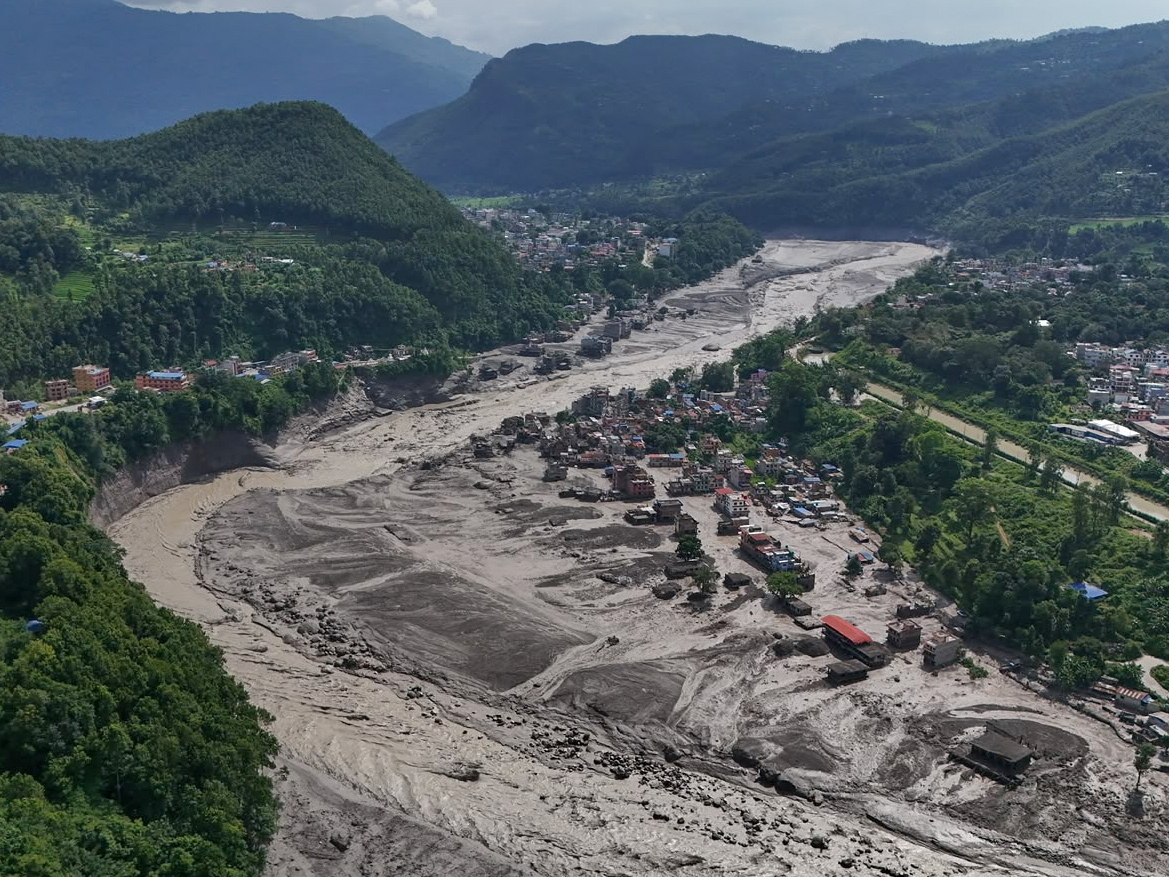
A glacier collapses high in the Himalayas unleashed a destructive flood of water, rock and mud across Nepal and Tibet.
The disaster shows how warming can destabilise mountain terrain and turn remote ice loss into an immediate risk for settlements and downstream infrastructure.
For other glacier-fed regions, including African mountain communities, prevention now depends on monitoring, warning systems and climate-resilient planning.
A collapsing glacier becomes a deadly flood
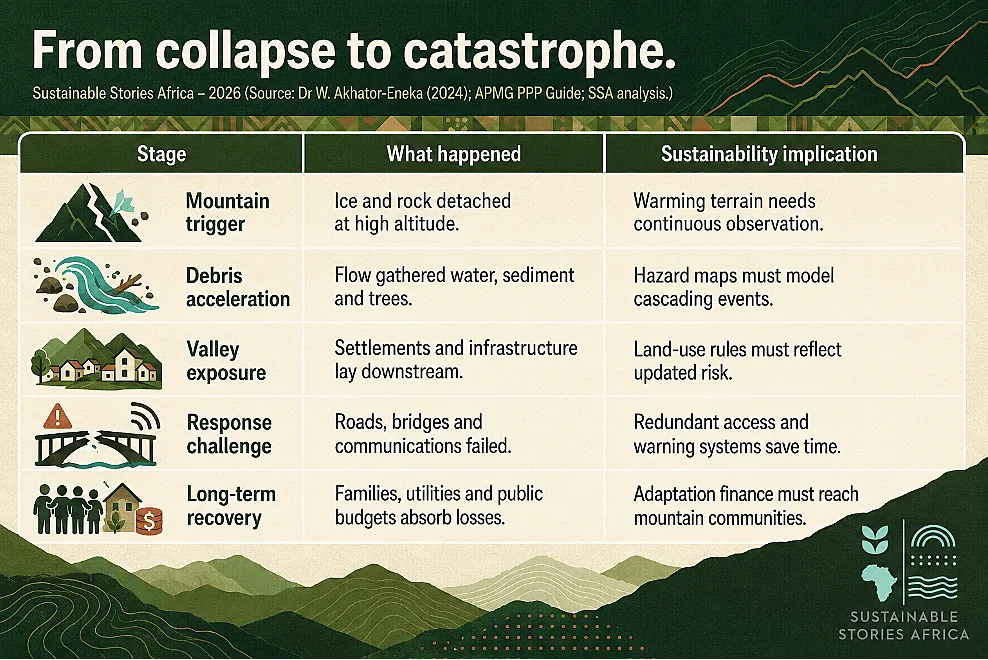
A massive glacier collapse triggered the catastrophic 26 August flood along the Nepal-Tibet border, turning ice, rock, sediment and water into a fast-moving debris flow that swept through river valleys and communities.
Nature initially reported about 350 deaths and more than 1,000 people missing. By 30 August, Reuters reported that the confirmed toll had risen to about 750, with more than 3,000 still missing as recovery teams struggled with blocked roads, damaged bridges and unstable slopes.
The US Geological Survey first detected what appeared to be an earthquake, but seismic patterns and satellite evidence instead pointed to a large landslide initiated by collapsing ice.
Scientists cautioned that no single collapse can be attributed to climate change without detailed analysis.
However, warming is shrinking glaciers, thawing permafrost and weakening the frozen material that helps bind steep mountain slopes together.
Warming multiplies risks below the ice
In high mountains, the hazard rarely stops where the ice breaks.
- A falling mass can accelerate down a valley, collect rock and soil, dam rivers and then release a destructive surge.
Nature cited research showing that climate change is making high-altitude regions less stable and raising concern about more frequent landslides and floods.
Human exposure is also expanding.
- Homes, roads, border crossings and hydropower projects increasingly occupy narrow valleys that concentrate flood energy.
- Nepal relies heavily on hydropower, making glacier and landslide risk both a humanitarian and development-finance issue.
- A project designed to deliver low-carbon electricity can become a liability when its catchment, access roads and worker accommodation are planned using historical hazard maps.
Preparedness can reduce avoidable losses
The disaster does not mean every retreating glacier will collapse.
- It does mean governments can no longer treat glacier hazards as remote scientific concerns.
- Satellite radar, seismic sensors, river gauges and community alerts can identify changes and buy evacuation time.
- Engineering standards can require hydropower plants, bridges and settlements to withstand debris floods rather than ordinary river flow alone.
The lesson extends beyond the Himalayas.
- Uganda's Rwenzori Mountains, Mount Kenya and other African highlands contain shrinking ice and steep catchments where extreme rain, erosion and downstream settlement interact.
- Their risk profiles differ from Nepal's; however, the planning principle is shared: climate information must shape infrastructure decisions before construction, not after disaster.
Investment must follow changing mountain risk
Authorities should update glacier inventories and hazard maps, audit critical infrastructure and make warnings understandable at village level.
Development banks and insurers can require climate-risk screening, emergency routes and maintenance funding as conditions for financing mountain projects.
Communities must also decide where alerts, shelters and evacuation paths are placed.
- Technology works only when people trust the signal and can act before roads disappear.
Path Forward – Protect Communities From Growing Glacial Hazards
Governments should combine satellite monitoring, local observation, early-warning systems and climate-adjusted building rules across glacier-fed catchments.
Financiers should test hydropower, transport and settlement plans against cascading ice, landslide and flood scenarios, while directing adaptation funds to exposed communities before another emergency turns physical risk into mass loss.
Culled from: Glacier collapse caused Nepal’s deadly flash flood — a sign of things to come? | Nature