Artificial intelligence is rapidly transforming global water management, with the market projected to reach $53.85 billion by 2032.
Utilities are deploying AI-driven systems to optimise water distribution, reduce losses, and strengthen infrastructure resilience.
The shift signals a major technological transformation as governments and utilities seek smarter solutions to address water scarcity, climate risks, and operational inefficiencies.
Artificial Intelligence Transforms Water Infrastructure Management
Artificial intelligence is rapidly emerging as a foundational technology reshaping global water management, with market projections indicating growth to $53.85 billion by 2032 as utilities accelerate digital transformation.
Water utilities worldwide are increasingly adopting AI-driven systems to monitor water networks, predict infrastructure failures, and optimise resource allocation.
These capabilities are critical as climate change, urbanisation, and population growth intensify pressure on water systems.
AI technologies enable utilities to manage water resources more efficiently, reduce waste, and strengthen infrastructure resilience.
The transformation reflects a broader shift toward data-driven infrastructure management, enhancing long-term sustainability.
As water scarcity becomes a global challenge, AI is emerging as a key tool for ensuring water security.
Utilities Deploy AI to Improve Efficiency
Water utilities are facing growing operational challenges, including ageing infrastructure, water losses, and climate-related disruptions.
AI technologies provide solutions by enabling real-time monitoring, predictive maintenance, and operational optimisation.
AI-driven systems improve efficiency while reducing operational costs and resource waste.
AI Application Area | Operational Function | Strategic Benefit |
|---|---|---|
Leak detection systems | Identify water losses | Reduced water waste |
Predictive maintenance | Prevent infrastructure failures | Improved reliability |
Demand forecasting | Optimise water distribution | Resource efficiency |
Real-time monitoring | Track system performance | Operational resilience |
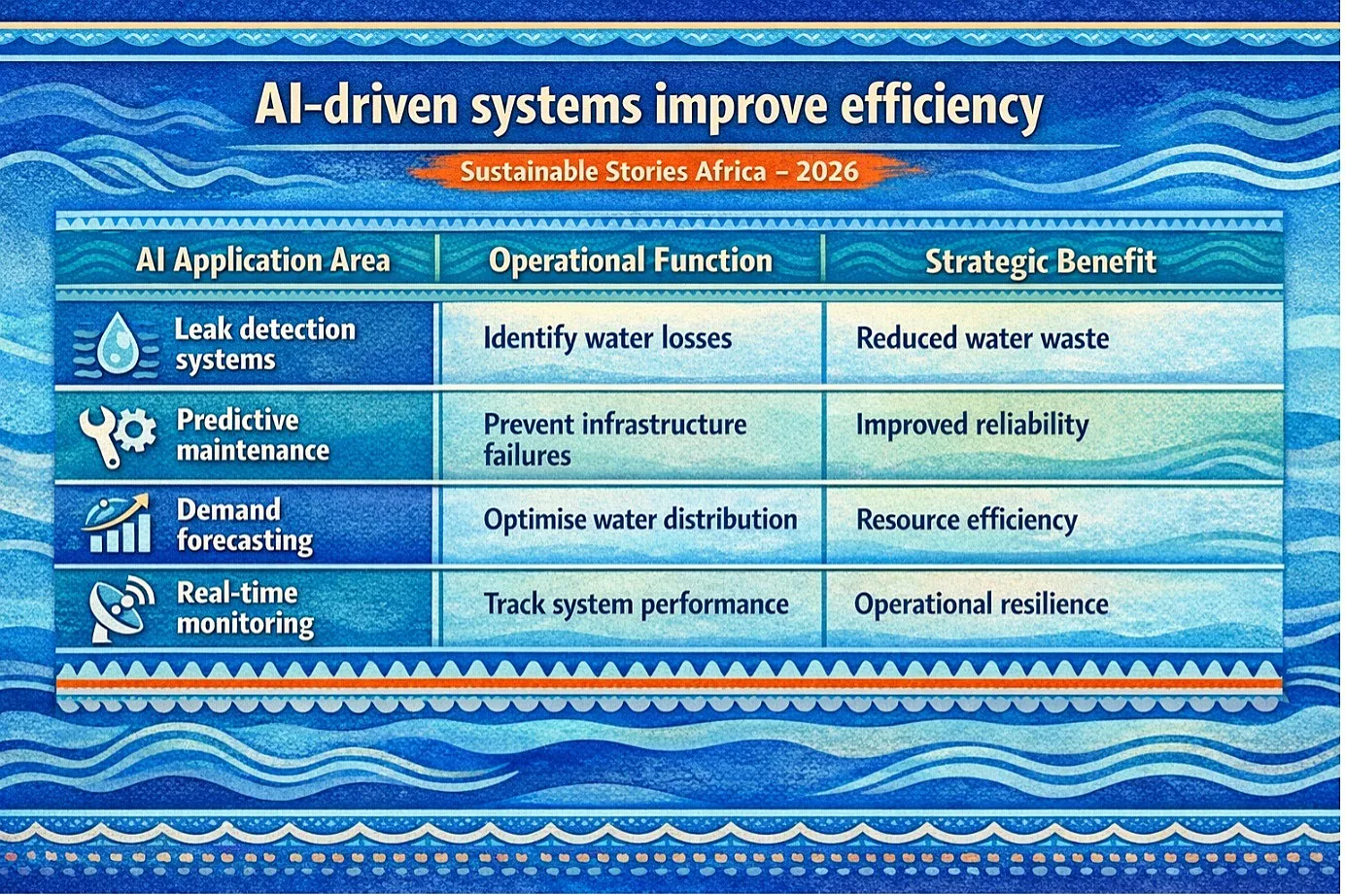
AI technologies enable utilities proactively manage infrastructure, reducing losses and improving service delivery.
These capabilities are increasingly essential for addressing water scarcity and infrastructure challenges.
AI Strengthens Water Security and Sustainability
AI-driven water management supports long-term water security by improving resource efficiency and infrastructure resilience.
Efficient water systems are essential for economic development, public health, and environmental sustainability.
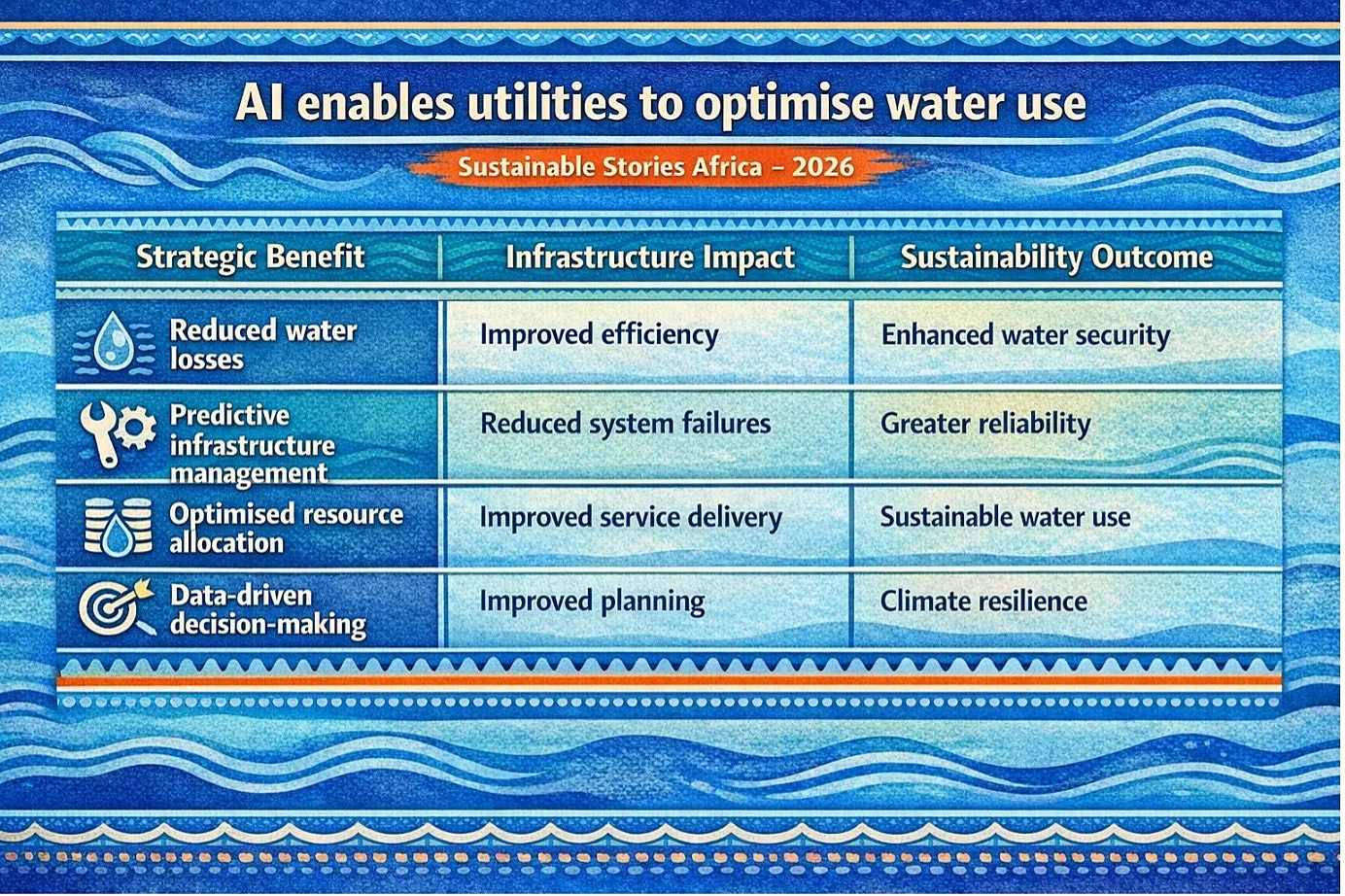
AI enables utilities to optimise water use while reducing operational risks.
Strategic Benefit | Infrastructure Impact | Sustainability Outcome |
|---|---|---|
Reduced water losses | Improved efficiency | Enhanced water security |
Predictive infrastructure management | Reduced system failures | Greater reliability |
Optimised resource allocation | Improved service delivery | Sustainable water use |
Data-driven decision-making | Improved planning | Climate resilience |
Countries adopting AI-driven water management systems are strengthening infrastructure resilience and ensuring sustainable resource management.
Water infrastructure modernisation is essential for long-term sustainability.
Utilities Must Accelerate Digital Transformation
Utilities must invest in AI technologies, digital infrastructure, and workforce capabilities to support the transformation of water management.
Governments and private sector stakeholders must collaborate to deploy AI-driven solutions that strengthen water security and infrastructure resilience.
Policy support, investment, and technological innovation will be essential to unlocking AI’s full potential in water management.
Without digital transformation, water systems risk increasing inefficiency and vulnerability.
AI-driven water management represents a critical step toward sustainable infrastructure development.
Path Forward – AI Enables Smarter Water Infrastructure Management
Utilities must adopt AI technologies, strengthen digital infrastructure, and improve water system management.
AI-driven water management can enhance efficiency, strengthen resilience, and support sustainable water security.
Culled From: AI in Water Management Market Set to Reach $53.85 Billion by 2032 as Utilities Accelerate Digital Transformation