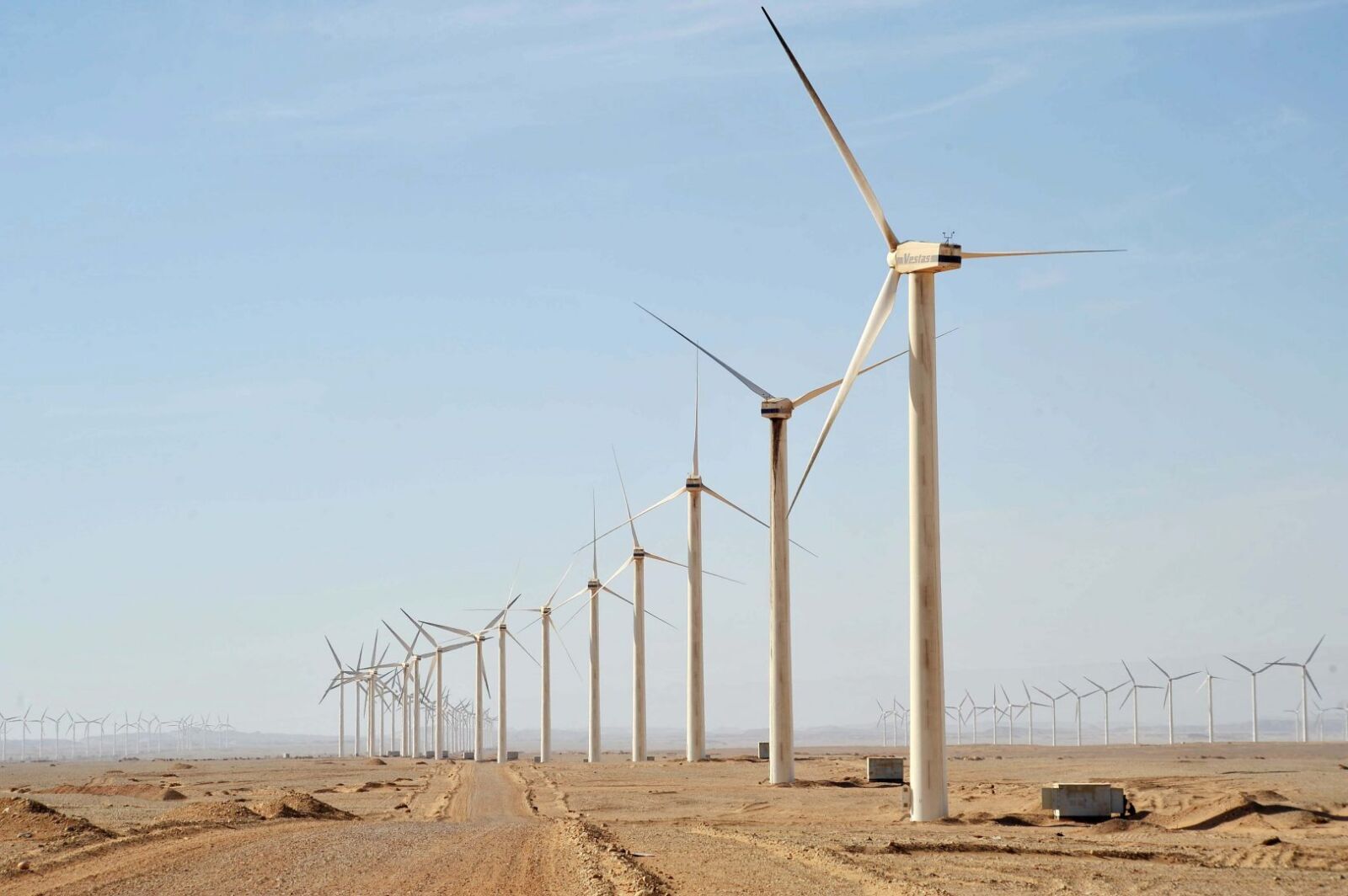
Alcazar Energy Partners has reached financial close on two Red Sea wind farms with a combined capacity of 500 MW.
The company’s investment figure of more than US$1 billion includes a separate privatisation agreement for Gabal El Zeit that is progressing towards its own financial close.
The new wind farms are expected to begin commercial operation by the end of 2028.
Financing clears the way for construction
Alcazar Energy Partners announced on 9 November that it had reached financial close on the Niat and Rasgha wind farms in Ras Ghareb, on Egypt’s Red Sea coast.
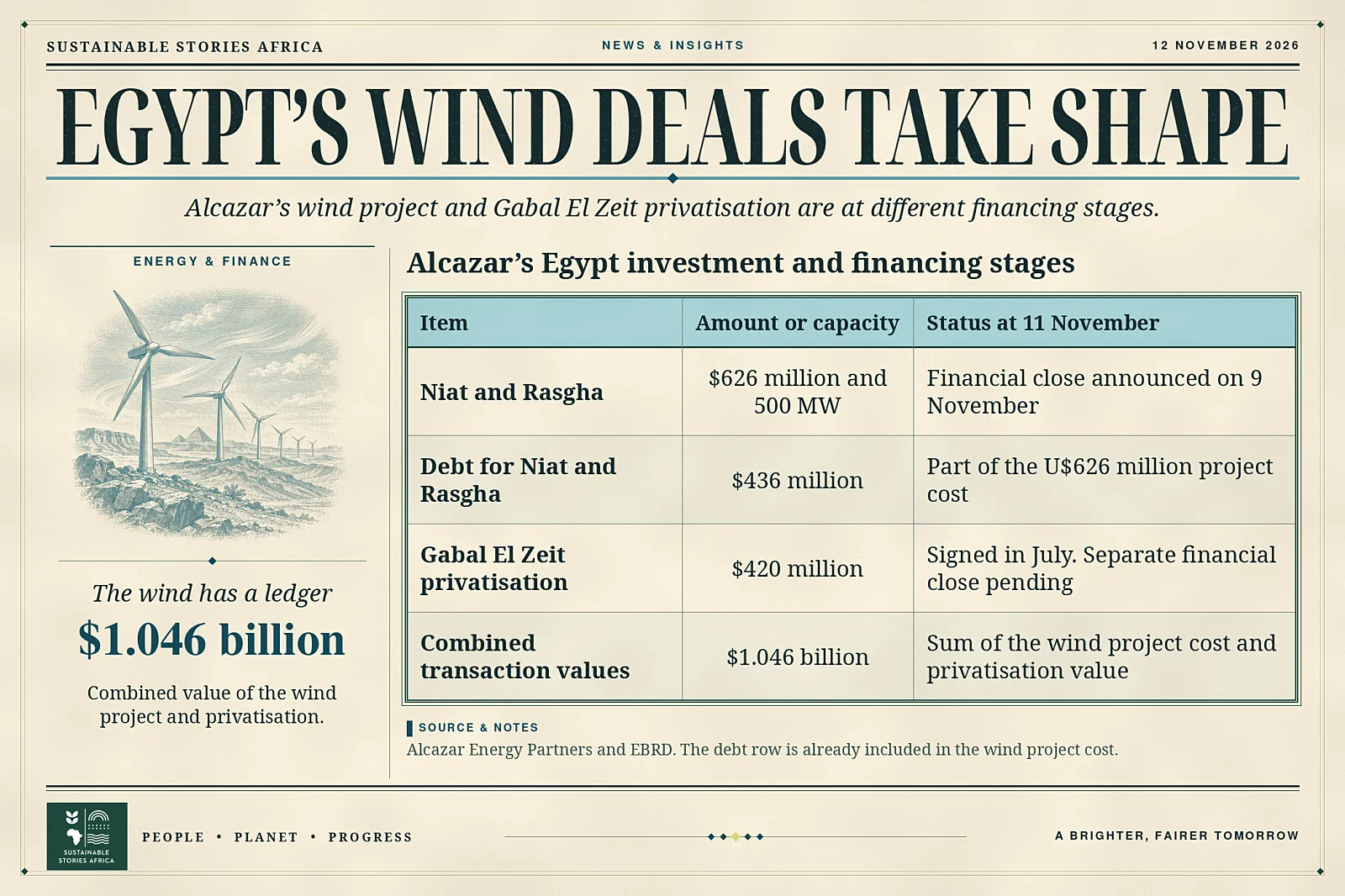
- The projects cost $626 million and, if completed as planned, will add 500 megawatts of generating capacity.
- Alcazar said Siemens Gamesa Renewable Energy had received notice to proceed, moving the two developments into execution.
Alcazar put the value of its Egyptian electricity transactions at more than $1 billion.
- This figure combines the two new wind farms with the $420 million privatisation of Gabal El Zeit, whose agreements were signed in July.
- The latter is working towards a separate project-finance close.
- The combined figure includes both debt and equity and describes transactions at different stages.
For the grid, the 500 MW of new capacity comes from Niat and Rasgha.
European lenders share the financing
The European Bank for Reconstruction and Development, European Investment Bank and Germany’s DEG are providing $436 million in project financing, according to Alcazar.
- This represents about 70% of the two wind farms’ total project cost.
- The EBRD says its package totals up to $145 million across the two project companies.
The debt benefits from European Union first-loss cover, a guarantee designed to absorb some initial losses and reduce lenders' risk.
Long contracts support the wind buildout
Niat and Rasgha each have a 25-year power purchase agreement with the Egyptian Electricity Transmission Company.
- These agreements give the projects a buyer for their output and provide a basis for modelling revenue over the life of the financing.
- Siemens Gamesa will supply turbines and provide operating and maintenance services.
- Orascom Construction will handle the remaining infrastructure site.
For local workers, construction and operating phases offer different opportunities.
- Alcazar expects temporary construction work and around 45 direct jobs once the two wind farms are running.
- Reporting those figures separately would make it easier to see how long employment lasts after installation.
The contractors’ sourcing and training decisions will also shape how much project spending reaches Egyptian firms and workers.
The two farms each account for 250 MW and will sell to the same public buyer.
- Their individual contracts and project companies still matter to lenders, which assess how risks and obligations are allocated at each site.
- At construction, progress depends on work proceeding in sequence.
Turbines need to arrive when roads, foundations and electrical works are ready.
- A delay in one part of the project can push back the date when electricity starts flowing, and revenue begins.
- Notice to proceed marks the start of execution.
The 2028 completion remains Alcazar’s timetable for commercial operation.
Delivery will test the forecasts
Alcazar projects annual output above 2.3 terawatt-hours.
- This figure describes expected electricity generation, while 500 MW describes the maximum rated power of the turbines.
- Actual output will depend on wind conditions, equipment availability and the grid’s ability to receive the electricity when it is produced.
- The company expects the two farms to avoid nearly 1.1 million tonnes of carbon dioxide equivalent annually.
- The EBRD puts the figure at about 979,700 tonnes.
These are projections, and actual avoided emissions will depend on the generation the wind power displaces.
Egypt’s electricity system can benefit from more domestic generation when wind output reduces the need to burn imported fuel.
- The size of that benefit will vary by hour and by season.
- Progress on the grid connection therefore matters alongside progress on the turbines
For the public buyer, the transition from financial close to operation includes testing whether the farms can deliver electricity as expected and whether the grid can take the output.
The two wind farms and the privatisation also call for different measures of progress. Construction and commissioning are the milestones for the new capacity.
- For Gabal El Zeit, the next announced financing milestone concerns the transfer of an existing asset.
Treating those milestones separately gives a clearer view of what Alcazar’s investment adds to electricity supply.
Path Forward – Tracking Wind Delivery On Egypt’s Coast
The next milestones for Niat and Rasgha are construction, grid connection and commercial operation by the end of 2028.
Gabal El Zeit has its own financing timetable. Separate updates on that transaction and on output from the new farms will show how each investment contributes to Egypt’s electricity system.