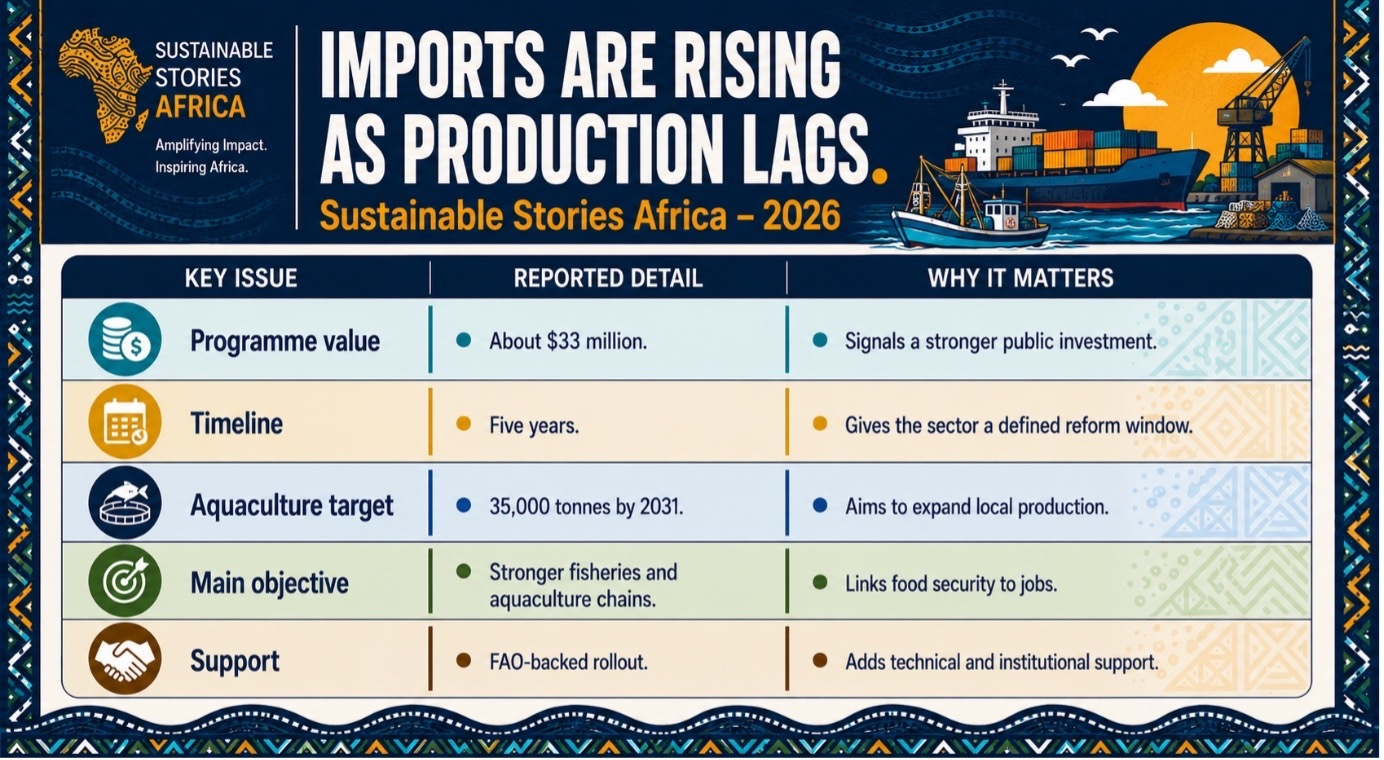
Côte d’Ivoire has launched a five-year fisheries and aquaculture programme worth about $33 million.
The plan aims to rebuild domestic fish production, strengthen value chains and reduce import dependence.
For families, fishers and traders, the outcome could shape food prices, jobs and nutrition security.
A Food Security Problem Meets Investment
Côte d’Ivoire has launched the Competitive Value Chain Development Project for Aquaculture and Sustainable Fisheries, known as ProDeCAP, a five-year programme designed to revive domestic fish production and strengthen food security.
Rolled out on March 26, 2026, with support from the Food and Agriculture Organisation, the programme carries an investment plan of about €28.95 million, or $33 million, and targets structural weaknesses in fisheries and aquaculture value chains.
The urgency is clear. Domestic fish production has not kept pace with demand, forcing the country to rely heavily on imports. For households, that means exposure to global food prices.
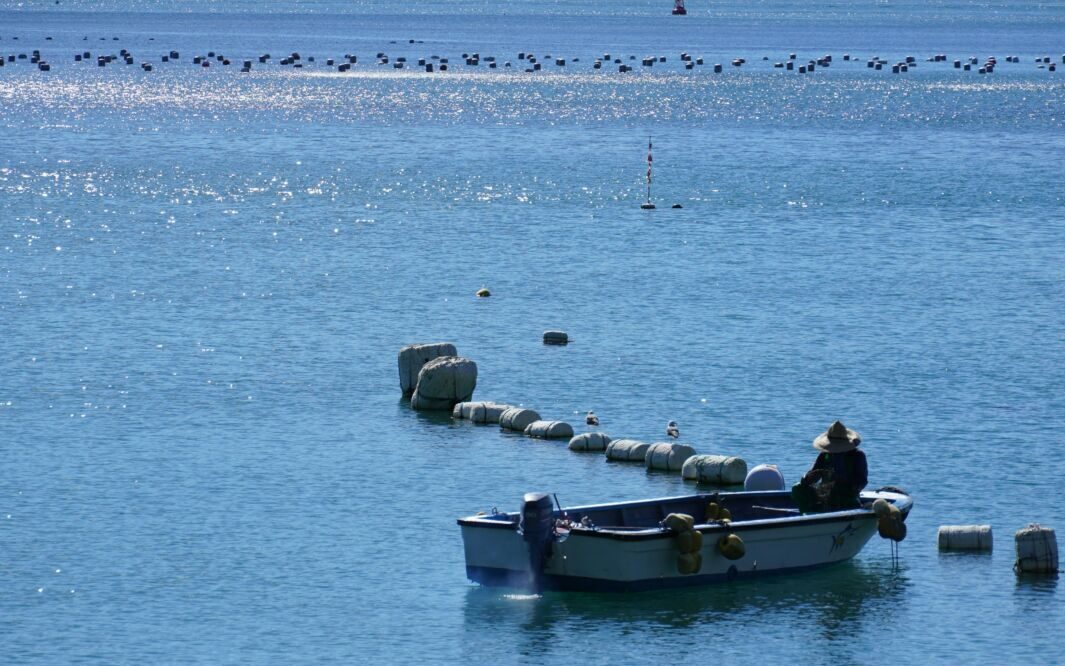
For local fishers and fish farmers, it means missed income in a sector that could create jobs, improve nutrition and support rural economies.
Imports Are Rising As Production Lags
Côte d’Ivoire’s new programme comes after years of pressure on the fish economy. Ecofin Agency reported that imports have surged as domestic production continues to decline, while authorities are targeting aquaculture output of 35,000 tonnes by 2031.
Other sector reports indicate the programme is financed largely through an African Development Bank loan, with the government and partners providing the balance.
Implementation is expected to focus on governance, marine and inland fisheries management, aquaculture expansion and value chain efficiency.
For a market woman in Abidjan or a small fish farmer near Bouaké, these reforms are not abstract.
They determine whether fish arrives fresh, whether cold storage is available, whether feed is affordable and whether local producers can compete with imported supply.
Aquaculture Can Feed Jobs And Families
If implemented well, ProDeCAP could shift fish from being an import-heavy staple to a stronger domestic growth sector.
Aquaculture can create jobs across hatcheries, feed supply, pond management, cold chains, transport, retail and processing. It can also improve access to affordable protein in a country where fish remains central to diets.
Feed Business Middle East and Africa reported that the programme is expected to benefit around 700,000 people, including 50,000 in aquaculture and 650,000 in fisheries.
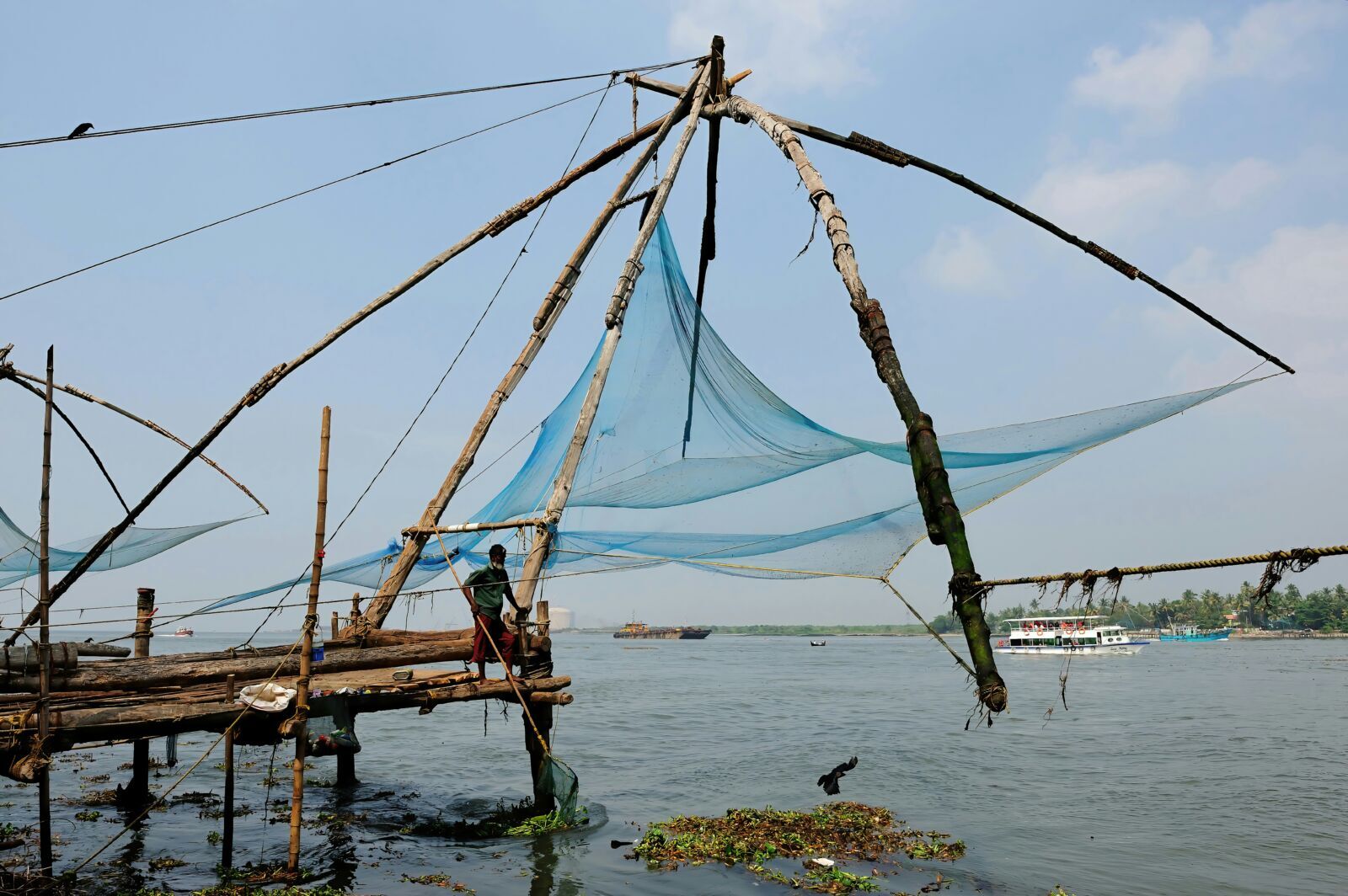
The opportunity is wider than production. Better fisheries governance can protect marine resources.
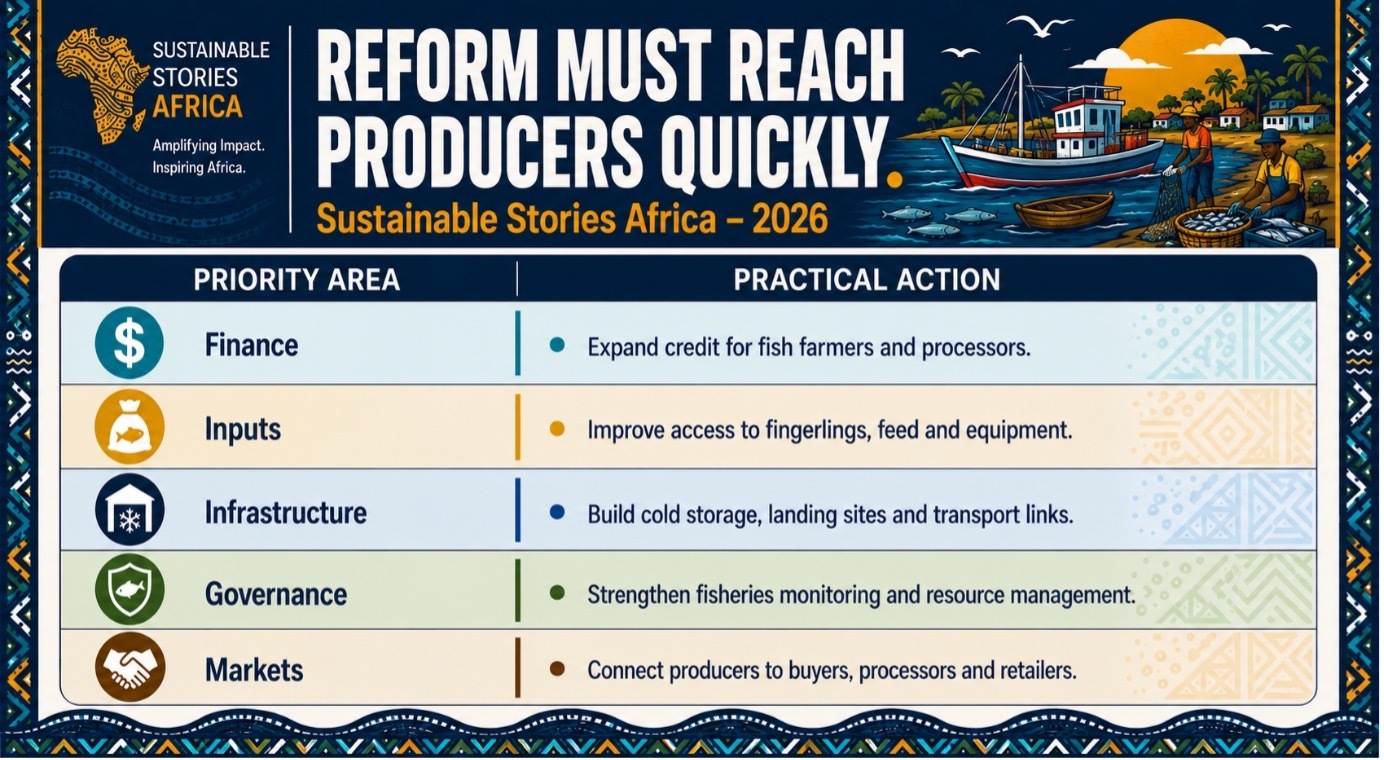
Stronger processing can reduce post-harvest losses. Better finance can help small producers buy fingerlings, feed and equipment. Improved cold chains can keep fish safe from landing sites to urban markets.
However, the risks are also clear. Without affordable credit, reliable inputs and enforcement against overfishing, the plan could struggle to move beyond policy ambition.
Reform Must Reach Producers Quickly
The next test is delivery. Côte d’Ivoire must ensure the programme reaches small fishers, women processors, youth entrepreneurs and aquaculture operators who often face the toughest constraints.
Government agencies, development partners and private investors should also treat fisheries as part of the country’s broader food security and ESG agenda.
A stronger fishery economy can reduce import exposure, create local jobs and support responsible use of aquatic ecosystems.
Path Forward – Build Local Fish Systems That Last
Côte d’Ivoire’s fisheries plan can strengthen food security if investment reaches producers, processors and markets with discipline.
The path forward is practical: finance fish farmers, protect fisheries, expand cold chains and build credible local value chains.
If delivery matches ambition, aquaculture can become a pillar of nutrition, jobs and sustainable blue-economy growth.
Culled From: Côte d’Ivoire Launches Five-Year Plan to Revive Fisheries and Aquaculture - Ecofin Agency