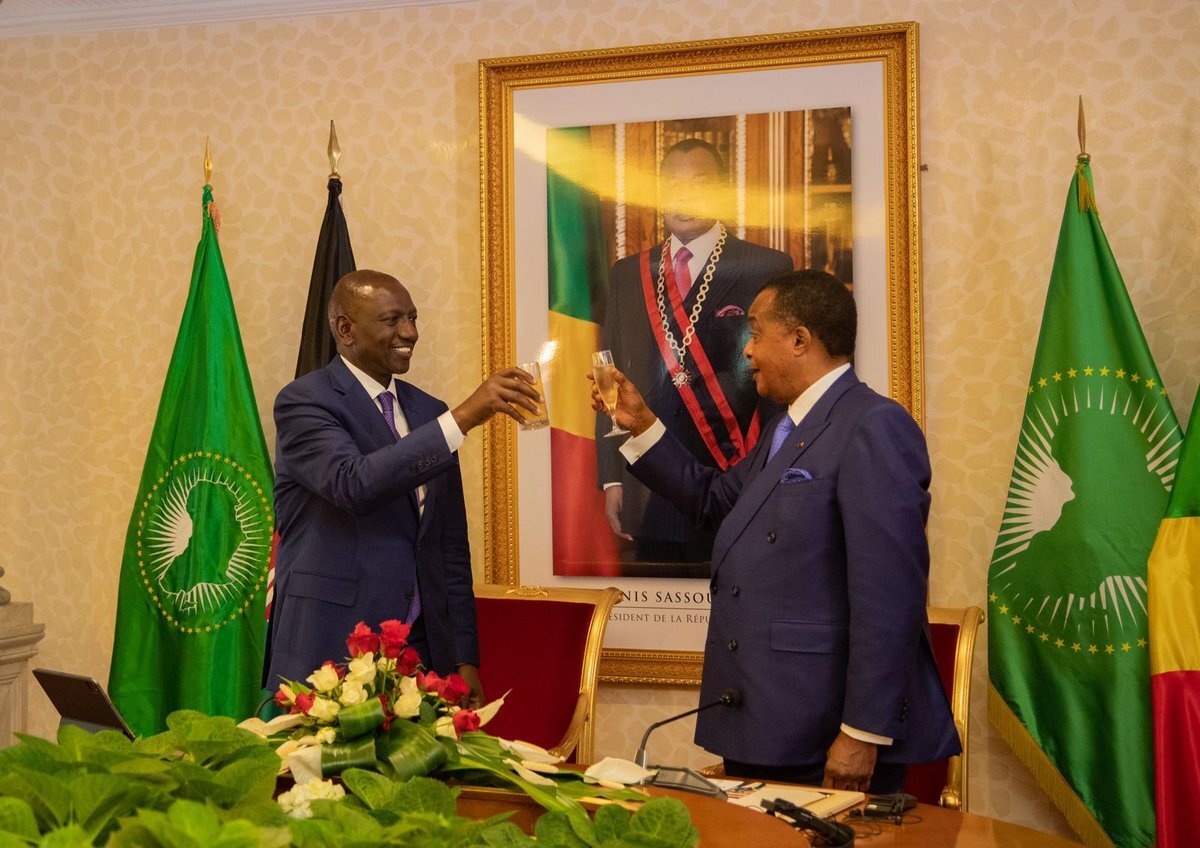
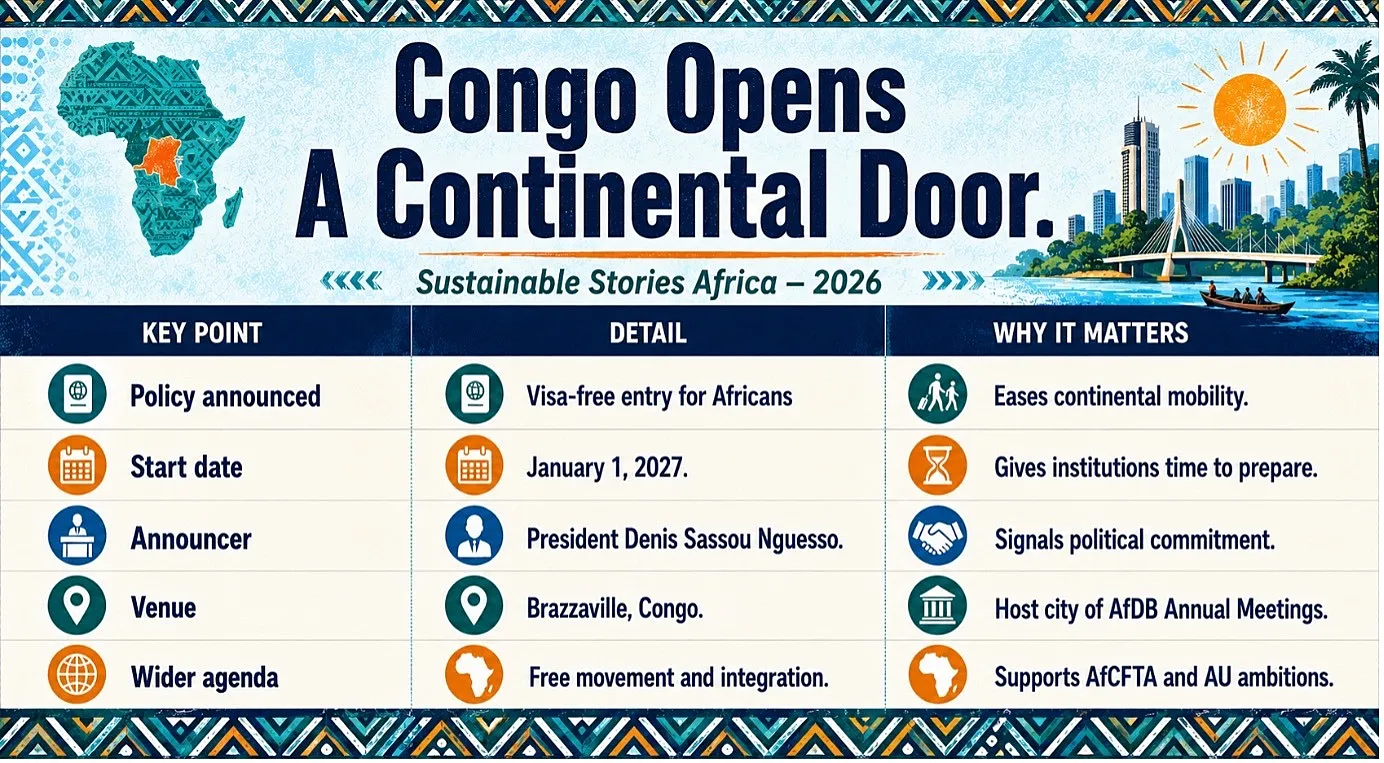
Congo’s President Denis Sassou Nguesso has announced visa-free access for all African nationals from January 1, 2027.
The pledge came as African leaders marked Africa Day during AfDB’s 2026 Annual Meetings in Brazzaville.
For traders, students, investors and families, the decision speaks to a larger question: can Africa finally make mobility match its integration ambitions?
Congo Opens A Continental Door
For decades, Africans have spoken of one continent but travelled it through many gates. On Africa Day in Brazzaville, the Republic of Congo moved to remove one of those gates.
President Denis Sassou Nguesso announced that African nationals will be able to enter Congo without visas from January 1, 2027, placing the country among a growing group of African states using border reform as an economic and political statement.
The announcement was made during Africa Day celebrations held alongside the African Development Bank Group’s 2026 Annual Meetings in Brazzaville, where leaders, policymakers and development institutions gathered around questions of integration, finance and Africa’s economic future.
The timing was symbolic. Africa Day commemorates the founding of the Organisation of African Unity in 1963.
In 2026, the message from Congo was practical: unity must move from speeches to passports, airports and border posts.
Mobility Becomes Economic Infrastructure
The policy matters because movement is economic infrastructure.
A visa rule can decide whether a founder attends a trade fair, whether a student reaches a university, whether a musician performs across borders, or whether a small exporter can meet a buyer before a deal disappears.
Across Africa, integration has often moved faster on paper than in daily life. The African Continental Free Trade Area promises a larger single market; however, goods, services, capital and people still face fragmented systems.
Visa barriers remain one of the most visible signs of that gap.
Congo’s decision follows recent mobility reforms in countries such as Rwanda, Benin, Seychelles, Ghana, Kenya and Togo, each taking different steps toward easier entry for African travellers.
The trend is uneven; however, the direction is clear: governments are beginning to treat mobility as a competitiveness issue, not only an immigration issue.
For Brazzaville, the announcement also strengthens its diplomatic positioning. Hosting the AfDB Annual Meetings gave Congo a continental platform.
Announcing visa-free access on Africa Day turned that platform into a policy signal.
A Freer Africa Can Trade Better
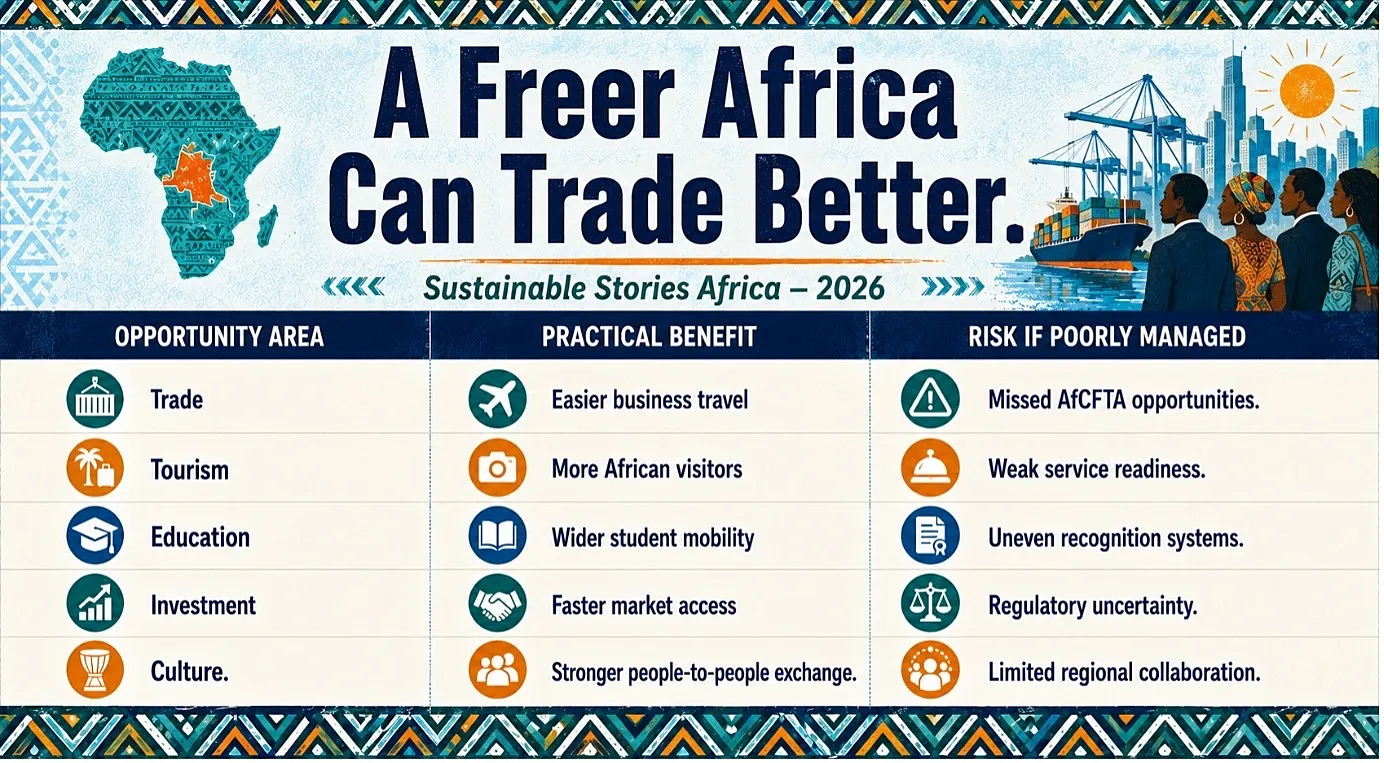
The promise of visa-free access is not only faster travel. It is the possibility of a more connected African economy.
- For small businesses, easier movement can reduce transaction costs.
- For tourism, it can open new visitor flows. For universities and creative industries, it can deepen exchange.
- For investors, it can make market exploration easier.
- For ordinary Africans, it can make the continent feel less like a map of restrictions and more like a shared space of opportunity.
However, the gains will depend on execution.
Visa-free access works best when supported by secure border systems, digital identity tools, transport links, fair rules and clear information for travellers.
Without these, a visa-free policy can be slowed by confusion at airports, weak coordination or uneven enforcement.
Turn Symbolism Into Working Systems
Congo’s next task is implementation.
The government will need to publish clear entry rules, prepare immigration officers, strengthen data systems and coordinate with airlines, border agencies and regional partners before the January 2027 start date.
Other African governments should also treat the move as a challenge.
The continent cannot build a single market while making Africans queue endlessly to visit one another. AfCFTA implementation requires mobility reform, transport investment, digital customs systems and mutual trust between states.
- For business leaders, the message is to prepare for new routes, partnerships and market opportunities.
- For civil society, the role is to track whether the promise becomes reality.
- For policymakers, the priority is to make free movement safe, efficient and economically productive.
Africa Day is often a day of memory. In Brazzaville, it also became a test of readiness for the future.
Path Forward – Make Mobility Work For Africans
Congo’s pledge should now become a practical reform programme: clear rules, secure systems, trained border officials and public communication before January 2027.
If delivered well, the policy can advance African ESG priorities by supporting inclusion, regional trade, sustainable tourism and people-centred economic integration.
The bigger opportunity is simple: make Africa easier for Africans to move through, invest in and build together.
Culled From: AM 2026: Congo’s President Announces visa-free access for Africans as Continent Celebrates Africa Day