The World Bank Group has approved $60 million to strengthen poultry and aquaculture value chains in the Republic of Congo.
The financing is intended to reduce dependence on food imports by improving inputs, skills, infrastructure and access to finance.
Its test will be whether climate-smart investment translates into affordable local food, competitive enterprises and durable jobs for women and young people.
New finance targets Congo’s food gap
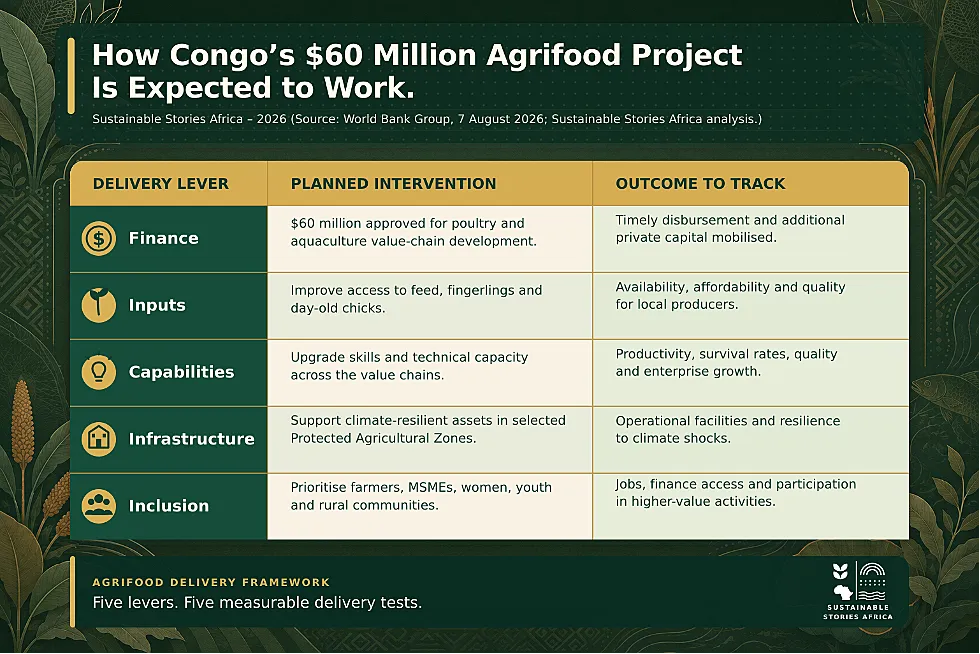
The World Bank Group has approved $60 million for a new Republic of Congo project designed to make the country’s poultry and aquaculture value chains more competitive, climate-resilient and increase capabilities for local food supply.
Announced on 7 August 2026, the Poultry and Aquaculture Development Project will support farmers, producer organisations, micro, small and medium-sized enterprises, public agricultural service providers and rural communities, with particular attention to women and young people.
The intervention targets a practical food-system challenge:
- Local producers cannot expand consistently when feed, fingerlings and day-old chicks are expensive or unreliable, technical capacity is weak, productive infrastructure is exposed to climate risk, and finance remains difficult to secure.
- The project links those constraints rather than treating production as a stand-alone problem.
Inputs, skills and infrastructure shape delivery
Implementation will focus on access to more durable and affordable inputs, upgraded technical skills and productive, climate-resilient infrastructure in selected Protected Agricultural Zones.
It will also support policy and regulatory reforms intended to improve private-sector participation, widen access to finance for farmers and investors, and mobilise private capital into the two value chains.
For a poultry farmer, the sequence matters.
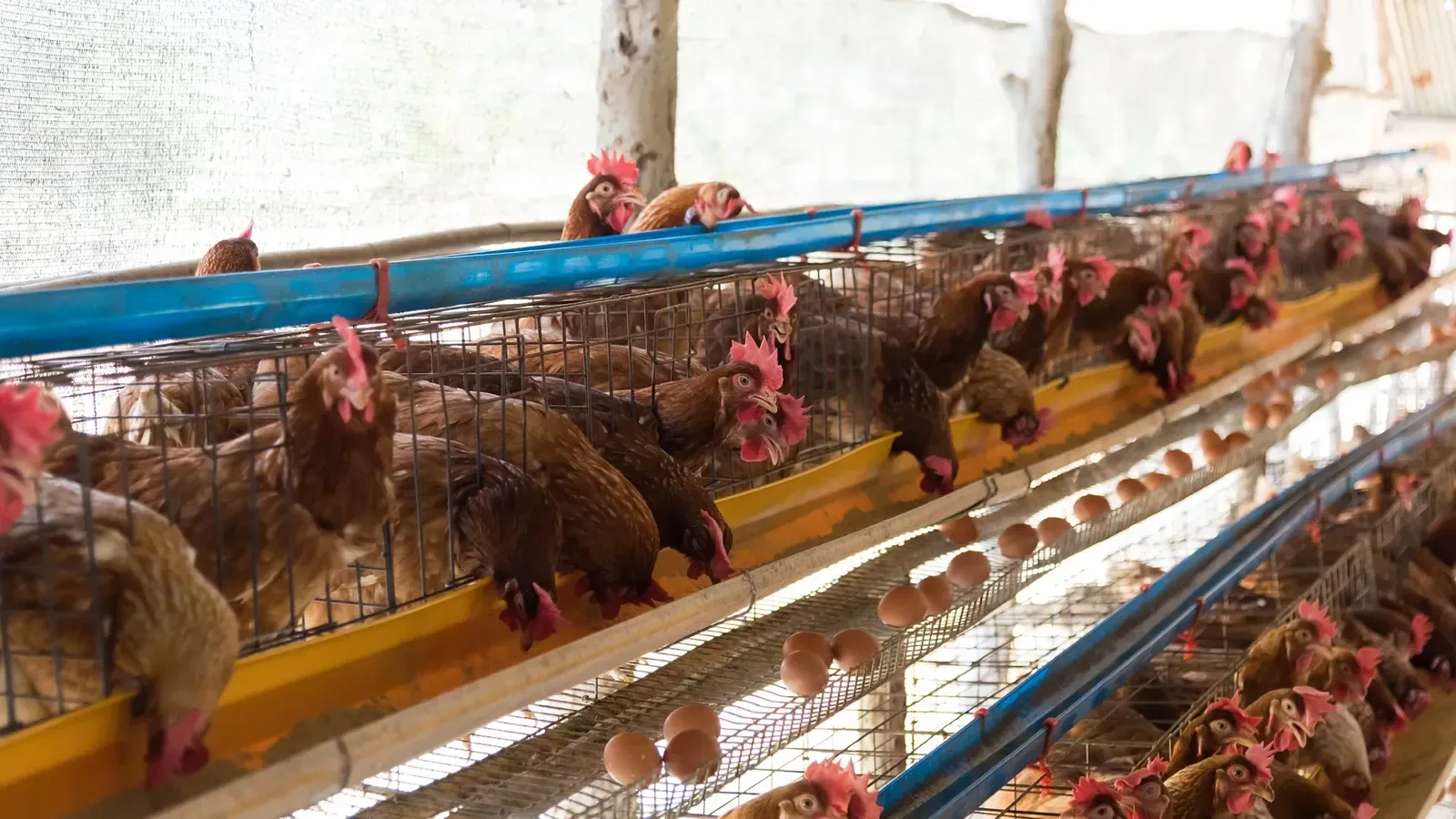
- Affordable chicks without reliable feed will not sustain a flock; production without processing, storage and market access can leave value stranded.
- The same logic applies to fish farmers, whose growth depends on fingerlings, water management, feed, technical support and routes to buyers.
By addressing several links together, the financing aims to turn isolated producers into more dependable local supply networks.
The World Bank’s announcement did not provide a disbursement schedule, name the Protected Agricultural Zones, or quantify expected increases in poultry and fish output, jobs or private capital.
|The delivery indicator expectations will matter when government, communities and financiers begin measuring whether the approved funding changes market outcomes.
Local production could widen opportunity
Cheick F. Kanté, the World Bank’s Division Director for the Republic of Congo, said the project combines public investment, private-sector engagement, skills development and climate-smart solutions to help local producers compete and grow.
He linked stronger poultry and aquaculture sectors to jobs, food and nutrition security, and a more diversified and resilient economy.
The potential gains reach beyond farms. Better-performing value chains can create work for hatcheries, feed suppliers, processors, transporters, cold-chain operators, traders and service providers.
More reliable local production can also reduce exposure to disruptions in imported food supply.
However, the benefits will depend on whether smaller enterprises, women and young people can obtain productive assets and finance on workable terms, not merely participate in training programmes.
Public accountability must follow approval
The next step is to convert the project’s broad design into transparent delivery commitments.
- Authorities and implementing partners should publish baselines, beneficiary criteria, zone-level infrastructure plans, procurement milestones and measurable targets for production, enterprise finance, job quality and women’s and youth participation.
Climate-resilient infrastructure should also be assessed for maintenance, water use and long-term operating costs.
- For financiers, the opportunity is building products around real agricultural cash flows rather than conventional collateral alone.
- For producer groups, the priority is collective bargaining, stronger quality control and traceable access to inputs and markets.
Without those mechanisms, public funding may improve assets without creating competitive businesses that endure after project support ends.
Path Forward – From approval to resilient local markets
Congo now needs a public results framework that shows where the money goes and whether local poultry and fish become more available, affordable and climate-resilient.
Reporting should connect infrastructure and training to production, incomes, jobs and private investment.
If implementation keeps smaller producers at the centre while improving standards, finance and market access, the project can become more than an import-substitution programme.
It can help build local enterprises and food systems able to withstand future shocks.