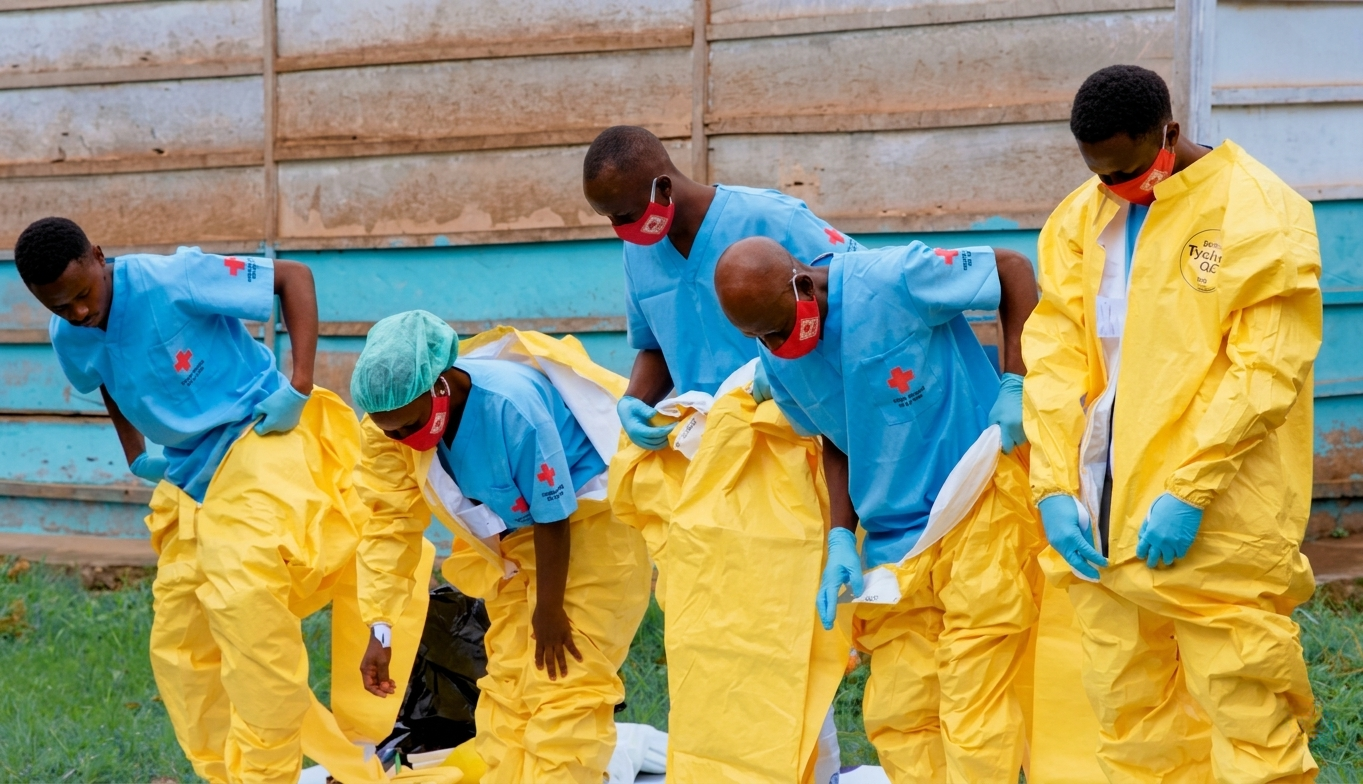
Health workers in eastern Democratic Republic of Congo are struggling to contain Ebola in crowded displacement camps as distrust disrupts contact tracing.
The outbreak has reached conflict-affected provinces where overcrowding, poor sanitation and weak health systems increase the risk of further spread.
For displaced families, the crisis is not only medical. It is also about trust, dignity, safety, and the right to be heard.
A Trust Crisis Threatens Ebola Control
In eastern Democratic Republic of Congo, an Ebola outbreak is exposing a crisis that medicine alone cannot contain: the collapse of community trust.
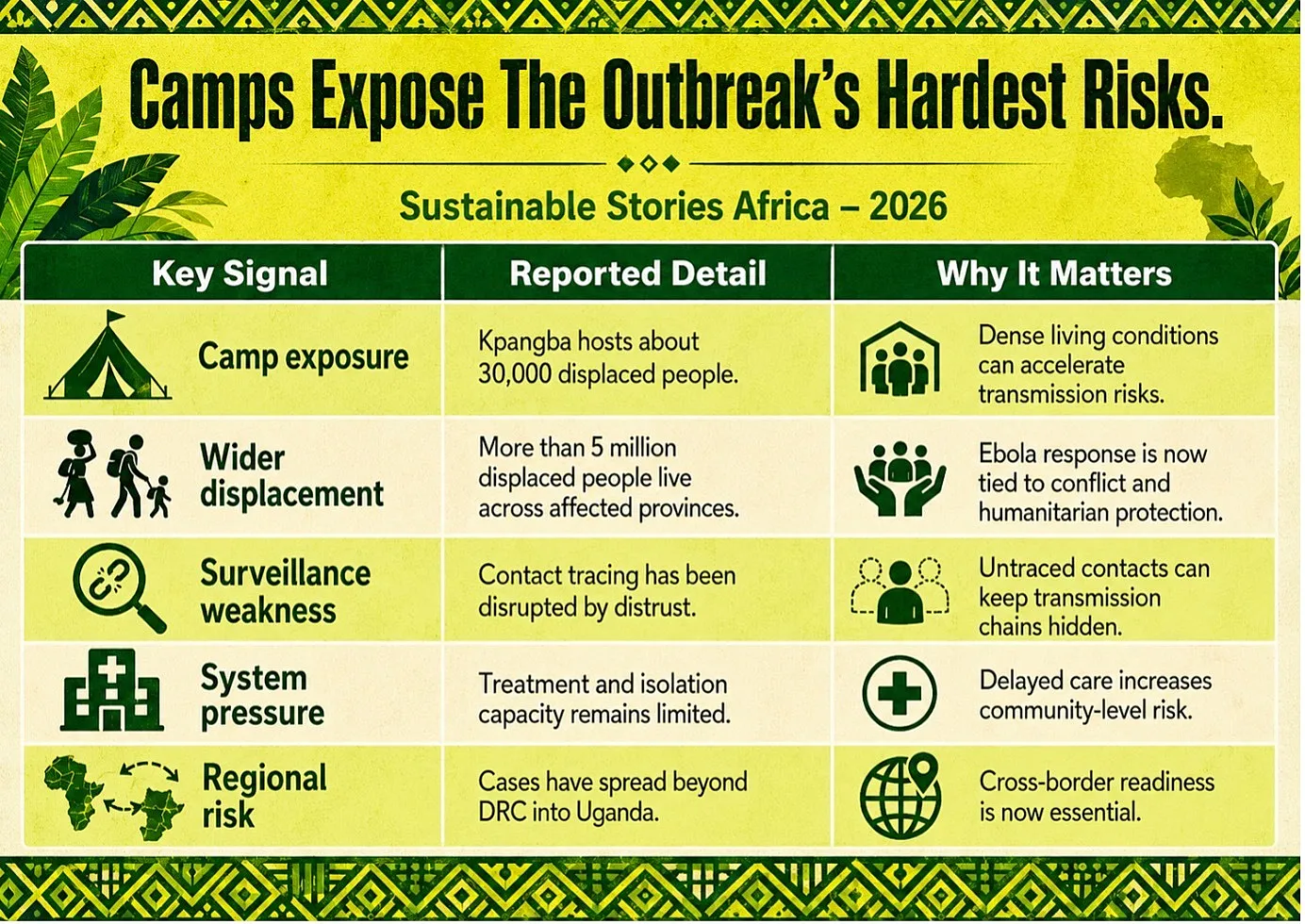
At the Kpangba displacement camp in Nizi health zone, home to roughly 30,000 people displaced by conflict, health workers attempting contact tracing following two Ebola deaths were pushed back by residents who rejected the diagnosis entirely.
The consequences are severe. Without tracing, isolation and testing, responders lose visibility into transmission chains, a dangerous blind spot in a densely populated camp environment.
The Bundibugyo strain outbreak has now spread into Uganda, with Congo recording 782 confirmed cases and 181 deaths as of June 15, making it among the deadliest on record.
However, testing gaps, insecurity and unreported community deaths mean the true scale remains uncertain.
Camps Expose The Outbreak’s Hardest Risks
The challenge extends well beyond Kpangba. Nizi Health Zone's chief doctor, Jean-Claude Lonzama, reports 22 displacement sites housing over 81,000 residents, with preventive measures largely limited to educational messaging.
In camp settings, every weakness in a health system compounds. Overcrowding, strained sanitation, the daily search for food, work, and safety create conditions in which the virus can spread faster than the response.
The distrust driving resistance is decades in the making. Eastern Congo's communities have endured prolonged armed conflict, fragile services and repeated emergency interventions where outsiders enforce rules and disappear once the crisis fades.
Ebola control measures, isolation, safe burials, and contact tracing feel threatening when families neither understand nor trust the process.
Critically, the Bundibugyo strain has no approved vaccine or treatment, making community engagement not a soft consideration but the backbone of containment.
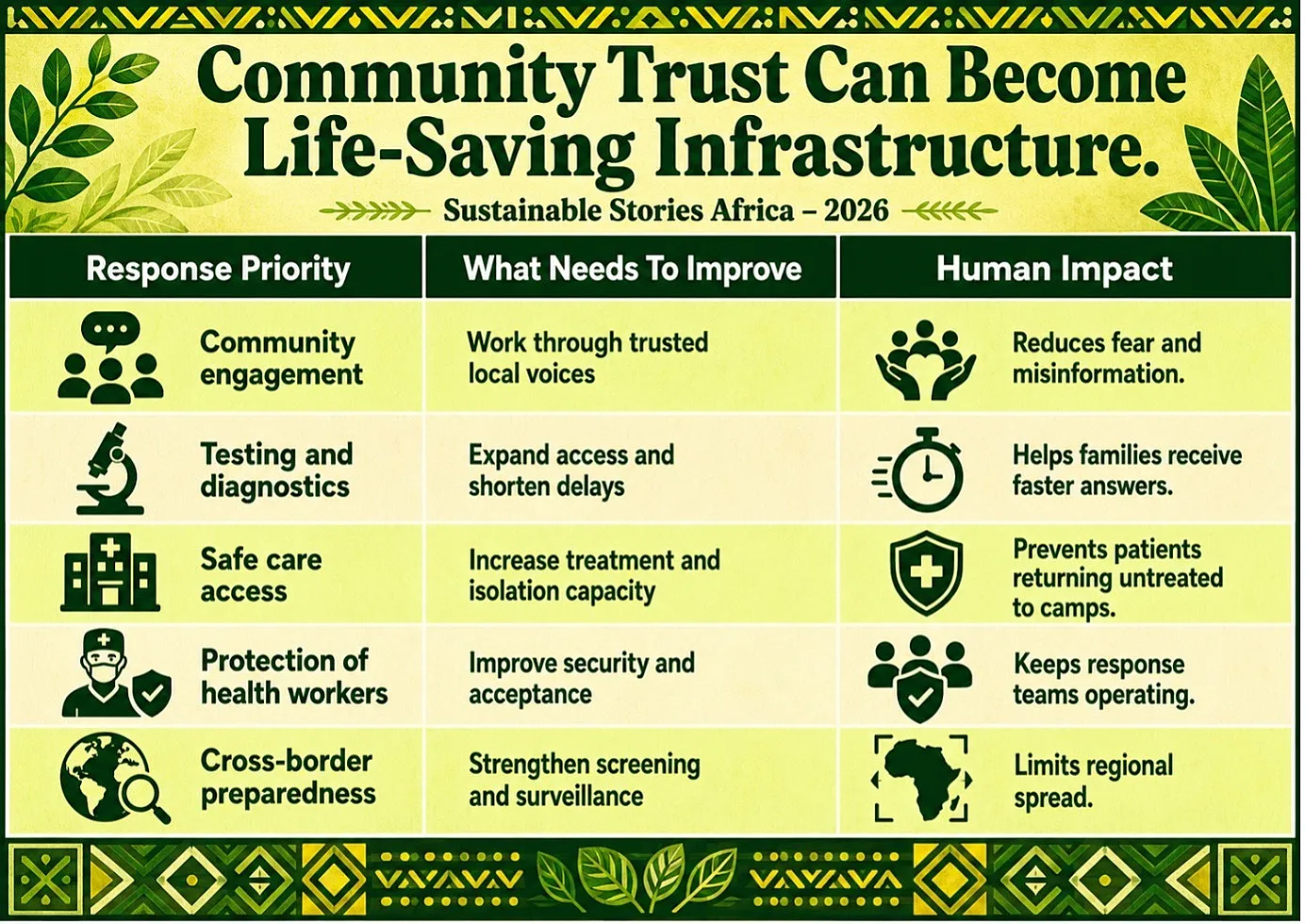
Community Trust Can Become Life-Saving Infrastructure
The path to containment remains open; however, it requires treating communities as partners, rather than obstacles.
Health teams must move beyond delivering instructions to listening first, engaging local leaders, explaining risks transparently and ensuring burials protect family dignity.
Treatment centres must feel like places of care, not disappearance. In an epidemic, trust is not a soft consideration; it is infrastructure.
The World Health Organisation and Africa CDC have responded with a six-month, $518 million continental preparedness and response plan running from June to November 2026, targeting surveillance, laboratory capacity, infection prevention, clinical care, logistics, research and community engagement across affected and at-risk countries.
If fully funded and well implemented, the plan can do more than contain one outbreak; it can build the health-security foundations that African economies need to absorb future shocks with greater resilience.
Response Must Move With Communities Now
The next phase must be urgent, practical and human-centred.
- DRC authorities, WHO, Africa CDC, humanitarian agencies and donors should prioritise trust-building at the same level as testing supplies and treatment beds. Community workers, women leaders, faith leaders, youth groups and camp representatives should be part of daily response planning, not only public messaging.
- Donors also need to move fast. Delayed financing turns every response gap into a wider risk. Funding must reach laboratories, health zones, mobile teams, sanitation services, protective equipment, transport and local organisations that already understand community realities.
- For ESG-focused investors and policymakers, the lesson is clear: health security is part of social infrastructure. Disease outbreaks affect labour markets, trade corridors, education, household income, border management and public trust.
A fragile health system is not only a health risk, but also a development risk.
The people in Kpangba and other camps are not just data points in an emergency dashboard.
They are families who have already survived violence and displacement. The response will succeed only if it protects their health while respecting their dignity.
Path Forward – Trust First, Systems Stronger, Response Faster
The path forward is to rebuild trust while scaling the technical response.
That means faster testing, safer care, better sanitation, stronger contact tracing and protection for health workers.
Africa’s Ebola response must also leave behind stronger systems. Community-led surveillance, resilient health zones and predictable emergency financing.
Containment will depend not only on science, but on whether communities believe the system is working with them.
Culled From: Health workers struggle to contain Ebola in Congo camps as distrust grows | Reuters