Brookings’ Centre for Universal Education has opened a global symposium series on collaborative research and action for education systems transformation.
The conversation matters as millions remain out of school and many learners still leave classrooms without foundational or life-ready skills.
For Africa and emerging markets, the lesson is clear: reform must move from policy documents to relationships, evidence, agency and locally owned action.
Education Reform Starts With Listening First
Education transformation is too often measured in policy targets and budget lines.
A Brookings reflection argues that the deeper work begins with something simpler and harder: listening to the people inside the system.
On April 20, Brookings' Centre for Universal Education convened its first Global Symposium on Collaborative Research and Action for Education Systems Transformation in Washington D.C., bringing together over 150 researchers, practitioners, policymakers, educators and young people from Africa, Asia, Latin America and North America.
The central question, what makes education transformation equitable, durable and locally meaningful, produced not a reform package but a mandate: collaborative research, shared power, youth agency and evidence built with communities, not delivered to them.
For African systems navigating learning poverty, youth unemployment, climate disruption and rapid technological change, that distinction is not semantic.
It is foundational.
Young People Want More Than Exams
The symposium's most compelling signal came directly from young people.
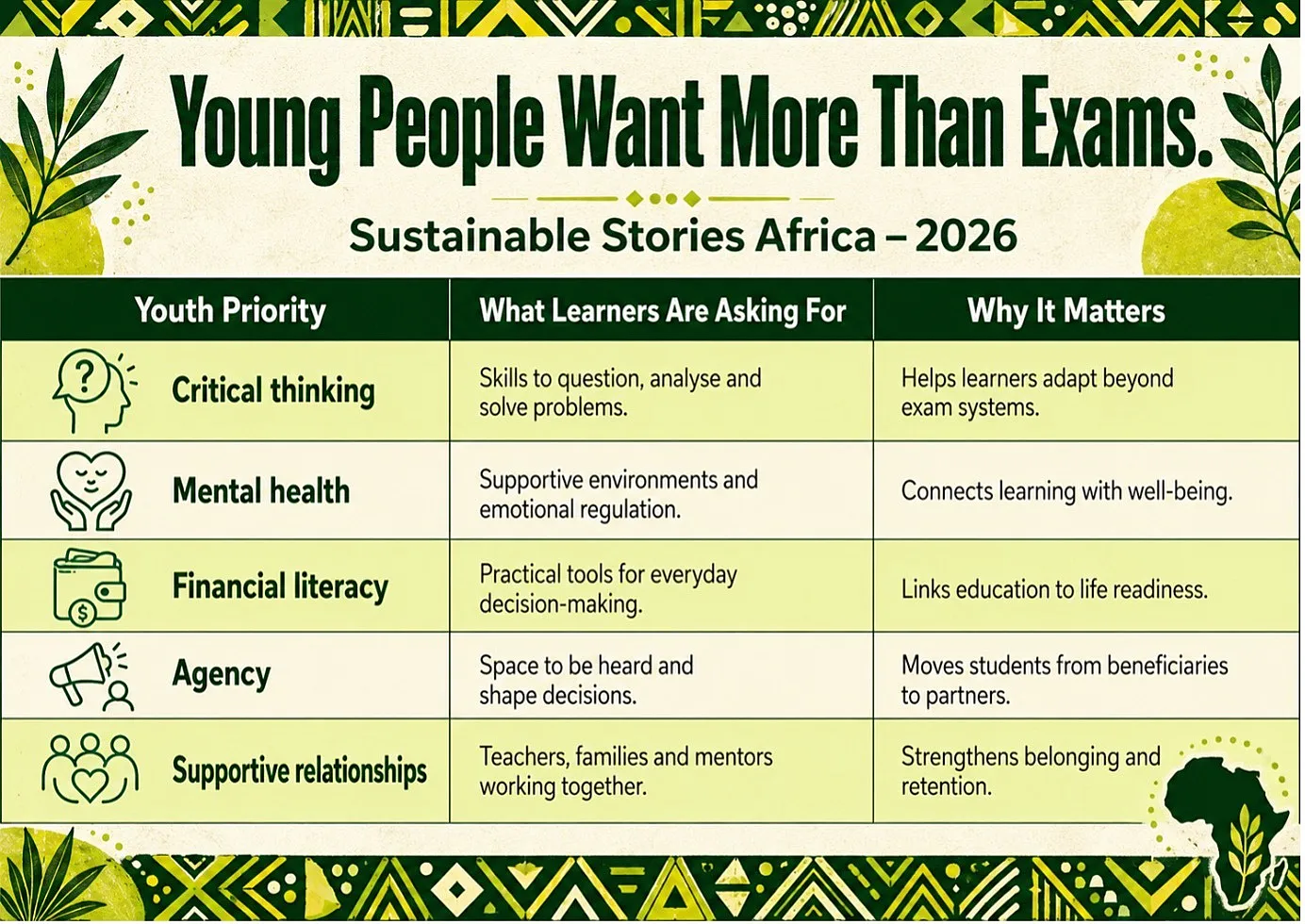
Drawing on responses from over 100 people aged 15 to 25 across multiple countries, youth priorities were consistent:
- Critical thinking
- Adaptability
- Mental health
- Emotional regulation
- Financial literacy
- Practical life skills.
One respondent captured the institutional gap sharply: schools taught them to pass exams, not navigate life.
Real-world examples demonstrated what genuine transformation looks like.
- In Sierra Leone, where learning poverty reaches nearly 96%, EducAid and the Ministry of Education engaged students as peer researchers to understand chronic absenteeism.
- In Peru, Enseña Perú embedded students, families and teachers into the research design.
- In Bangladesh, girls shifted from beneficiaries to agents of change through community-defined frameworks of agency.
Across every context, the pattern was the same: transformation deepens when those most affected by education systems are trusted to help redesign them.
Collaboration Can Turn Evidence Into Ownership
The symposium’s bigger argument is that education systems cannot be transformed by evidence that communities do not own.
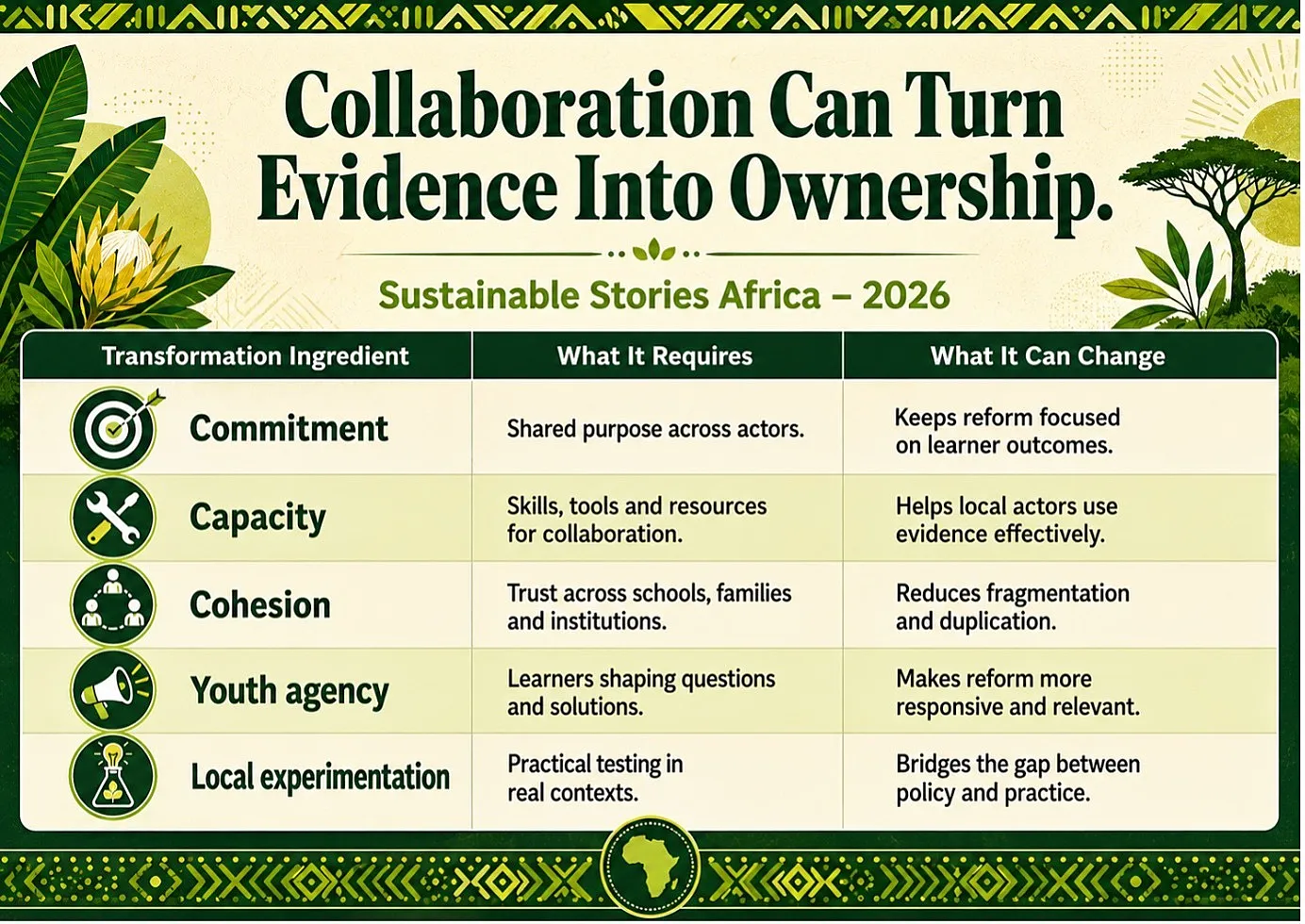
Brookings’ Knowing Doing Network, which brings together more than 200 people and organisations across 70 countries, centres collaborative research and action around three reinforcing elements: commitment, capacity and cohesion.
It focuses not only on visible changes such as policies, practices and resources, but also on less visible forces such as relationships, power dynamics and mindsets.
This matters because many education systems are crowded with pilots, reforms and donor programmes that never fully connect.
Collaborative research can help shift reform from isolated projects to shared learning.
It can also reduce the false choice between foundational learning and social-emotional learning, showing that literacy, numeracy, joy, confidence and agency can reinforce one another.
Policymakers Must Fund The Messy Work
The next step is for governments, donors and education institutions to fund the work that makes transformation possible.
That means investing not only in textbooks, technology and teacher training, but also in community engagement, participatory research, student voice, real-time learning data and long-term partnerships.
It means giving local actors enough time to test, adapt and learn before declaring a reform successful or failed.
For African policymakers, the lesson is especially important.
- Education reform must be connected to employment, climate resilience, digital skills and inclusion.
However, it must also be rooted in trust.
- Parents need to believe schools are preparing children for real life. Teachers need support, not only instructions.
- Students need systems that see them as contributors, not empty vessels.
Brookings said the symposium series will continue in Mexico City, Nairobi and Ho Chi Minh City, with a field guide expected in 2026.
That gives the conversation a practical next phase: turning shared reflections into tools that systems can use.
Path Forward- Build Trust, Evidence, Agency Into Systems
The path forward is to make collaboration a core strategy to reform education, rather than an optional consultation exercise.
Governments and partners should build policies around youth voice, community evidence, teacher capacity and locally owned experimentation.
For ESG and sustainability agendas, better education systems are a social infrastructure.
They shape employment, inclusion, gender equity and resilience. Transformation will happen when learners, families, teachers and policymakers build the future of education together.