The electric vehicle (EV) boom is opening a powerful new revenue frontier across global energy and infrastructure markets, reshaping how electricity is produced, traded, and monetised.
Utilities, governments, and private investors are rapidly repositioning to capture value from vehicle charging, grid services, and battery integration.
For Africa and emerging markets, EV growth represents more than transport decarbonisation; it creates new electricity demand, industrial opportunities, and financial flows that can strengthen fragile power systems.
Those who move early will shape future energy economics.
Electric Vehicle Boom Opens New Revenue Frontier Globally
Electric vehicles are transforming global electricity markets into one of the fastest-growing revenue frontiers, as rising EV adoption increases power demand, the need for charging infrastructure, and the improvement of grid services.
This shift is creating new income streams for utilities, infrastructure developers, and governments while accelerating global decarbonisation.
Unlike traditional electricity consumption, EV charging introduces flexible, scalable demand that can support grid stability, improve asset utilisation, and enable entirely new business models.
For emerging markets, including African economies, EV expansion presents an opportunity to strengthen power sector revenues while accelerating industrial and energy transition objectives.
Electric Vehicles Transform Global Energy Economics
The rapid rise of electric vehicles is fundamentally changing how electricity systems operate and generate revenue.
EVs function not only as transport assets but also as distributed energy storage units capable of interacting dynamically with power grids. This creates opportunities for electricity providers to monetise charging demand, optimise grid utilisation, and introduce new service-based revenue models.
As EV penetration increases globally, electricity demand patterns are shifting, creating more predictable and profitable revenue streams for power sector participants.
Charging Infrastructure Drives Electricity Demand Growth
The expansion of EV charging infrastructure is becoming a major driver of electricity consumption and investment.
EV Growth Driving New Electricity Revenue Streams
Revenue Source | Strategic Mechanism | Economic Value Creation |
|---|---|---|
EV charging services | Direct electricity sales to vehicles | Expands utility revenue base |
Charging infrastructure investment | Public and private charging networks | Creates infrastructure investment returns |
Grid balancing services | EV batteries stabilise electricity demand | Reduces system costs and increases efficiency |
Energy trading opportunities | Smart charging optimises electricity pricing | Enhances electricity market profitability |
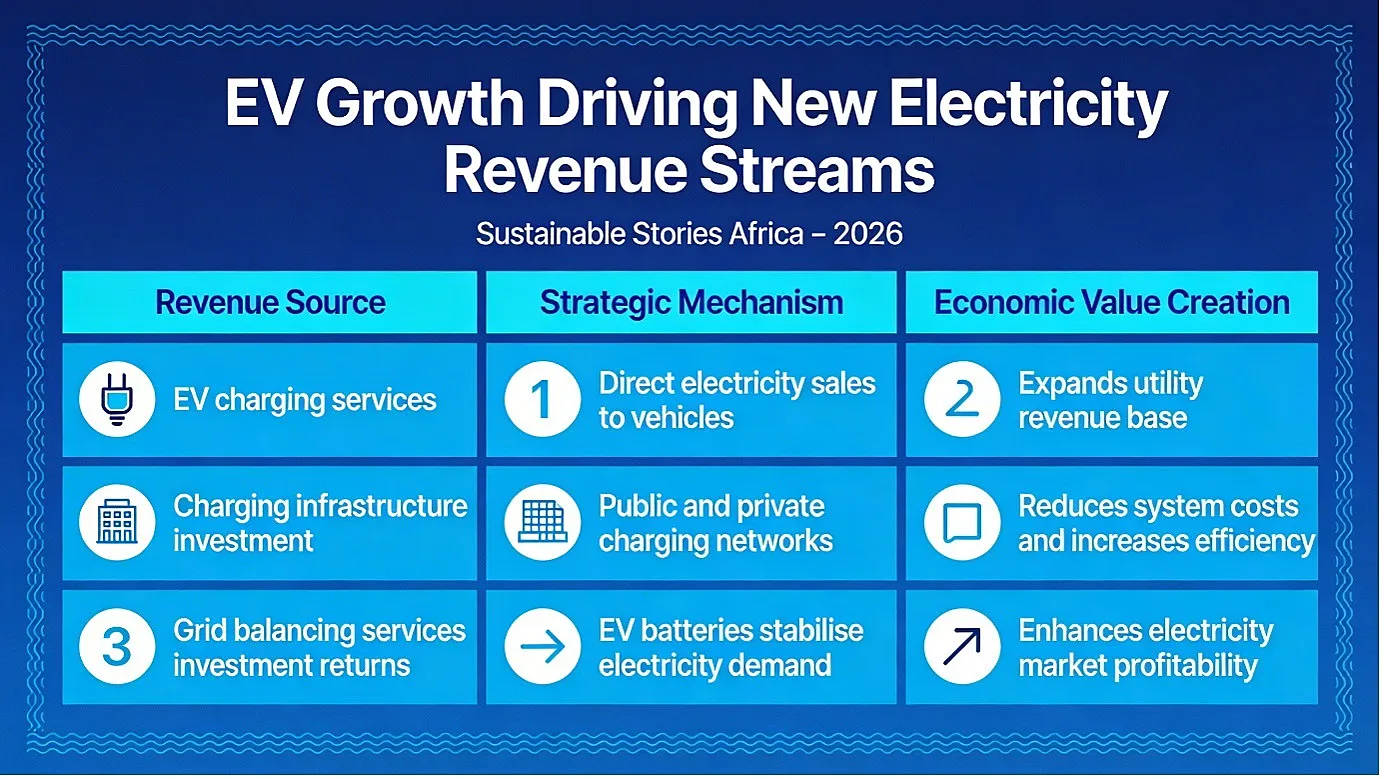
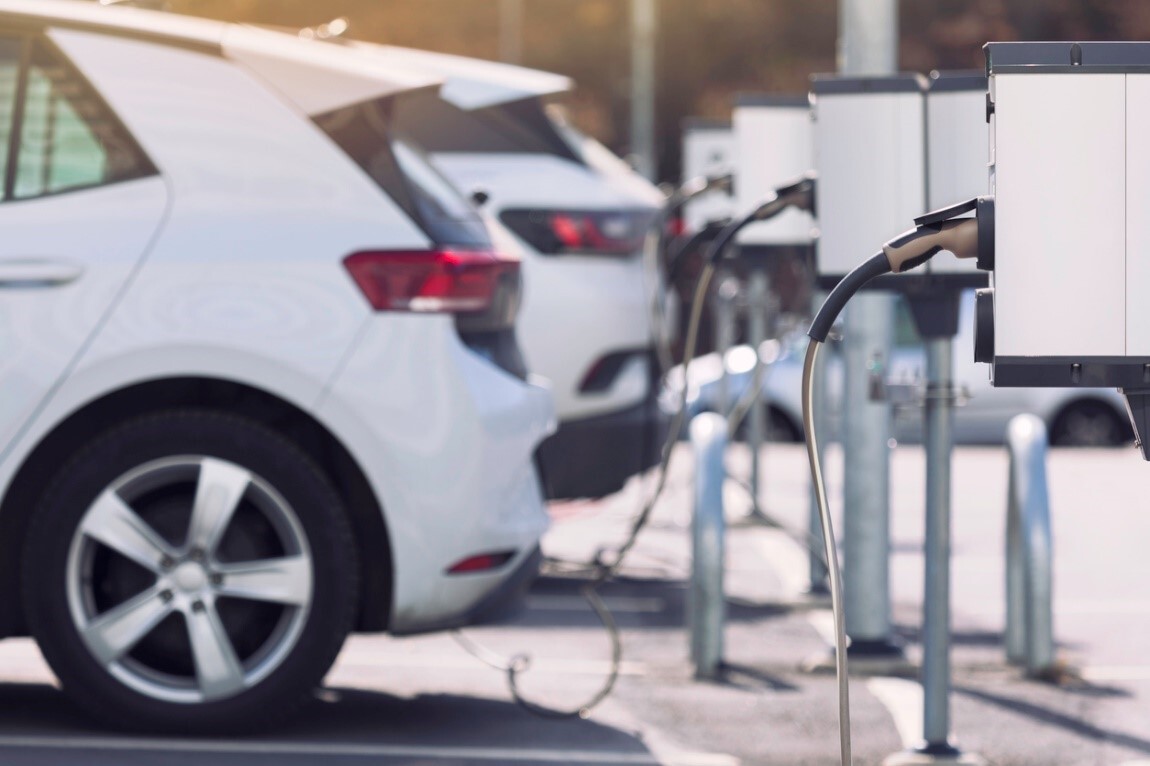
Electric vehicles create flexible demand, allowing electricity providers to sell power during off-peak periods, improving system efficiency and financial performance.
Emerging Markets Gain Strategic Revenue Advantage
For emerging economies, EV adoption can strengthen the electricity sector's financial sustainability and attract infrastructure investment.
In markets where utilities face revenue constraints, EV charging creates a new, reliable demand source that can improve system viability.
Strategic Economic Benefits Of EV Expansion
Strategic Opportunity | Economic Impact | Long-Term Outcome |
|---|---|---|
Increased electricity demand | Expands utility revenue streams | Improves power sector financial stability |
Infrastructure investment | Attracts private capital flows | Accelerates infrastructure development |
Grid optimisation | Enhances system efficiency | Reduces energy losses and operational costs |
Industrial development | Supports EV supply chain growth | Strengthens domestic manufacturing capacity |
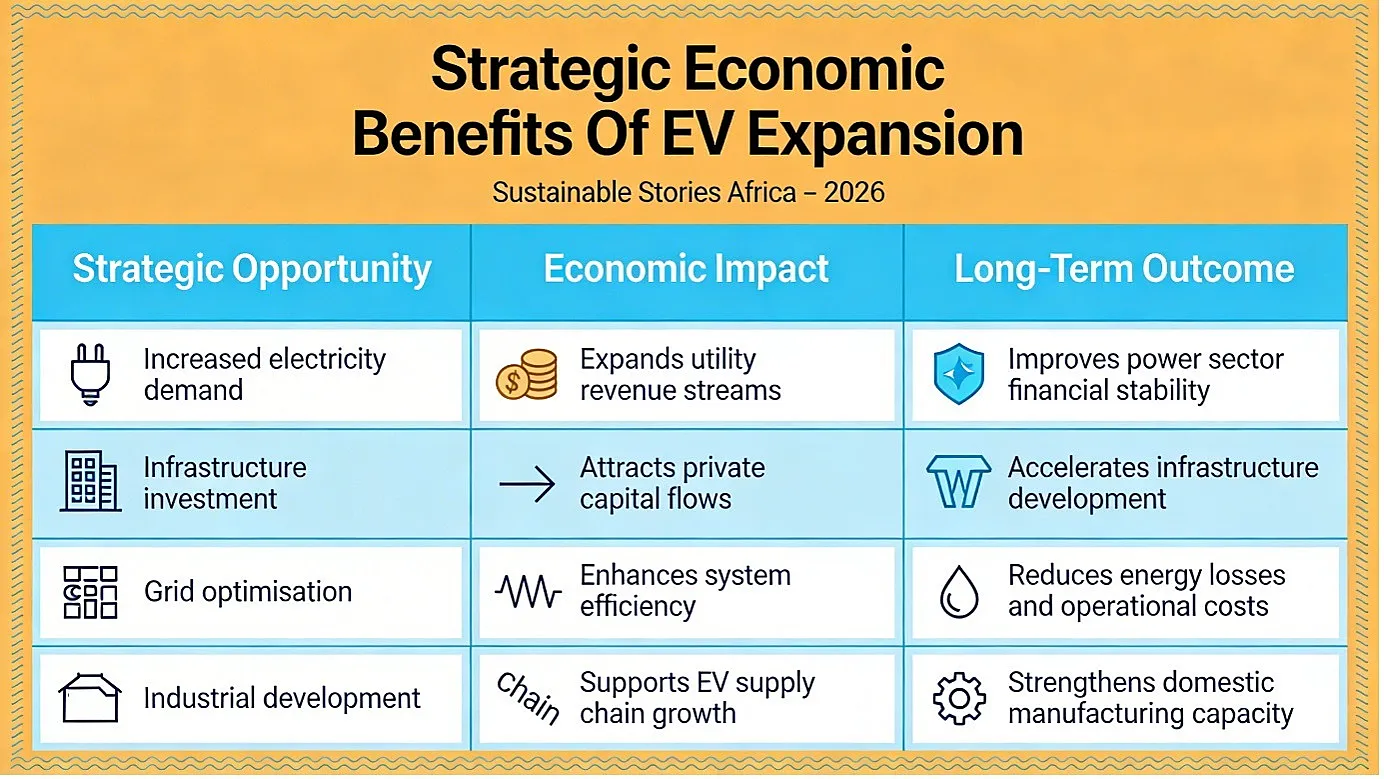
Africa’s growing urban population and expanding electricity access position it to capture significant benefits from the growth of EV-driven electricity demand.
Early Investment Determines Future Revenue Leadership
Capturing EV-related revenue opportunities requires early investment in charging infrastructure, grid modernisation, and regulatory frameworks.
Governments must create enabling policies, including EV incentives, infrastructure planning, and electricity pricing models that encourage adoption while supporting utility sustainability.
Utilities and private investors must also develop integrated strategies that align EV infrastructure with long-term energy system planning.
Countries that act early can position themselves as leaders in the emerging EV-powered energy economy.
Path Forward – Integrated Infrastructure Investment Enables Energy Transformation
Governments and utilities must prioritise charging infrastructure deployment and grid modernisation to unlock EV-driven revenue opportunities. Strategic investment will strengthen power system resilience and financial sustainability.
Clear regulatory frameworks and private sector participation will accelerate EV adoption and infrastructure expansion, enabling emerging markets to capture long-term economic and energy transition benefits.
Strategic Analysis – Why EV Revenue Transformation Matters Now
The EV boom represents a structural shift in global energy economics, transforming electricity from a static commodity into a dynamic service-driven market.
Electric vehicles introduce flexible electricity demand capable of improving grid efficiency, enabling new revenue models, and strengthening the economics of the power sector.
For Africa, this creates a critical opportunity.
With the right infrastructure and policy alignment, EV growth can strengthen electricity systems, attract investment, and accelerate industrial development, turning electrification into a major engine of economic transformation.
Culled From: EV boom opens new revenue frontier