Emerging markets face a widening $3.7 trillion ESG financing gap, which could threaten global climate, social and governance targets as capital flows remain concentrated in developed economies.
A new report highlights structural barriers which limit sustainable investment across Africa, Asia and Latin America.
Without rapid reforms, analysts warn the shortfall could derail the de-carbonisation process, inclusion and long-term economic resilience worldwide.
A $3.7 Trillion ESG Gap Emerges
Emerging markets are currently grappling with an estimated $3.7 trillion shortfall in ESG-aligned financing, underscoring a critical imbalance in the global sustainable finance architecture.
The gap, highlighted in a recent report cited by Punch, reflects persistent disparities in how climate, social and governance capital is allocated between advanced economies and the developing world.
As global investors accelerate ESG integration, the paradox is becoming clearer: regions most exposed to climate and social risks are receiving the least capital to address them.
Why Emerging Markets Are Falling Behind
Despite accounting for most of the future emissions growth and population expansion, emerging economies attract a disproportionately small share of ESG funding.
Structural issues, ranging from currency risk and policy uncertainty to shallow capital markets, continue to deter large institutional investors.
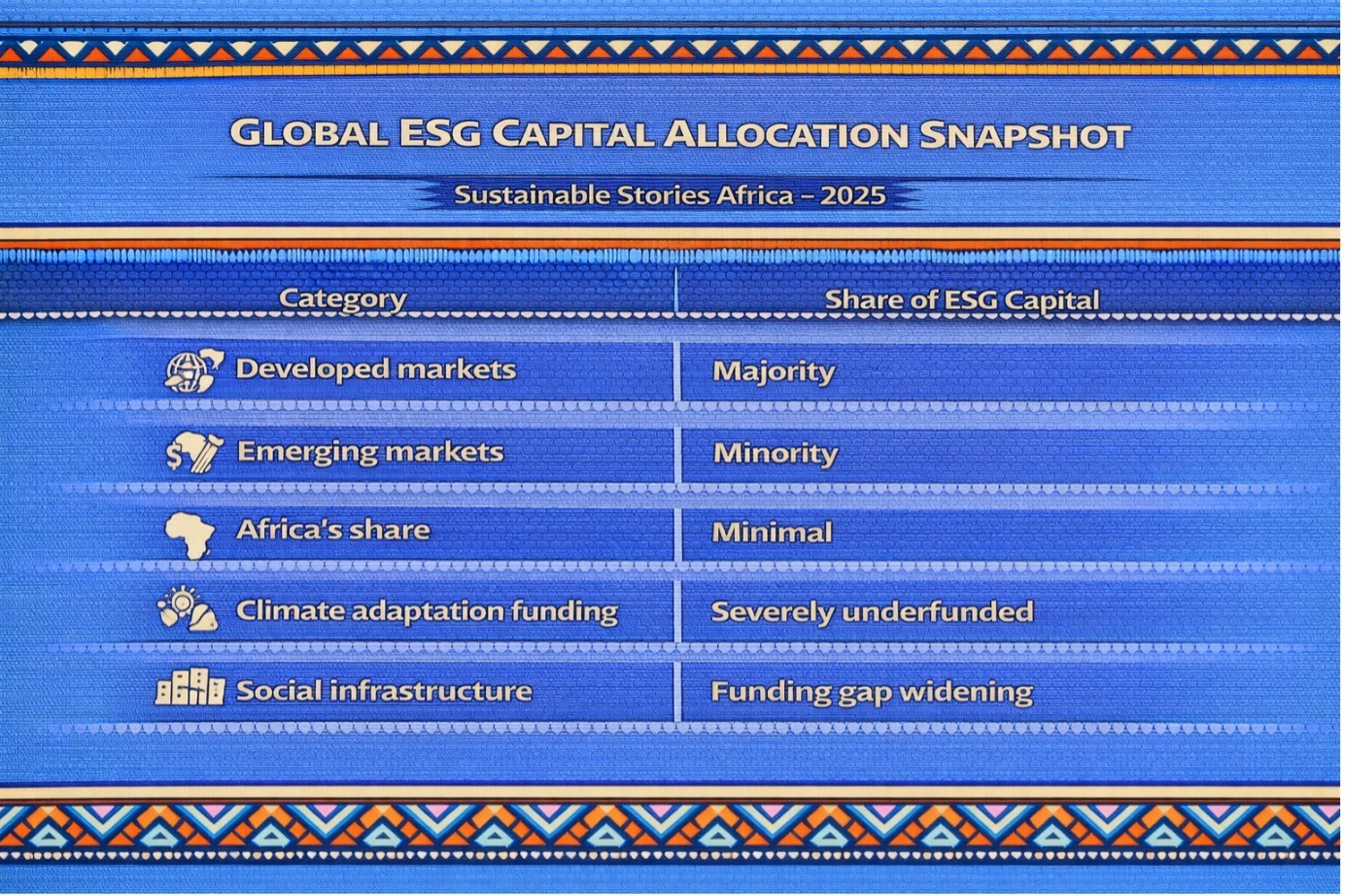
Global ESG Capital Allocation Snapshot
| Category | Share of ESG Capital |
|---|---|
| Developed markets | Majority |
| Emerging markets | Minority |
| Africa's share | Minimal |
| Climate adaptation funding | Severely underfunded |
| Social infrastructure | Funding gap widening |
Analysts note that ESG frameworks were largely designed in advanced economies, often misaligned with the development realities of emerging markets. This mismatch has slowed capital mobilisation into projects critical for energy access, resilient infrastructure, healthcare and education.
What the Funding Gap Really Means
The $3.7 trillion gap is not merely a financing issue; it is a systemic risk to global sustainability ambitions. Without adequate funding, emerging markets may struggle to meet climate targets, manage urbanisation pressures, and maintain social stability.
Key consequences include:
- Slower decarbonisation despite rising emissions
- Delayed infrastructure and energy-transition projects
- Increased climate vulnerability and inequality
- Higher long-term transition costs
For Africa, where climate finance needs are projected to rise sharply, the funding gap threatens both development outcomes and investor confidence.
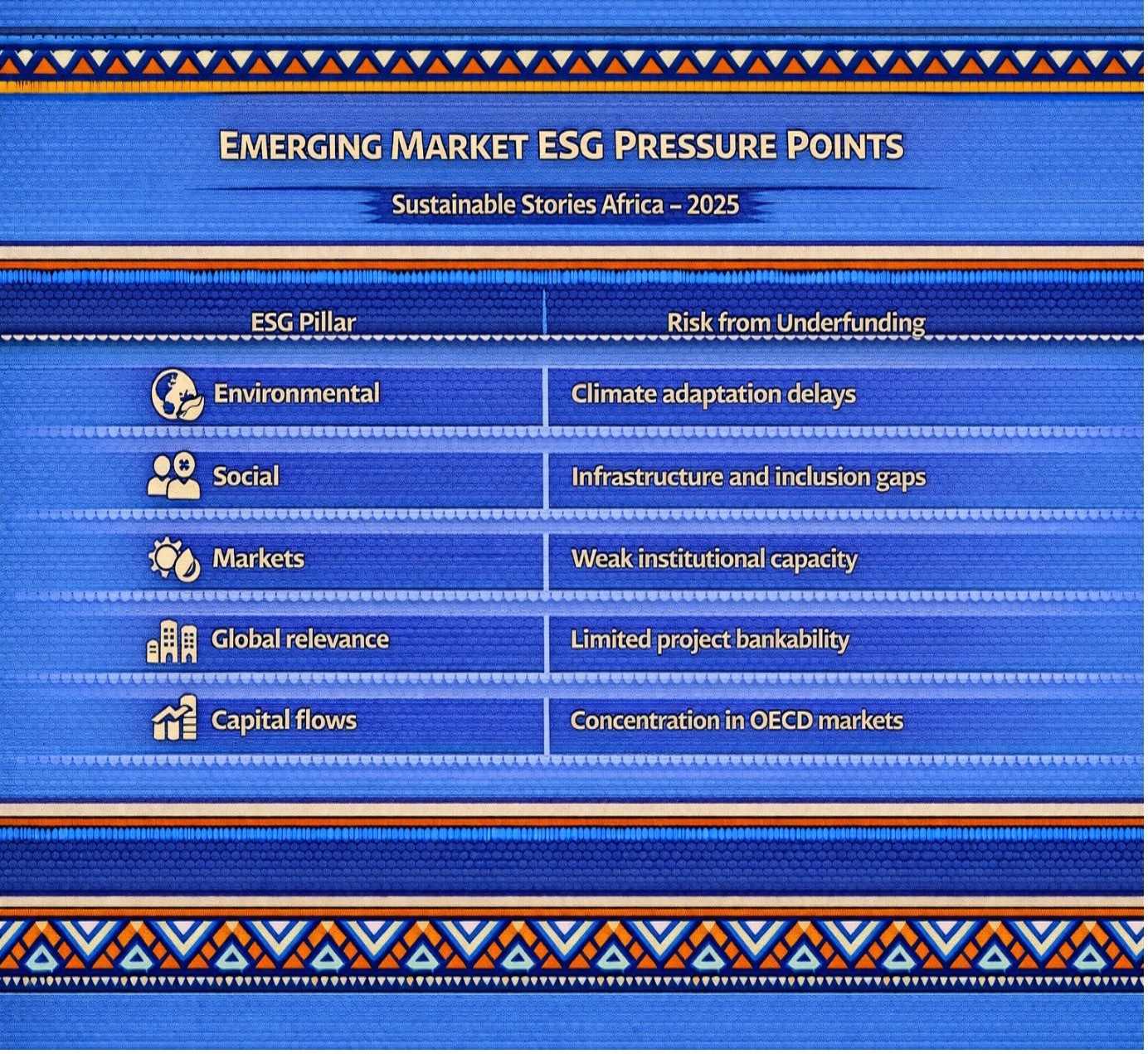
Emerging Market ESG Pressure Points
| ESG Pillar | Risk from Underfunding |
|---|---|
| Environmental | Climate adaptation delays |
| Social | Infrastructure and inclusion gaps |
| Governance | Weak institutional capacity |
| Markets | Limited project bankability |
| Capital flows | Concentration in OECD markets |
Rethinking Capital Mobilisation Models
Closing the ESG funding gap will require a shift away from one-size-fits-all sustainability models toward context-specific financing solutions. Experts argue for greater use of blended finance, guarantees, local-currency instruments and public-private partnerships to crowd in private capital.
Multilateral development banks, sovereign funds and global asset managers are increasingly under pressure to:
- De-risk emerging-market ESG investments
- Support project preparation and pipelines
- Align ESG metrics with development priorities
- Scale transition and adaptation finance
Without these interventions, ESG capital risks reinforce existing global inequalities rather than correcting them.
Path Forward – Rebalancing Global ESG Capital Flows
"Rebalancing ESG Capital Toward Emerging Markets" requires bridging the $3.7 trillion ESG funding gap, which requires coordinated action across regulators, investors and development institutions.
Aligning global ESG standards with emerging-market realities is essential to unlock scalable, investable projects.
Ultimately, sustainable finance must move beyond risk avoidance toward risk-sharing, ensuring capital reaches regions where climate, social and governance investments can deliver the greatest long-term impact.
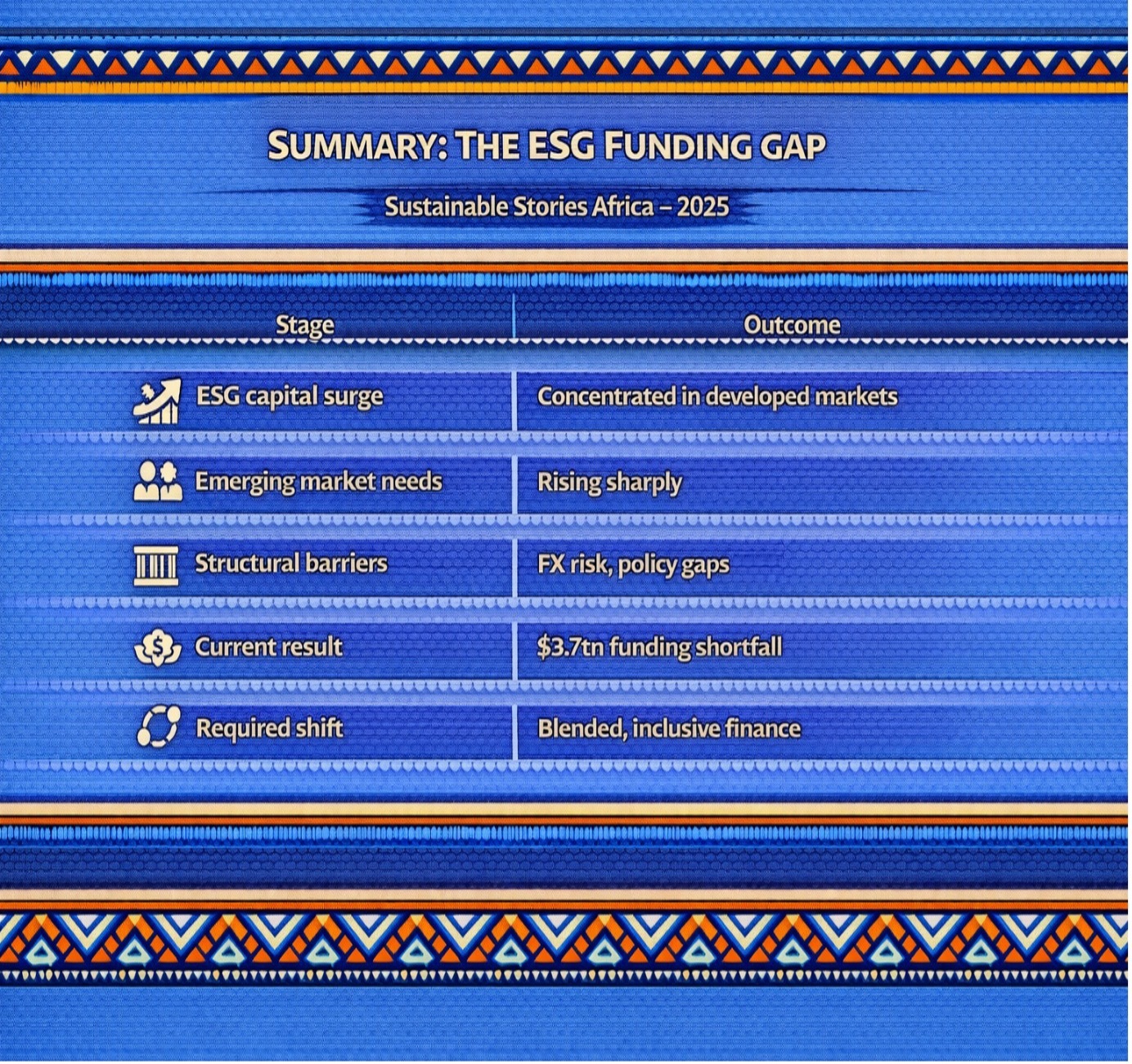
Summary: The ESG Funding Gap
| Stage | Outcome |
|---|---|
| ESG capital surge | Concentrated in developed markets |
| Emerging market needs | Rising sharply |
| Structural barriers | FX risk, policy gaps |
| Current result | $3.7tn funding shortfall |
| Required shift | Blended, inclusive finance |
Culled From: https://punchng.com/emerging-markets-face-3-7tn-esg-funding-gap-report/