
New GlobeScan data shows a sharp global divide in Gen Z attitudes toward AI.
40% of Gen Z respondents in the United States and India see AI’s dangers as “very serious,” compared with 13% in China.
The gap could shape trust, skills, jobs and the speed of AI adoption across economies.
AI’s Youngest Workforce Is Divided
Artificial intelligence may be global, but young people are not reacting to it the same way.
New GlobeScan public opinion data shows that Gen Z attitudes toward the dangers of AI vary sharply across 33 markets.
The United States and India have the greatest concern, with 40% of Gen Z respondents in both countries describing AI’s dangers as “very serious.” China, by contrast, stands near the bottom at 13%.
The finding matters because Gen Z is entering the workforce just as AI is reshaping hiring, education, creativity, productivity and competition.
For employers, universities and governments, the question is no longer whether young people will use AI. It is whether they trust the systems being built around it.
Concern Is Not Evenly Shared
The survey, based on representative online research conducted across 33 markets in July and August 2025, found diverse perceptions among young people about AI risk.
India and the United States led the “very serious” concern ranking at 40%, followed closely by Indonesia and South Africa at 39%.
Kenya also ranked high at 34%, placing two African markets among the most concerned youth populations measured.
At the lower end, China recorded 13%, similar to Italy, while Thailand and Japan stood at 12%.
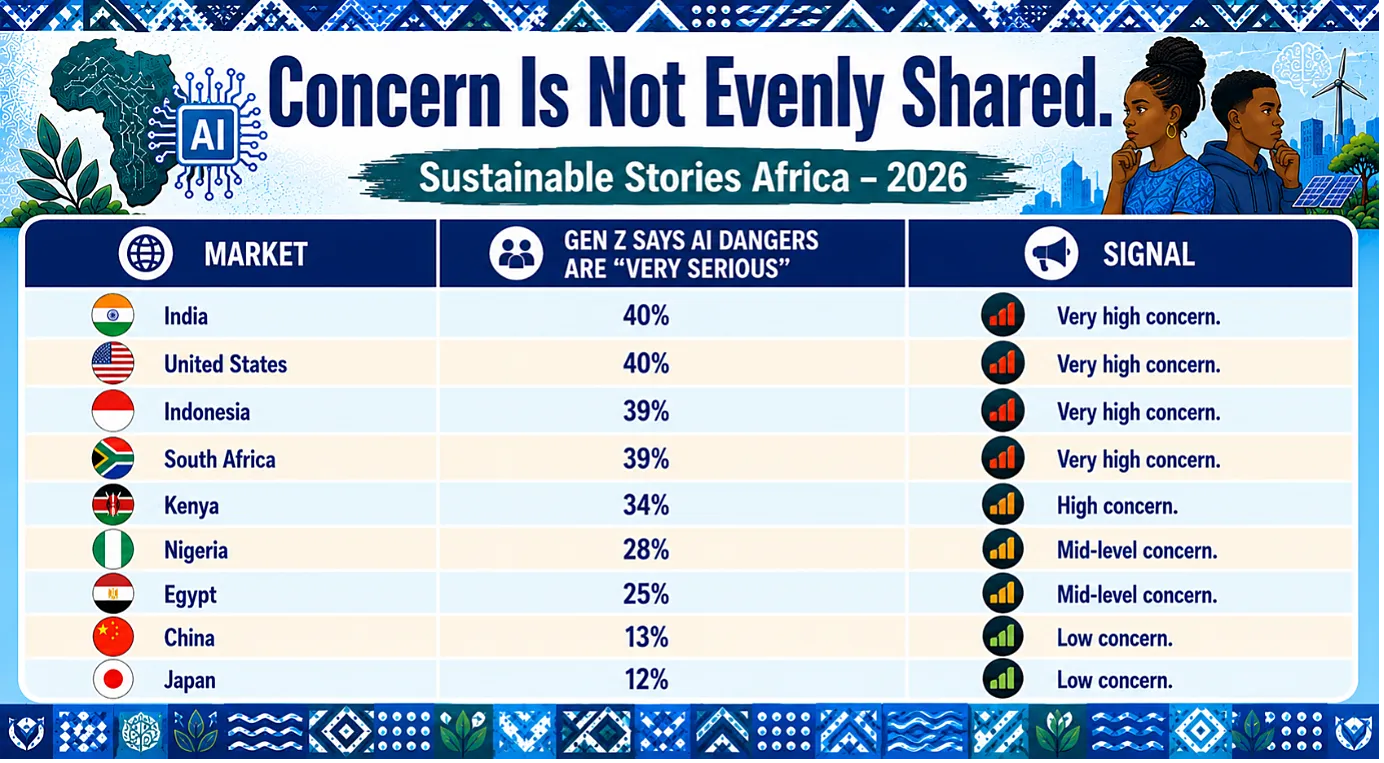
The pattern suggests AI anxiety is not simply about technology. It is also about economic pressure, labour-market insecurity, trust in institutions and whether young people see AI as a tool for advancement or a threat to opportunity.
For a graduate in Lagos, Nairobi or Johannesburg, AI may feel like a double-edged instrument: useful for learning and work, but also capable of shrinking entry-level pathways.
Trust Can Turn Anxiety Into Skill
The divide also creates an opportunity. Countries that build trust around AI could turn uncertainty into skills, productivity and innovation.
That means providing young people with practical AI education, clearer workplace rules, and stronger safeguards against bias, privacy, misinformation, and job displacement.
It also means showing how AI can support human capability rather than replace it.
For African markets, this is especially important. With young populations and expanding digital economies, AI adoption could help close skills gaps, improve public services and support small businesses.
However, if young people see AI mainly as a threat, adoption may become uneven, and distrust may slow innovation.
The prize is not blind optimism. It is informed confidence.
Action: Make AI Work For Young People
The GlobeScan findings point to a new responsibility for policymakers, employers and educators: AI strategy must include youth trust.
Schools and universities should teach practical AI literacy alongside ethics and critical thinking. Employers should explain how AI will change roles, not hide behind vague efficiency language. Governments should create rules that protect workers and consumers while encouraging innovation.
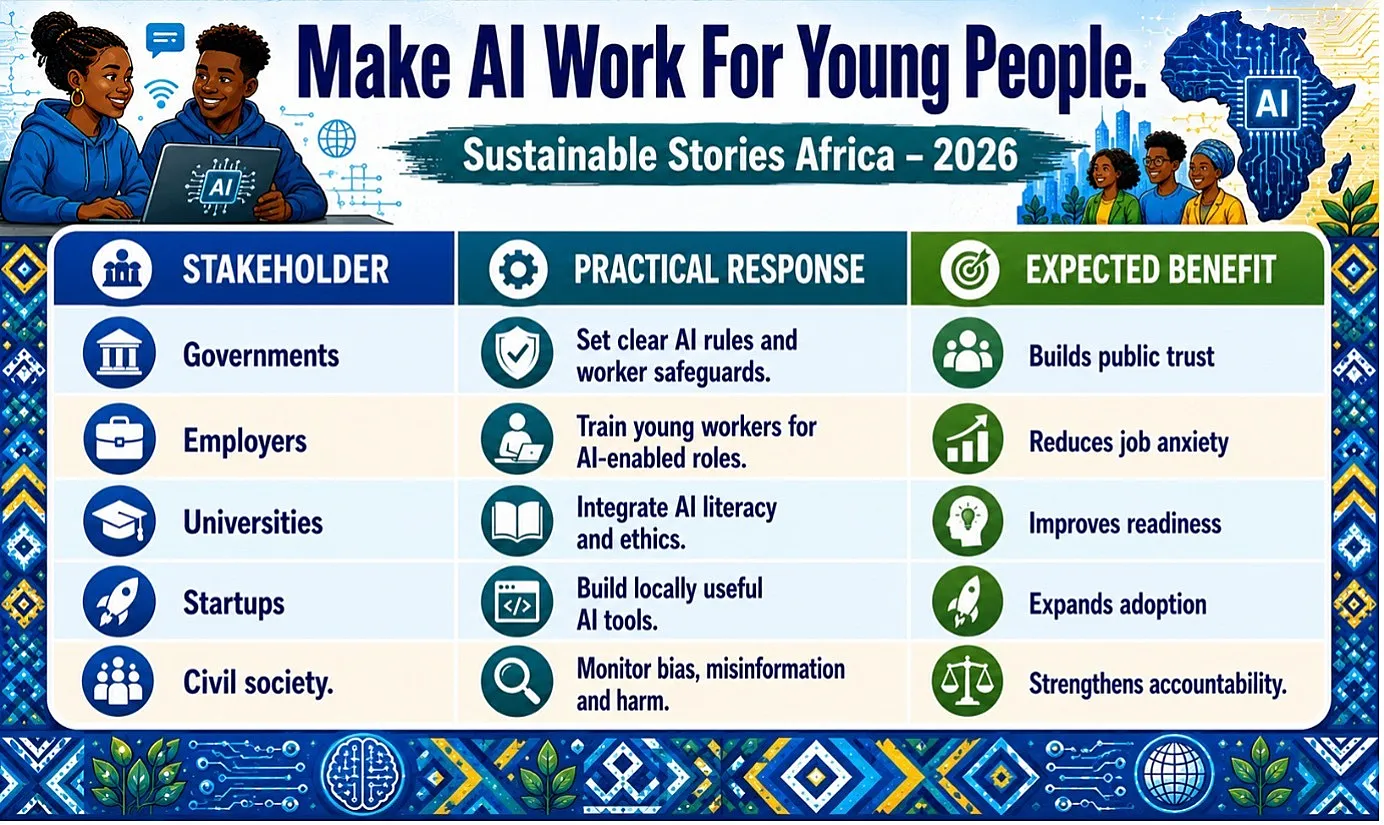
The call to action is clear: AI policy cannot be written only for investors, engineers and regulators.
It must also answer the fears and ambitions of the generation that will inherit the AI economy.
Path Forward – Build Trust Before Scaling AI
The next priority is responsible adoption: practical skills, transparent rules and youth-centred safeguards that make AI feel usable, fair and economically relevant.
For ESG and sustainability leaders, the lesson is clear. Technology governance is now a social-impact issue, shaping jobs, trust, inclusion and long-term competitiveness across African and global markets.
Culled From: Global Divide in AI Sentiment: US Gen Z Among Most Anxious, in China Far Less So