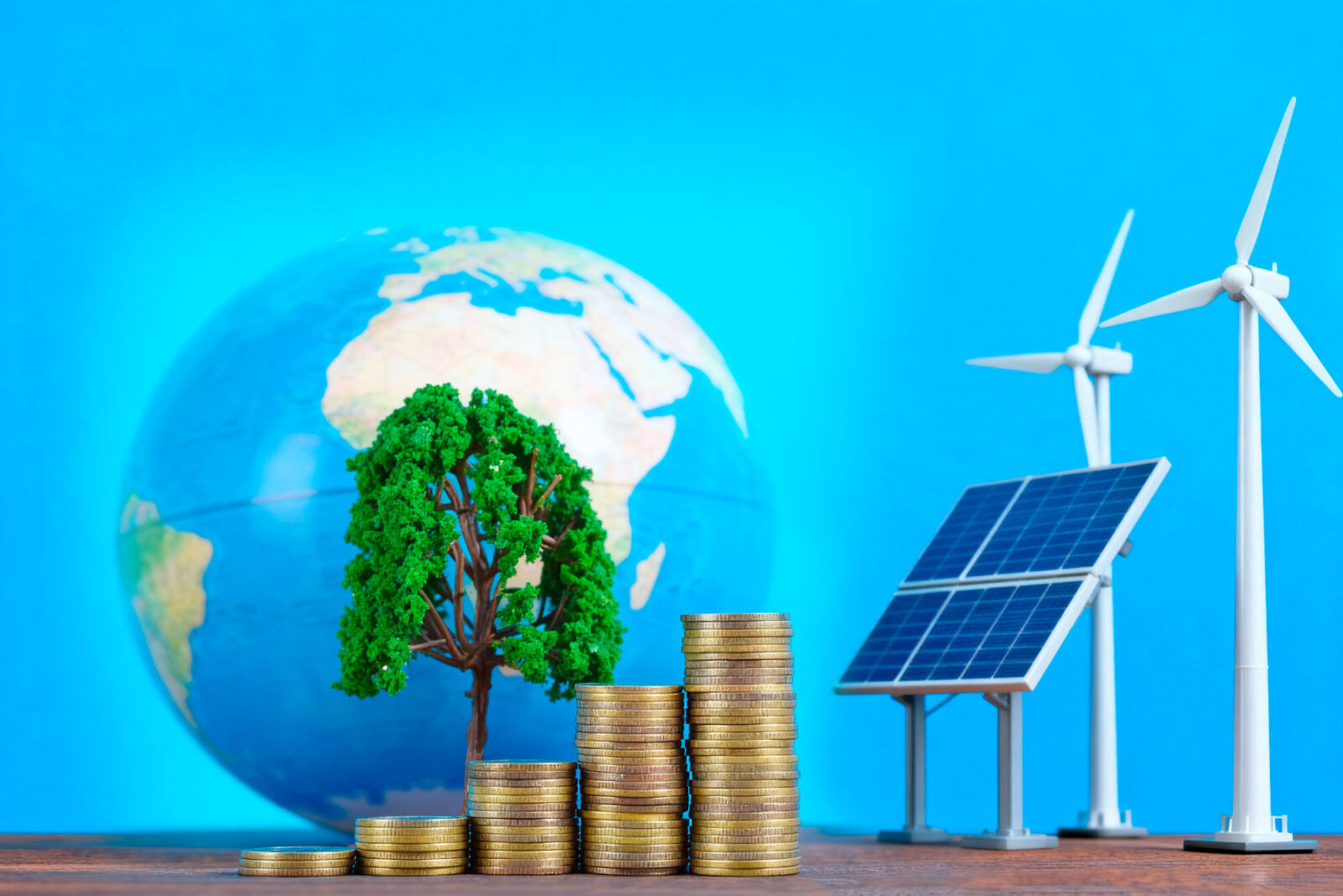
Africa stands at a critical crossroads in its energy transition. As much as the climate finance inflows are being accelerated, $44 billion a year, it still falls far short of the $277 billion required by 2030.
The region’s future hinges on creative financial mechanisms, stronger governance, and scaling private sector investment, to determine whether Africa’s 2030 climate ambitions are realised
Africa’s Climate Finance: Rising, But Not Enough
Africa’s energy transition is surging. Climate finance inflows have been surging by 48% since 2019. Annual flows reached $44 billion in 2023, only 23% of the estimated $277 billion needed by 2030 for clean expansion.
Innovative finance structures, including Just Energy Transition Partnerships (JETPs), blended finance, green bonds, and expanding carbon market participation, are rewriting the landscape.
The top 10 African countries absorb 50% of these flows, while the 10 most climate-vulnerable receive just 11%. Such inequality, especially around debt vulnerability, mobilisation of private capital, and overreliance on debt financing, risks derailing progress, even as innovation accelerates.
Transformative Growth and Persistent Funding Gaps
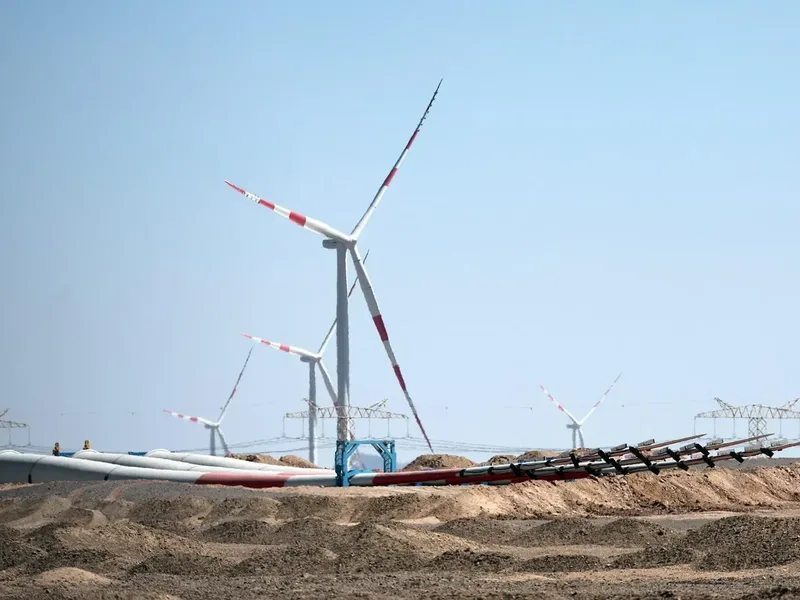
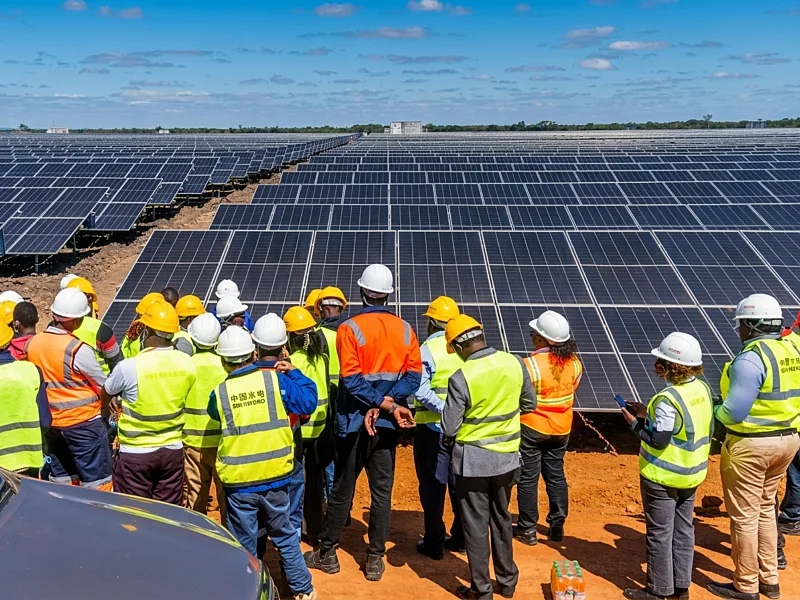
In 2023, $15 billion was invested in African renewables. This was record-breaking, doubling 2022’s figure and driving 7.9 GW of new capacity, led by 5.5 GW in solar PV. However, to hit the African Union’s goal of 300 GW by 2030, annual installation rates must quadruple to 32.5 GW.
Private sector participation doubled to $8 billion, yet remains just 18% of total finance, the lowest globally, underscoring the urgent need to mobilise commercial capital.
Climate Finance Flows Table
Metric | 2019/20 | 2021/22 | 2023 | Needed (2030) |
Annual Climate Finance ($B) | 30 | 44 | 44 | 277 |
Renewable Energy Investment ($B) | -- | -- | 15 | -- |
New Renewable Capacity (GW) | -- | -- | 7.9 | 32.5/year |
% Private Sector Share | -- | -- | 18 | 50+ |
The top ten African countries absorb 50% of total finance, while 30 nations receive just 10%. Only 11% of finance reaches the region’s 10 most climate-vulnerable countries. Debt instruments constitute 80% of adaptation flows, compounding vulnerability as 21 nations face or risk debt distress.
Financing Innovations and Success Stories
JETPs: South Africa’s $8.5 billion JETP led to cabinet-approved reforms, sector liberalisation, and the end of load-shedding. Senegal’s EUR 2.5 billion JETP, targeted at raising renewables from 31% to 40%, demonstrates flexibility beyond coal-centric models.
Blended Finance: SEFA’s best year, with $108 million approved across 14 projects, shows the power of multi-donor risk-sharing. Japan’s contribution and successful Asian bundling models point to solutions for scaling capital.
Carbon Markets: The Africa Carbon Markets Initiative aims for a 19-fold increase in credits by 2030, with the UN estimating $82 billion annual potential. Kenya is leading, with the Olkaria II geothermal project issuing 230,000 credits and adding 35MW capacity.
Debt-for-Climate Swaps: Germany’s EUR 60 million swap with Kenya for renewables and Egypt for transmission lines highlight new pathways to ease debt burdens while advancing clean energy. But price volatility and governance readiness remain critical risks.
Islamic Green Finance: Sovereign sukuk expansion may catalyse $500-600 million over five years, helping address the $100 billion annual infrastructure gap.
Mechanism | Highlight Project | Funding ($B/EUR) | Key Milestone |
JETP - South Africa | Cabinet approval | 8.5 (pledge), 11.6 (total) | End of load-shedding |
JETP - Senegal | Renewable expansion | 2.5 (EUR) | +9% renewables by 2030 |
Green Bonds | Nigeria, IFC Solar Bond | 1.4 (2023), 0.15 (IFC) | 220 MW productive use |
Debt Swap - Kenya/Egypt | Renewable/Transmission | 0.06 (EUR, Kenya) | 3 lines, 1,200 MW wind |
Carbon Credits - Kenya | Olkaria II Geothermal | -- | 230,000 credits, 35MW added |
Scaling Up: Solutions for Systemic Barriers
To scale from $44 billion to $277 billion, comprehensive reforms are essential:
- Risk-sharing through guaranteed mechanisms (e.g., $5 billion Mission 300 facility)
- Currency risk mitigation - Africa pays 5%+ higher cost of capital; needs dedicated solutions
- Private sector mobilisation - current 18% share must grow rapidly
- Multilateral and regional bank coordination, as with World Bank/AfDB’s Mission 300 Initiative, targeting 300 million with electricity by 2030
- Regulatory and grid upgrades: Only 60% of African nations run renewable auctions; losses average 15% on transmission lines
Digital finance is creating novel access points. African FinTechs have nearly tripled, representing 74% of global mobile transactions. Innovations like “Carbon Neobank” demonstrate technology’s ability to democratise climate funding.
Path Forward – Coherence, Local Impact, and Equity
For finance to deliver real change, national and local alignment is needed. Best practice examples include South Africa’s JETP funding for community-owned projects, Kenya’s county-level governance, and East Africa’s pay-as-you-go solar.
Community-driven microfinance, skills-building, and transparent benefit-sharing will be vital for inclusive energy access.
Summary Table: Persistent Scaling Challenges
Challenge | Indicator | Impact/Stakes |
Weighted Avg. Cost | Africa: 15.6% vs. Global: 10% | Higher project costs |
Currency Risk | Africa: +5% vs. peers | Higher financing risk |
Debt Sustainability | 21 countries distressed | Limited fiscal space |
Private Investment | 18% current, 50%+ needed | Scaling barrier |
Grid Limitations | 15% losses, 60% auctions | Bottlenecks |
Africa is making historic strides, but must strive towards quadrupling annual renewable investment and bridge massive funding gaps to meet energy targets. Solutions are emerging, innovative instruments, technology, collaborations and partnerships.
These must be paired with policy consistency, local empowerment, and transparent governance. As global finance pivots toward green, Africa’s success will depend on accelerating proven innovations and making climate money accountable to communities, not just capitals.
Culled from: https://rsisinternational.org