Mauritania and Mali have signed key contracts for a high-voltage electricity interconnection project.
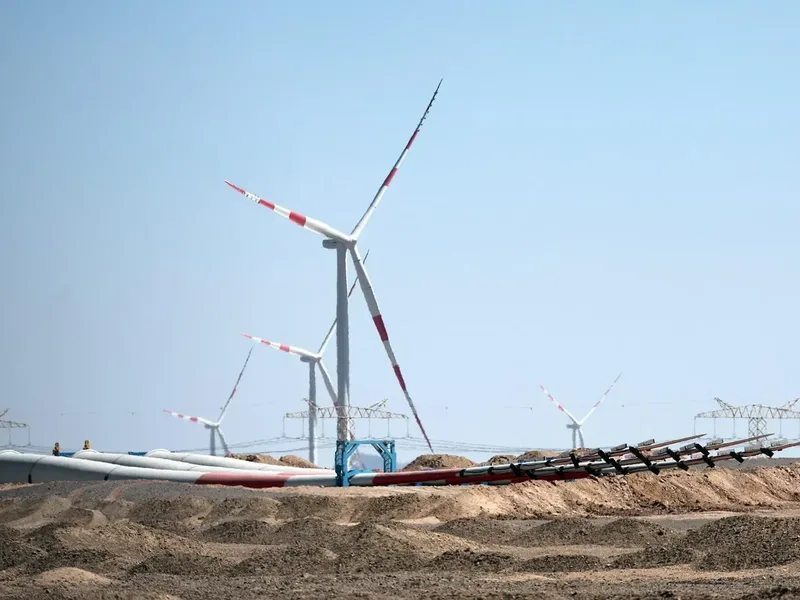
The deal advances a 225 kV corridor designed to move cleaner power across borders.
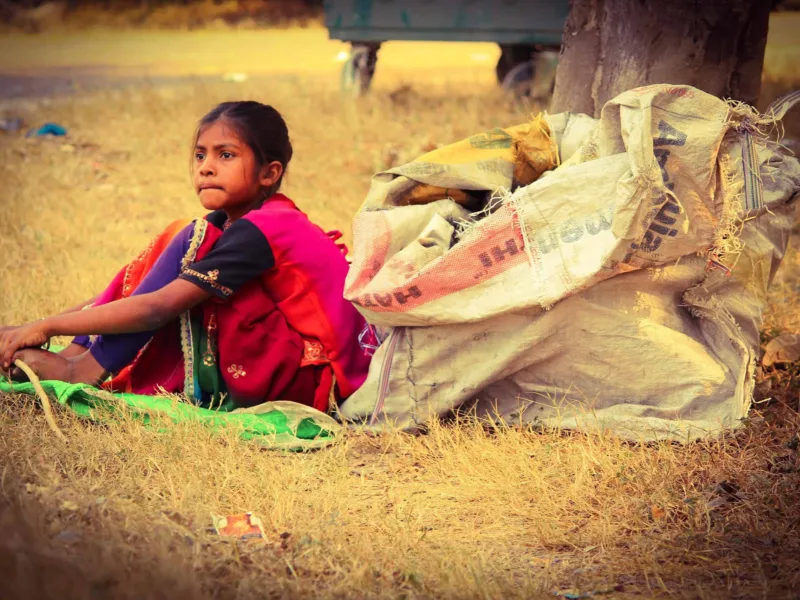
For households, clinics, schools and agro-pastoral communities, the promise is simple: more reliable electricity where fragility and fuel costs have long constrained growth.
A Grid Deal With Regional Stakes
Mauritania and Mali have moved a step closer to reshaping electricity access across the Sahel after signing contracts for a major cross-border power interconnection project tied to solar generation, regional trade and rural electrification.
The agreements, signed in late April 2026, cover a current phase of the 225 kV Mauritania-Mali Power Interconnection and Related Solar Power Plants Development Project, known as PIEMM.
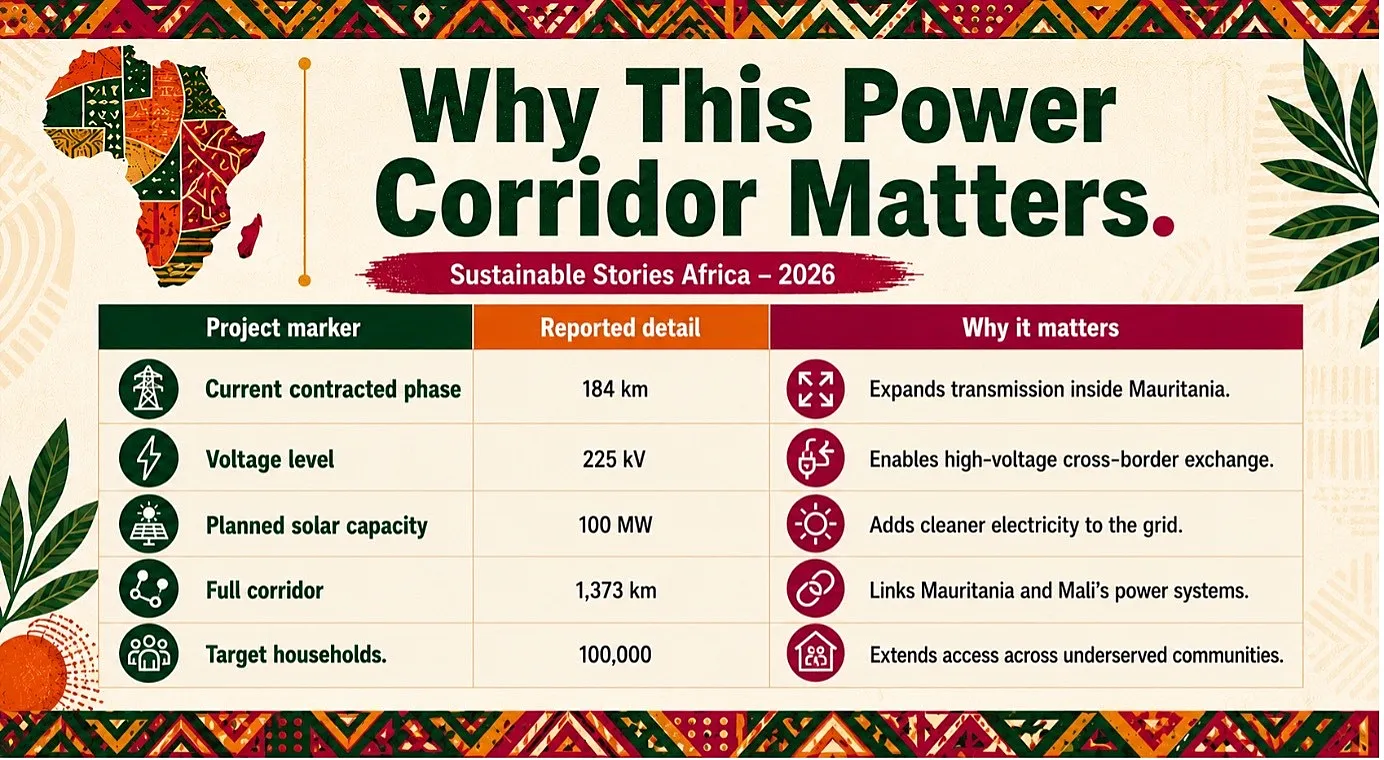
The phase focuses on the 184-kilometre transmission line in Mauritania, including 114 kilometres between Kiffa and Teintane and 70 kilometres between Teintane and Ayoune, as well as modern substations.
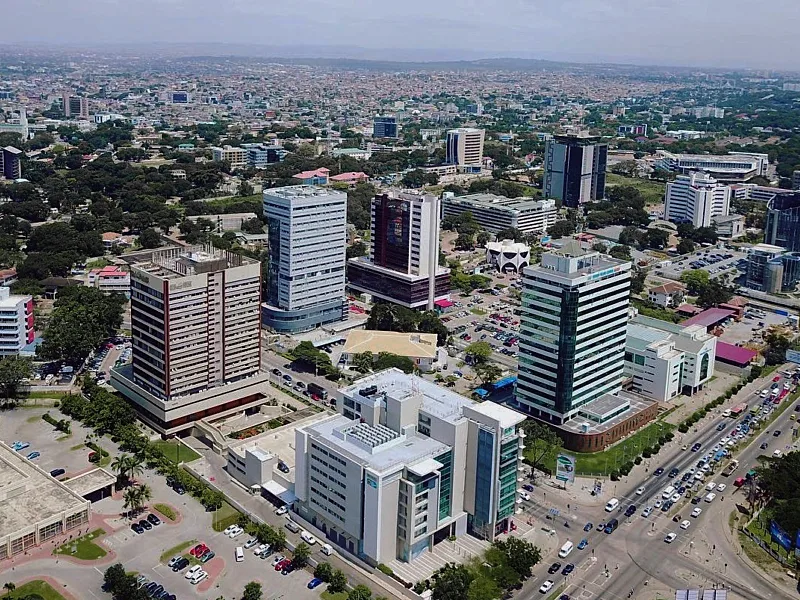
For two Sahelian economies in which electricity shortages, fuel imports and dispersed rural settlements shape daily life, the contracts are more than infrastructure paperwork.
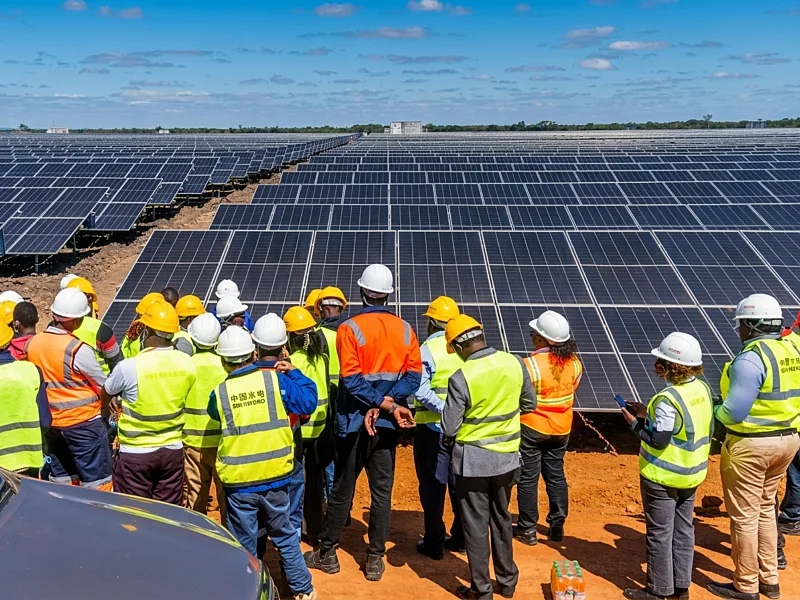
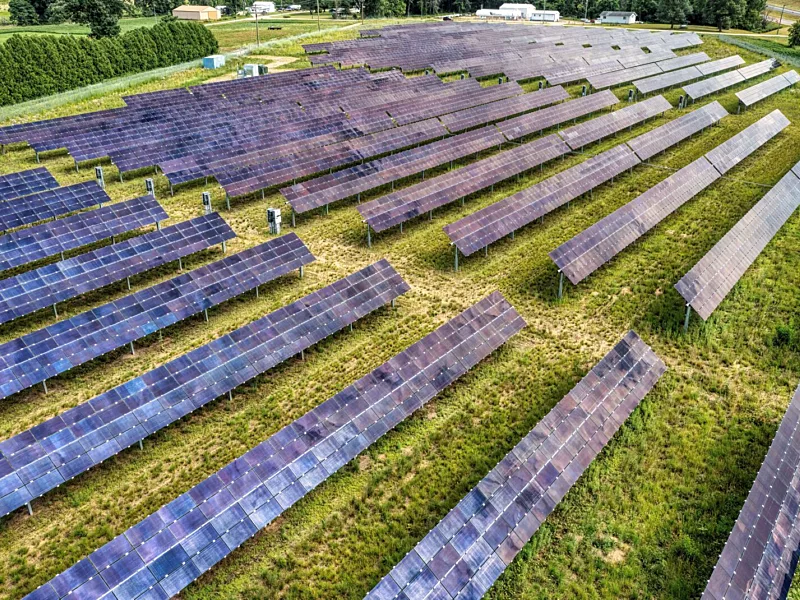
They mark progress toward a 1,373-kilometre transmission corridor linking the power systems of Mauritania and Mali, with planned 100 MW solar capacity in Mauritania.
Why This Power Corridor Matters
The project falls inside the African Development Bank-backed Desert to Power agenda, which aims to turn the Sahel’s solar potential into a development asset rather than an unused natural advantage.
SolarQuarter reports that the Kiffa–Teintane–Ayoune section alone is estimated at $135 million, with support from institutions including the African Development Bank, Green Climate Fund and OPEC Fund.
- For a farmer near an agro-pastoral corridor, electricity can mean cold storage, irrigation, phone charging, milling and safer night-time activity.
- For a clinic, it can mean refrigeration for medicines and stable lighting.
- For a small enterprise, it can reduce dependence on diesel generators whose costs rise with global fuel volatility.
The project is expected to benefit around 100,000 households, including nearly 80,000 in Mauritania and 20,000 in Mali, while supporting about 150 rural and agro-pastoral communities.
What Reliable Power Could Unlock
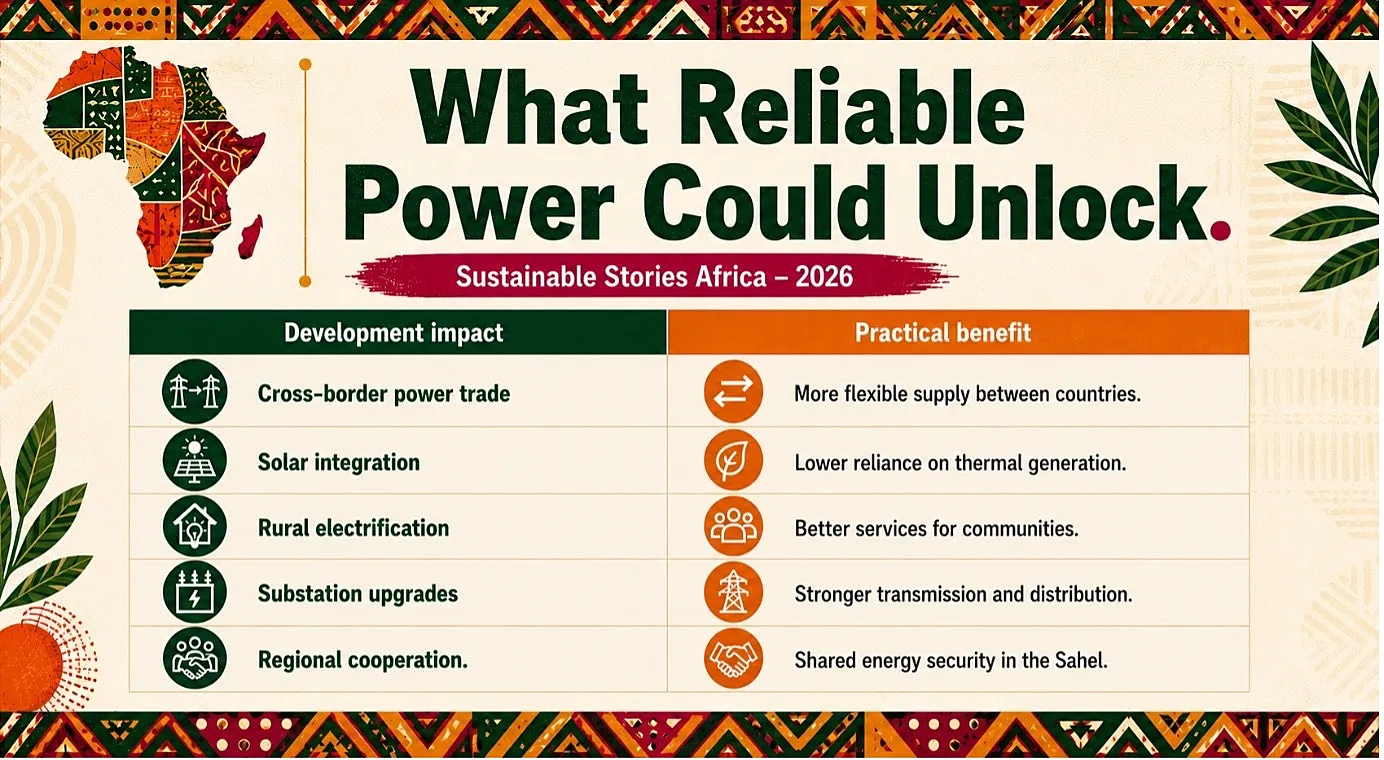
If delivered well, the interconnection could help both countries move from isolated electricity systems toward a more flexible regional power market.
That matters because power trade allows countries to share supply, balance demand and reduce the need for expensive emergency generation.
The broader development case is also social. Electricity access supports schools, health facilities, local processing and small businesses.
In fragile regions, these can strengthen economic resilience and reduce the daily burden carried by households that depend on costly, unreliable alternatives.
Execution Must Match Ambition
The next test is delivery. Contracts must translate into completed lines, functional substations, fair procurement, community engagement and maintenance systems that keep the assets working after commissioning.
- Financiers and governments also need to protect the project’s social promise. Transmission corridors can move power across borders; however, inclusive planning determines whether nearby communities benefit directly through household connections, productive-use electricity and support for local enterprises.
- For policymakers, the priority is coordination. For investors, it is a bankable execution. For citizens, the measure of success will be whether power becomes more available, affordable and reliable.
Path Forward – Build Power, Trust, Regional Resilience
Mauritania and Mali now need disciplined implementation, transparent oversight and community-centred delivery to convert signed contracts into real electricity access.
The project advances ESG goals by linking clean power, regional cooperation and social inclusion.
Its success will depend on whether infrastructure reaches homes, farms, clinics and businesses, rather than only national grids.
Culled From: Mauritania And Mali Sign Key Contracts For Cross-Border Power Interconnection Project - SolarQuarter