The countdown to the 2026 FIFA World Cup is becoming more than a sporting story. It is rapidly evolving into a global test of sustainable tourism, transport and consumer behaviour.
With Mexico, the United States and Canada jointly hosting football's biggest event, environmental performance is increasingly shaping expectations.
The choices millions of supporters make, from flights and public transport to food and waste—could determine whether the tournament becomes a climate success or a missed opportunity.
Football's Biggest Tournament Faces Its Biggest Sustainability Test
As excitement builds for the 2026 FIFA World Cup, sustainability is emerging as one of the tournament's defining competitions. While Mexico, the United States and Canada are preparing world-class stadiums and welcoming millions of supporters, environmental experts say the real winners may be determined not by goals scored but by how fans travel, consume and minimise their environmental footprint.
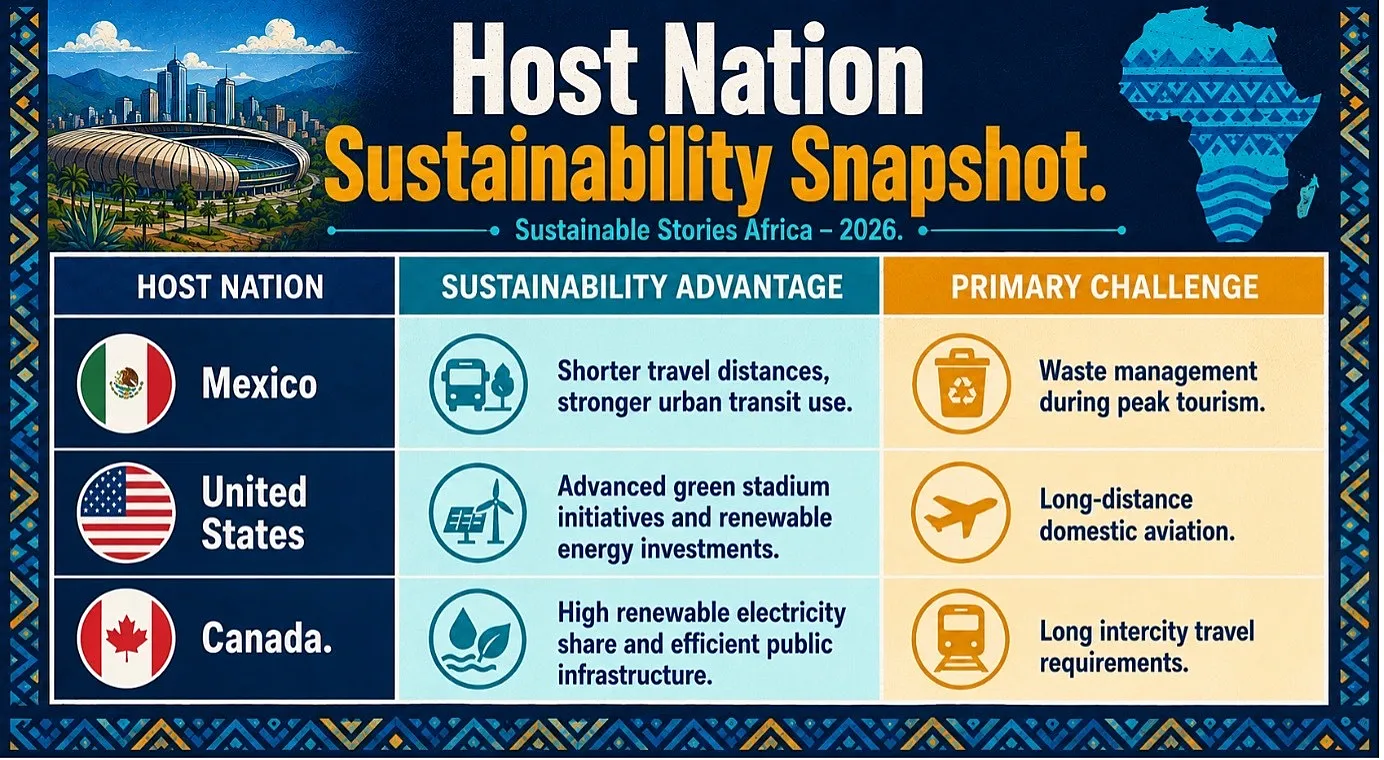
Among the three host nations, Mexico currently appears best positioned to showcase comparatively more sustainable fan behaviour.
Its compact geography between host cities, stronger reliance on public transport in major urban centres and shorter average domestic travel distances could significantly reduce emissions per spectator compared with the United States and Canada, where longer air travel remains unavoidable.
With FIFA expecting more than six million spectators across 16 host cities, transport alone is projected to account for the overwhelming majority of tournament-related greenhouse gas emissions, making supporter behaviour central to the event's climate legacy.
Transport Choices Will Shape Football's Climate Legacy
The three host countries present sharply different sustainability profiles.
Mexico's host cities, including Mexico City, Guadalajara and Monterrey, are connected through relatively shorter travel corridors, allowing greater use of buses and rail services.
Urban public transport networks also support lower-carbon mobility for visiting supporters.
By contrast, the United States hosts matches across eleven cities separated by thousands of kilometres, making domestic flights almost unavoidable for many travelling fans.
Canada, with only Toronto and Vancouver hosting matches, similarly faces significant aviation-related emissions because of its vast geography.
The challenge extends beyond transport. Food waste, disposable plastics, hotel energy use and stadium operations collectively influence the tournament's environmental footprint.
According to international sports sustainability research, spectator travel can account for between 70% and 90% of total emissions generated during major sporting events.
That places unprecedented responsibility on fans themselves.
For African policymakers and tourism authorities, the World Cup offers valuable lessons.
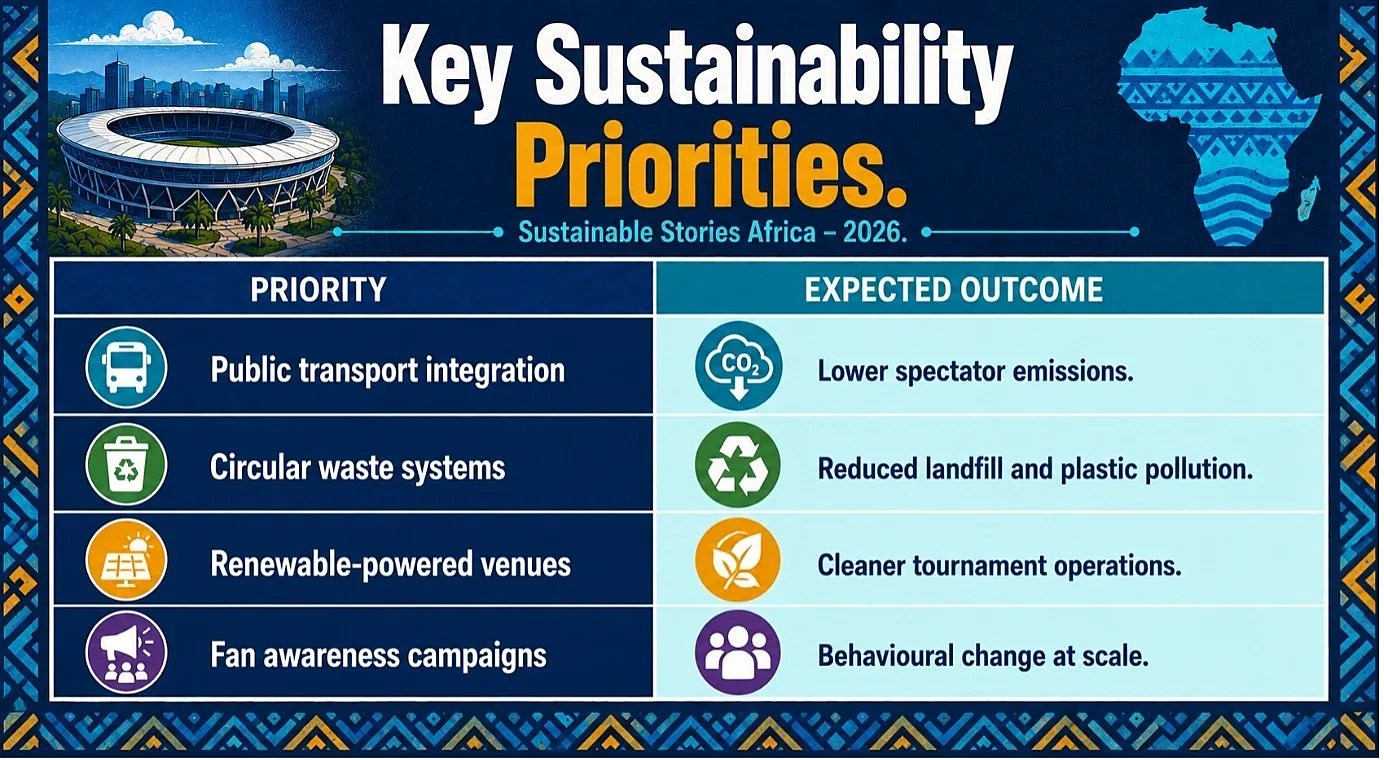
As countries increasingly compete to host global sporting competitions, integrating low-carbon mobility, circular waste management and renewable-powered venues is becoming an economic advantage rather than simply an environmental ambition.
Greener Fans Could Redefine Global Sporting Events
If supporters increasingly embrace public transport, refillable water bottles, local food vendors and longer stays rather than multiple return flights, the 2026 tournament could become a blueprint for sustainable mega-events.
Cities would benefit from cleaner air, reduced congestion and stronger local economic participation. Businesses investing in circular packaging, sustainable hospitality and low-carbon transport could capture growing consumer demand while strengthening long-term competitiveness.
For Africa, where sports tourism continues to expand, these lessons could shape future continental tournaments by embedding sustainability into infrastructure planning from the outset rather than treating it as an afterthought.
Conversely, if millions of fans continue high-emission travel patterns without meaningful mitigation measures, the tournament risks reinforcing concerns about the environmental cost of global sporting spectacles.
Tournament Success Requires Collective Climate Leadership
Governments, organisers, airlines, hotels, transport operators and supporters all have a role in ensuring the World Cup delivers a lasting sustainability legacy.
- Investment in integrated public transport, expanded recycling systems, renewable-powered venues and verified carbon reduction programmes should be accelerated before kickoff.
- Equally important is empowering supporters with practical information that encourages lower-carbon travel choices throughout their journeys.
Businesses can also seize this opportunity by demonstrating measurable ESG performance, while tourism authorities should use the event to showcase sustainable destination management that extends beyond the final whistle.
Ultimately, the greenest World Cup will not be determined solely by FIFA's environmental commitments but by millions of individual decisions made before every match begins.
Path Forward – Building Tomorrow's Sustainable Sporting Legacy
The 2026 FIFA World Cup presents a unique opportunity to demonstrate that global sporting excellence and environmental responsibility can advance together.
Success will depend on coordinated investment, transparent measurement and sustained public engagement.
For African markets, the tournament offers practical lessons for designing future sporting events that strengthen tourism, accelerate ESG adoption and build resilient low-carbon economies without compromising fan experience.
Culled From: Mexico, USA, or Canada: Which World Cup Host Nation’s Soccer Fans Are Most Sustainable?